Neil Young
The Man in the Black Hat

A loud poem. A whimsical western tale of music and love.
Official
I didn’t know what to expect when I pressed play on Paradox. The synopsis called it a "whimsical western tale of music and love," which sounded like a recipe for either enchantment or disaster. The director was Daryl Hannah—yes, that Daryl Hannah, the one who once fought a replicant in Blade Runner and now, apparently, was making surreal musical fantasies with Neil Young.
The cast list read like a family reunion at a folk festival: Neil Young, his son Ben, Lukas and Micah Nelson (sons of Willie), and a handful of musicians whose names I didn’t recognize but whose faces looked like they’d been plucked from a 1970s Laurel Canyon commune. The runtime was a lean 73 minutes. The TMDB score was a baffling 3.8/10.
And the tagline? Nonexistent.
So, what is Paradox? It’s not a movie in any conventional sense. It’s a mood, a vibe, a loose collection of images and sounds that feel like they were captured in a single, sun-drenched afternoon where no one bothered to check if the camera was rolling.
There’s a plot, sort of—a group of outlaws, led by a grizzled Neil Young (playing a character named "The Man in the Black Hat"), stumble upon a mysterious box that may or may not contain a fortune or a curse. But the plot is beside the point. The point is the way the light hits the dust, the way the characters move like they’re half-asleep, the way the music doesn’t so much score the film as exist alongside it, like a parallel universe bleeding into this one.
The first thing you notice is the sound. Or, more accurately, the lack of it. Paradox is a film that breathes in silence. Dialogue is sparse, often muttered or sung rather than spoken.
When characters do talk, it’s in riddles or half-finished thoughts, as if they’re not entirely sure what they’re saying—or if they’re even awake. The music, when it arrives, feels like a relief, a sudden burst of color in a world that’s otherwise muted. Neil Young’s guitar work is as jagged and unpredictable as ever, but here it’s paired with Lukas Nelson’s smoother, more melodic playing, creating a push-and-pull that mirrors the film’s own tension between chaos and calm.
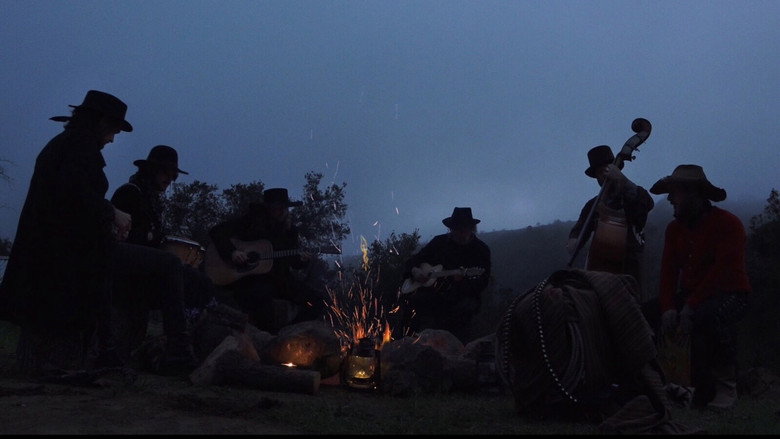
There’s a moment early on where the outlaws sit around a campfire, playing a song that feels like it’s been passed down through generations. The camera lingers on their faces, half-lit by the fire, and for a second, you forget you’re watching a movie. You’re just there, in the desert, listening.
The cinematography is where Paradox comes closest to greatness. Shot on grainy, saturated film stock, the movie looks like it was unearthed from a time capsule buried in the 1970s. The colors are rich and warm—golden yellows, deep oranges, the kind of hues that make you want to reach out and touch the screen.
The camera moves lazily, drifting from one scene to the next like it’s following the scent of something just out of frame. There’s a dreamlike quality to it all, as if the film itself is half-remembered, a story told by someone who’s not entirely sure if it happened or if they just dreamed it.
But here’s the thing about dreams: they don’t always make sense. And Paradox doesn’t either. There’s a scene about halfway through where the outlaws find the mysterious box, and instead of opening it, they just sort of...
Stare at it. For a long time. The camera lingers.
The music swells. And then, abruptly, the scene cuts to something else. It’s the kind of moment that could be profound or pretentious, depending on your tolerance for ambiguity.
I’m still not sure which side I fall on. There’s another scene where a character named "The Particle Kid" (played by Micah Nelson) delivers a monologue about the nature of time and reality, and it’s so earnest and so bizarre that I couldn’t help but laugh. Not because it was bad, but because it was so sincere, like watching someone try to explain a dream they had last night that they’re convinced holds the key to the universe.
The performances are... Well, they’re not really performances in the traditional sense. Neil Young, in particular, seems to be operating on a different plane of existence.
He’s not acting so much as he is being, which is both the film’s greatest strength and its most frustrating limitation. There’s a rawness to his presence, a sense that he’s not playing a character but simply existing in front of the camera, unfiltered. It’s fascinating to watch, but it’s also alienating.
You can’t help but feel like you’re intruding on something private, like you’ve stumbled into a room where you weren’t invited.
And that, I think, is the paradox at the heart of Paradox. It’s a film that wants to be both deeply personal and completely universal, a loud poem whispered in a quiet room. It’s messy, uneven, and often baffling.
But there’s something undeniably magnetic about it, too. Maybe it’s the music, or the way the light hits the desert, or the sheer audacity of a film that refuses to play by the rules. Or maybe it’s just the fact that, for all its flaws, Paradox feels like nothing else out there.
It’s not trying to be a blockbuster or a critical darling. It’s just trying to be itself, in all its strange, sun-drenched glory.
I don’t know if Paradox is a good movie. I’m not even sure it’s a movie at all, in the way we usually define them. But I do know that it’s stuck with me in a way that few films have this year.
There’s something about its refusal to explain itself, its insistence on existing purely in the moment, that feels radical in an era where every story is dissected, analyzed, and packaged for maximum consumption. Paradox doesn’t want to be consumed. It wants to be experienced, like a song or a dream or a memory you can’t quite place.
And maybe that’s enough. Maybe, in a world that’s always demanding answers, there’s something beautiful about a film that’s content to just sit with the questions. Even if those questions don’t always make sense. Even if the answers are never coming.
Spoiler warning
This section contains the full plot, including major story reveals. Overview above stays spoiler-free.
Daryl Hannah liked the phrase spitball production. Neil Young and Promise of the Real were on her Colorado ranch in September 2016, sitting high so they could breathe for a Telluride date and then Desert Trip. She knew they would end up at a campfire with jokes and songs. latestnetflix.com's read is that she told the Austin American-Statesman she did not want a documentary of that.She wanted a little movie. The script for the short was 10 pages. The characters started improvising. Three days later she had a 73-minute western that Netflix bought a week before SXSW.,,
Hannah wrote and directed. Deadline printed her own origin story. "Paradox sprung up spontaneously and unexpectedly, like a peculiar dandelion, popping up between the cracks in the pavement." The logline called it a fantasy, a loud poem, and a free-spirited tale of music and love. Young plays the Man in the Black Hat. Lukas Nelson is Jail Time. Micah Nelson is the Particle Kid. Willie Nelson turns up as Red. The band, the managers, the road crew, and the caretakers play cartoon versions of themselves. Hannah told the Globe and Mail they are how other people see them, more than how they are. Young was 72 and, in the film, a taciturn rider who robs seed banks.,,
The Times reported Super 8 and Hannah's iPhone. She thrifted the costumes herself. Young said she did all the work. Hannah's own comparison was El Topo without the budget. Micah told the Statesman they even shot a beat at Luck, the Western town set from Red Headed Stranger, where he used to play as a kid and got stung by hornets. They jammed giant skin drums for a day to score footage that had no plot yet. Concert scraps from Telluride and Desert Trip sit next to guitar in the woods. The soundtrack, Young plus Promise of the Real, dropped on Reprise the same day the film hit Netflix.,,
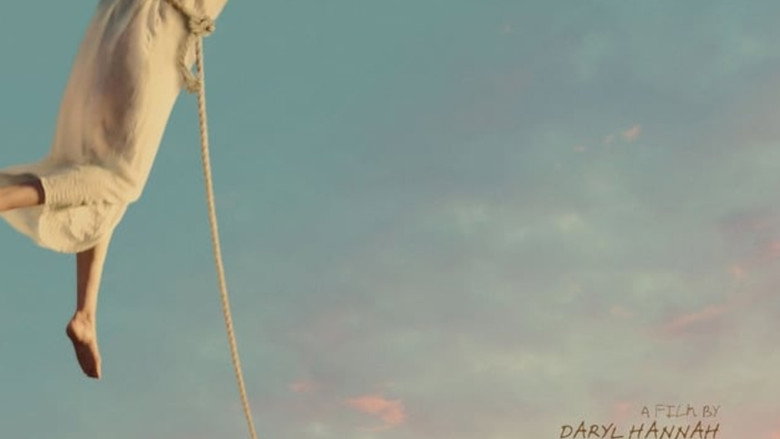
Netflix took global rights on 7 March 2018 and set a worldwide date of 23 March, with a limited theatrical around it. The SXSW bow was 15 March. TMDB still files the film as music and fantasy, 1 hour 13 minutes, NR. The official trailer leans Leone. A Nelson says the man in the black hat can be kind of shady. Then Young's eyes under the brim. Somebody appears to float away.,,,
Rotten Tomatoes sits at 29 percent from seven reviews. Metacritic logged 31 from four. Peter Sobczynski at RogerEbert.com gave it 1.5 out of 4 and called it a glorified home movie without the glory. Variety's Joe Leydon called it a waste of time made bearable only by its brevity. The Guardian's Monica Castillo, writing from SXSW, found a rambling future where men prospect for old technology and women harvest food off-screen until a full moon unites them. She clocked the GMO-seed activism that never gets explained, and a Mexican sidekick who arrives in serape and sombrero. She hoped the debut was a warm-up.,,
Hannah told the Statesman she still wanted to make a real film by traditional norms, and that she would keep making spitball work because it is liberating to make art without asking permission. Netflix asked. Netflix paid. The dandelion is still in the catalog, 73 minutes of tour family in cowboy hats, waiting for the moon.,
Entertainment rumors and trivia aggregated from public reporting. Treat speculation as unverified unless a cited source confirms it.
More titles in the same genres and with the same cast.