
Aditya Modak
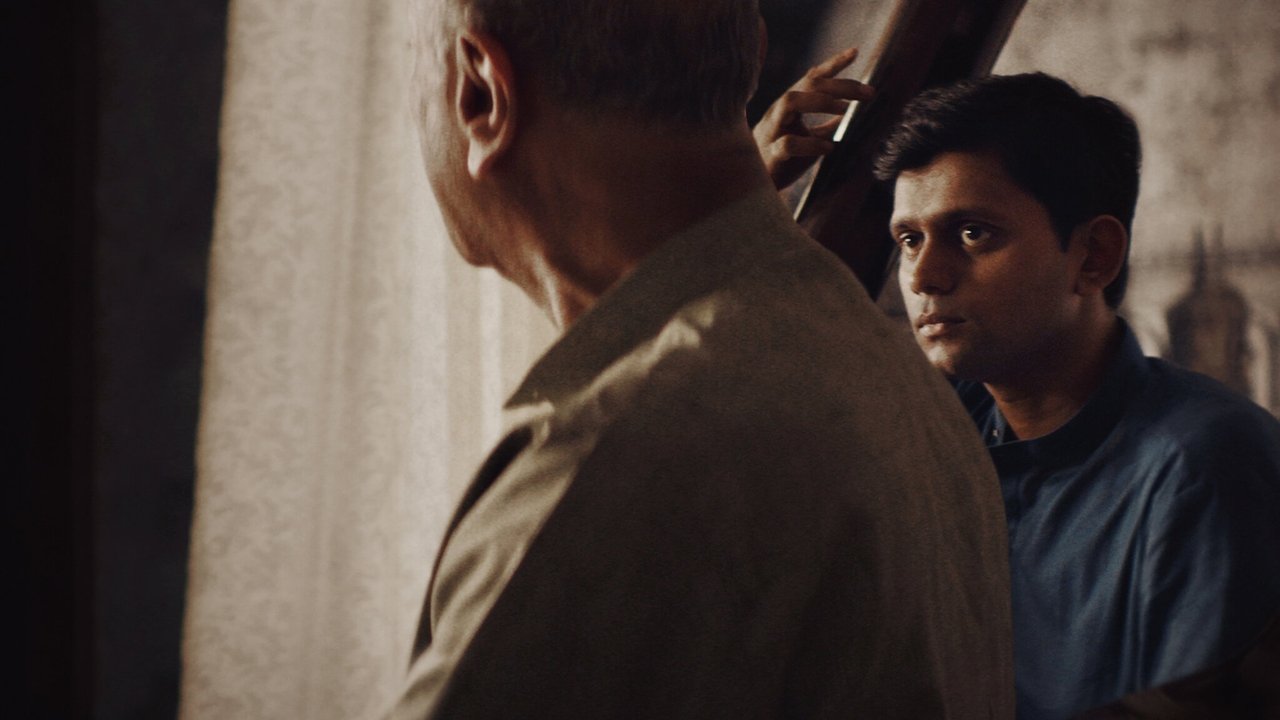
Sharad Nerulkar
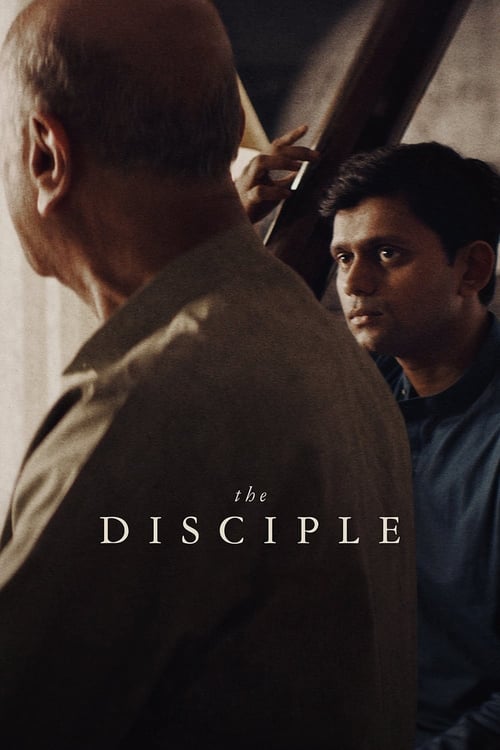
“If you want to walk this path, learn to be lonely and hungry.”
Self-doubt, sacrifice and struggle converge into an existential crisis for a devoted classical vocalist as the mastery he strives for remains elusive.
I’ve been thinking about The Disciple for days—not because it’s a film that lingers in the way of a grand, sweeping epic, but because it lingers in the way of a quiet, unresolved ache. It’s the kind of movie that doesn’t so much end as it does exhale, leaving you with the sense that you’ve just witnessed something true, something that doesn’t wrap itself up neatly because life, especially the life of an artist, rarely does.
Chaitanya Tamhane’s second feature (after the razor-sharp Court) is a film about failure, but not the kind of failure that’s dramatic or cinematic in the way we’re used to. There are no grand collapses here, no moments of public humiliation or operatic breakdowns. Instead, The Disciple is about the slow, grinding erosion of a dream—the kind that happens in private, over years, as the weight of your own limitations presses down on you until you’re left wondering if the thing you’ve sacrificed everything for was ever really within your grasp.
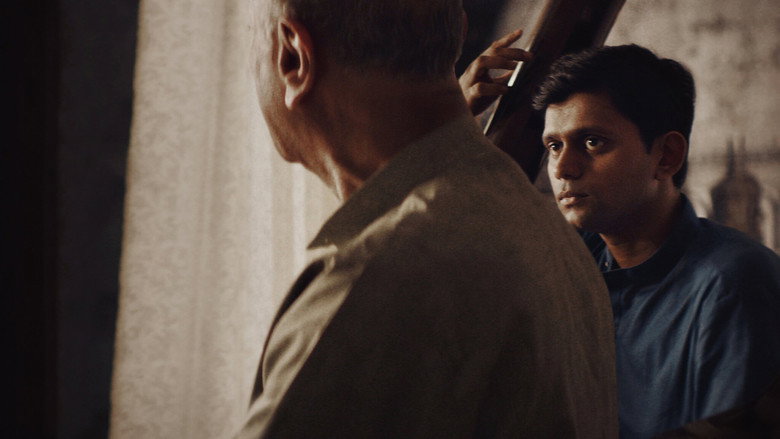
The film follows Sharad Nerulkar (Aditya Modak), a Hindustani classical vocalist in Mumbai, as he navigates the gulf between devotion and mastery. We meet him as a young man, full of idealism and the kind of romanticized notions about art that only the very young (or the very naive) can sustain. He believes in the purity of the tradition, in the idea that if he just works hard enough, if he just stays true to the guru-shishya parampara (the teacher-student lineage), he will one day achieve greatness.
His guru, a stern but caring figure, tells him early on: "If you want to walk this path, learn to be lonely and hungry." Sharad takes the words to heart, but what he doesn’t yet understand is that loneliness and hunger aren’t just conditions of the journey—they’re the destination.
Tamhane’s direction is deliberate, almost meditative, and it’s clear from the outset that this is a film that demands patience. The camera lingers on Sharad’s face, on the way his expression shifts from determination to doubt to something like resignation, all in the span of a single, unbroken take. There’s a scene early on where he performs at a small gathering, his voice wavering slightly as he hits a high note.
It’s not a bad performance, but it’s not a transcendent one either. The audience claps politely, and Sharad’s face betrays nothing, but you can almost see the gears turning in his head: Was that enough? Will it ever be enough? It’s a small moment, but it’s devastating in its honesty.
How many of us have stood in front of a room, waiting for applause, only to feel the gnawing sense that we’ve fallen short?
The film’s structure mirrors Sharad’s journey. We see him at 24, then at 30, then at 40, each iteration of himself a little more worn, a little more disillusioned. The passage of time is marked not by dramatic events but by the accumulation of small, almost mundane disappointments: a performance that doesn’t go as planned, a student who quits, a job teaching music to disinterested children.
Tamhane doesn’t rush these moments. He lets them breathe, and in doing so, he captures something rare in cinema—the way life actually feels when you’re living it, rather than the way it’s compressed and dramatized for the screen.
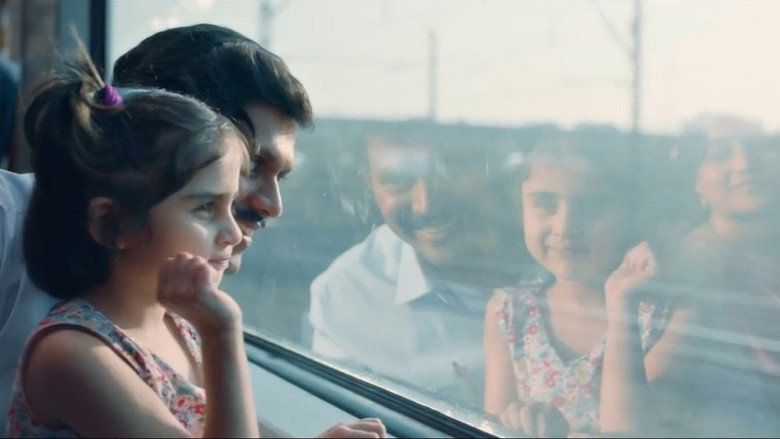
One of the film’s most striking motifs is Sharad’s motorcycle rides through Mumbai, accompanied by the disembodied voice of Maai, a mythic guru whose recordings he listens to obsessively. Maai’s voice is a constant presence in his life, a kind of spiritual GPS guiding him toward an artistic purity that always seems just out of reach. The rides are hypnotic, the city blurring past him as Maai’s words wash over him: "The artist must be like a lotus—untouched by the mud from which it grows." But the more Sharad clings to this ideal, the more isolated he becomes.
The film’s Mumbai is a city of contrasts—vibrant, chaotic, alive—but Sharad moves through it like a ghost, untethered from the world around him. The motorcycle rides, which start as moments of transcendence, gradually become something sadder, a man clinging to a dream that’s slipping through his fingers.
Aditya Modak’s performance is the film’s anchor, and it’s a remarkable one. He’s not an actor by trade—he’s a classical singer, and Tamhane cast him specifically because he wanted someone who could bring an authenticity to the role that a trained actor might not. Modak delivers on that authenticity in spades.
His Sharad is a man of few words, but his face speaks volumes. There’s a scene toward the end of the film where he sits across from a veteran music critic (Prasad Vanarse), a man who has seen countless artists come and go. The critic, now cynical and world-weary, tells Sharad a hard truth: *"You have discipline, you have devotion, but you don’t have that spark.
That thing that makes people stop and listen."* Sharad doesn’t react with anger or despair. He just sits there, absorbing the words, and in that moment, you can see the last remnants of his idealism crumble. It’s a lacerating scene, not because it’s dramatic, but because it’s so quiet, so matter-of-fact.
This is what failure looks like, the film seems to say. It doesn’t announce itself with fanfare. It just is.
The Disciple has drawn comparisons to Inside Llewyn Davis, and it’s an apt one. Both films are about artists who are good but not great, who possess the discipline and the devotion but lack that elusive "it" factor. Both are also films that refuse to romanticize the artistic life.
They show the grind, the doubt, the moments of small humiliation that chip away at a person over time. But where the Coen brothers’ film is infused with a dark, absurdist humor, Tamhane’s is more melancholic, more introspective. There’s a sense of inevitability to The Disciple, a feeling that Sharad’s fate was sealed from the moment he chose this path.
The question the film leaves you with is whether that fate is tragic or simply the cost of pursuing something that demands everything from you.
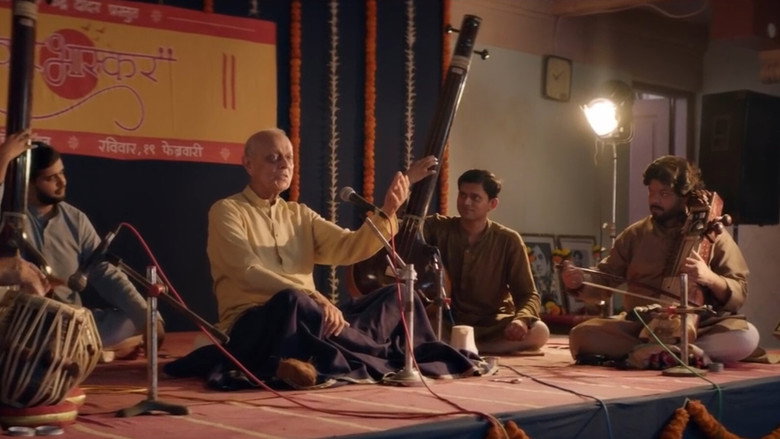
The film’s final act is where it risks losing some viewers. Sharad, now middle-aged, has become a music teacher, his dreams of artistic greatness long behind him. He’s not bitter, exactly, but he’s not at peace either.
There’s a scene where he attends a concert by a younger, more successful musician, and you can see the conflict in his eyes. Part of him is happy for this artist, but another part of him is still that young man who believed he would be the one on stage. The film doesn’t offer any easy resolutions.
Sharad doesn’t have a grand epiphany. He doesn’t suddenly rediscover his passion or find a new path. He just keeps going, because what else is there to do?
This is where The Disciple diverges from so many other films about artists. It doesn’t believe in the redemptive power of failure. It doesn’t suggest that Sharad’s struggles have made him a better person or that his sacrifices were worth it in the end.
Instead, it presents failure as something more complicated—a force that shapes you, but doesn’t necessarily ennoble you. Sharad’s story is a reminder that art is not a meritocracy. Talent matters, but so does luck, timing, circumstance.
And sometimes, no matter how hard you work, you still end up on the outside looking in.
I keep coming back to that line from Maai: "Learn to be lonely and hungry." It’s a beautiful sentiment, but The Disciple forces us to ask: At what cost? Sharad’s loneliness isn’t just a condition of his art—it’s a byproduct of his inability to reconcile the ideal with the real. He clings to the myth of the pure artist, the one who exists outside of commerce and compromise, but the world doesn’t work that way.
The guru-shishya tradition he reveres is fading, replaced by a music industry that values marketability over mastery. Sharad’s tragedy isn’t that he fails, but that he fails to adapt. He’s a man out of time, and the film doesn’t let him—or us—off the hook for that.
Critics have been nearly unanimous in their praise for The Disciple, and it’s not hard to see why. The film is a masterclass in restraint, in trusting the audience to sit with discomfort and ambiguity. RogerEbert.com called it "a bleak but beautiful character study," while The Guardian praised its "melancholy tone" but noted that Sharad’s asceticism can keep the audience at arm’s length.
That’s a fair criticism. Sharad isn’t an easy character to love. He’s stubborn, self-absorbed, and often frustratingly passive.
But that’s also what makes him feel so real. He’s not a hero or a villain. He’s just a man trying to make sense of his life, and failing, more often than not.
The Disciple isn’t a film that will leave you feeling uplifted. It’s not a crowd-pleaser or a feel-good story. But it is a film that will leave you thinking, long after the credits roll.
It’s a film about the stories we tell ourselves—the myths we cling to in order to make sense of our lives—and what happens when those stories no longer hold up. Sharad’s journey is a cautionary tale, but it’s also a deeply human one. It’s the story of someone who dared to dream big, and who paid the price for that dream.
And in that sense, it’s a story that resonates far beyond the world of Hindustani classical music.
I don’t know if The Disciple is a great film. But I do know that it’s an honest one. And in a world where so much art is about spectacle, about escape, about giving the audience exactly what they want, honesty feels like a rare and precious thing.
Tamhane doesn’t offer any easy answers, and he doesn’t let Sharad off the hook. He just presents the man as he is—flawed, struggling, and ultimately alone—and asks us to sit with that. It’s not always comfortable.
But then again, neither is life.
"A meditative, atmospheric study of artistic devotion whose slow pace may test patience."
Viewers find its authentic portrayal of Indian classical music and the protagonist's lifelong dedication immersive and thought-provoking. The deliberate pacing and lack of conventional drama leave others detached.
Chaitanya Tamhane’s The Disciple (2020) arrived as a slow-burn meditation on artistic devotion, but its journey from script to screen was anything but conventional. latestnetflix.com's view is that the film, which follows a young Hindustani classical singer’s struggle for mastery, became a critical darling—premiering at Venice Film Festival and later streaming on Netflix—but its production was marked by meticulous craftsmanship and unexpected influences.
Tamhane, known for his debut Court (2014), spent years researching Hindustani music to ensure The Disciple felt authentic. The director, born in 1987, immersed himself in the world of classical musicians, even learning the intricacies of raga performances. His approach wasn’t just about accuracy—it was about capturing the emotional weight of a fading tradition. In interviews, Tamhane has hinted at the challenges of balancing realism with narrative drama, though specifics remain scarce.
The film’s lead, Aditya Modak, wasn’t a professional actor but a trained classical singer—a casting choice that paid off. Modak’s portrayal of Sharad Nerulkar, the protagonist, was praised for its raw vulnerability, suggesting a deep collaboration with Tamhane. The two have appeared together in discussions, with Modak describing the process as "a spiritual experience", though exact details of their creative dynamic remain private.
The Disciple marked a rare foray into Marathi cinema for Netflix, which acquired the film after its festival run. The streaming giant released two official trailers—one targeting Indian audiences and another for global viewers —hinting at its dual appeal. The film’s pacing, however, was a risk: at 127 minutes, it demanded patience, a gamble that paid off with critics (it holds a 6.5/10 on SensCritique) but left some audiences divided.
Tamhane himself has acknowledged the influence of Alfonso Cuarón’s Roma (2018) on The Disciple, particularly in its use of long takes and immersive sound design. The Oscar-winning film’s impact on Tamhane’s approach suggests a deliberate shift toward cinematic grandeur, even in a story rooted in intimate, personal struggles.
While The Disciple was celebrated for its artistic ambition, the production wasn’t without challenges. Rumors (unconfirmed) suggest budget constraints forced Tamhane to shoot in real locations, including Mumbai’s music schools and performance halls, rather than sets. The film’s minimalist aesthetic—long takes, static frames—may have been a creative choice, but it also likely reflected practical limitations.
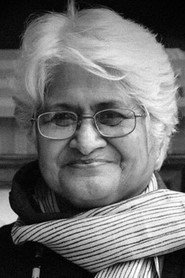
The cast, too, faced unique pressures. Sumitra Bhave, a veteran Marathi actress, played Sharad’s mentor, a role that required deep familiarity with classical music. Bhave’s performance was lauded, but her passing in 2021 added a layer of poignancy to the film’s legacy.
The Disciple didn’t just earn accolades—it sparked conversations about the future of classical music in India. Tamhane’s film doesn’t offer easy answers, instead presenting a bittersweet portrait of artistic idealism clashing with commercial reality. In a 2020 interview, Tamhane described the film as "a discovery of truth", a phrase that encapsulates its quiet, introspective power.
For now, details about Tamhane’s next project remain under wraps. But if The Disciple is any indication, his work will continue to defy expectations—blending rigor with emotion, tradition with modernity.
Entertainment rumors and trivia aggregated from public reporting. Treat speculation as unverified unless a cited source confirms it.
More titles in the same genres and with the same cast.