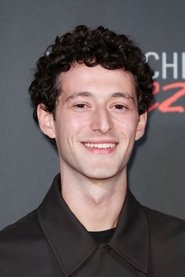
Vincenzo Crea
Niccolò
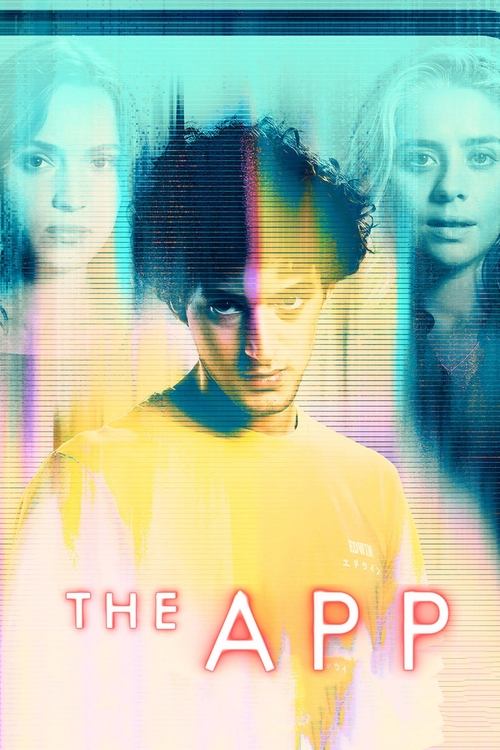
Loving girlfriend, family fortune, breakout movie role: he's got it all. Until an app awakens a powerful new yearning. While in Rome to shoot his first movie, actor and industrial heir Niccolò becomes obsessed with the dating app "US" that sends him into a self-destructive spiral.
Official
I’ll admit it: I was drawn in by the glow. That sickly, seductive neon haze that seems to seep from every frame of The App, Elisa Fuksas’s 2019 Italian sci-fi drama. It’s the kind of lighting that makes you feel like you’re staring into a screen even when you’re not—fitting, for a film about the way our devices have become both mirrors and prisons.
The problem is, once the glow fades, there’s not much left to hold onto.
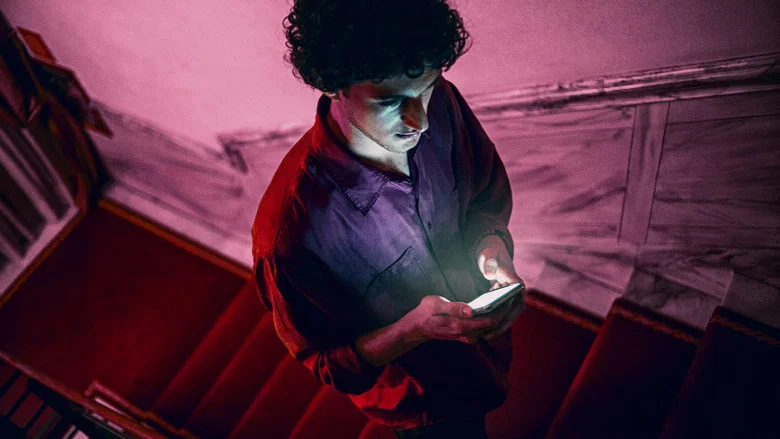
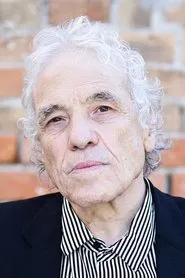
The premise is simple enough. Niccolò (Vincenzo Crea), a wealthy young actor with the world at his feet, arrives in Rome to play Jesus in a passion project directed by Abel Ferrara (who, in a meta twist, plays an American filmmaker shooting a movie about Jesus). Niccolò has a loving girlfriend, Eva (Jessica Cressy), a burgeoning career, and all the trappings of a life most would envy.
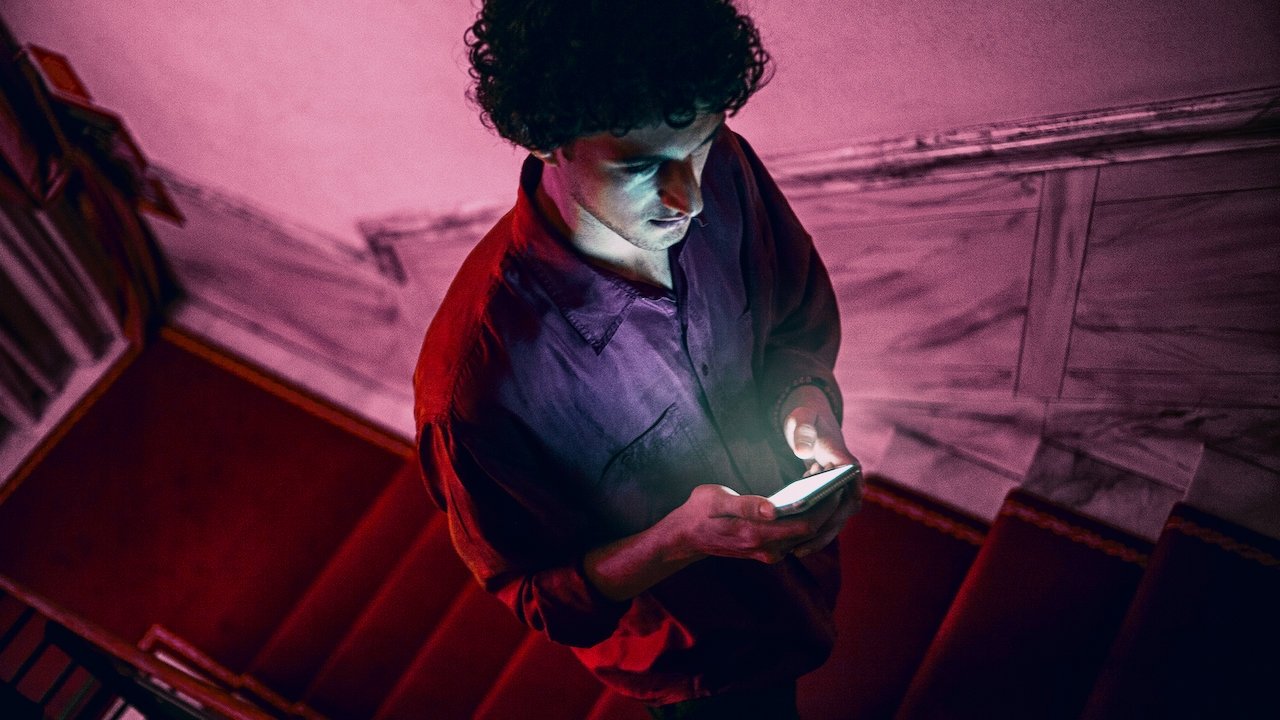
But then he downloads "US," a mysterious dating app that promises to reveal his deepest desires. What follows is a spiral into obsession, paranoia, and self-destruction, all rendered in the film’s signature visual language: cold blues, electric pinks, and the occasional flicker of religious iconography, as if the film itself can’t decide whether it’s a tech thriller or a modern-day passion play.
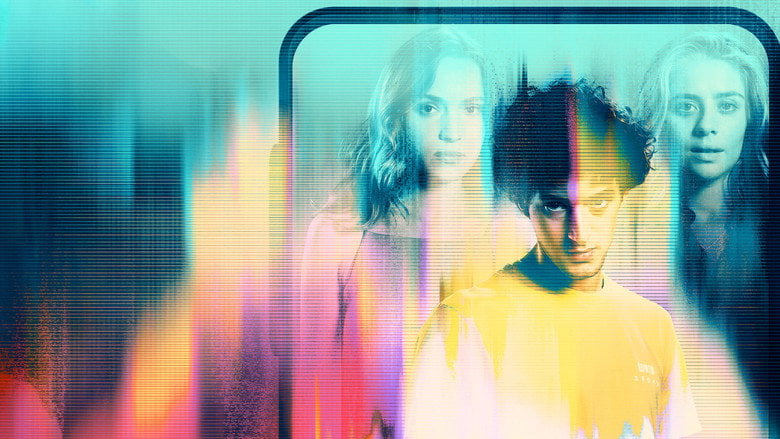
Fuksas leans hard into the visual symbolism, and at times, it’s intoxicating. The film’s aesthetic is undeniably striking—think Black Mirror meets Eyes Wide Shut, with a dash of Italian arthouse flair. The neon lights aren’t just decoration; they’re a character in their own right, pulsing like a heartbeat or a notification alert, reminding us that Niccolò’s world is increasingly mediated by screens.
The problem is, the film’s ambition often outstrips its execution. For every moment that lands—like a surreal dream sequence where Niccolò wanders through a nightclub that feels like a digital purgatory—there’s another where the narrative stumbles, tripped up by its own pretensions.
Take the app itself. "US" is less a piece of technology than a MacGuffin, a vague but potent force that seems to know Niccolò’s desires better than he does. It’s not clear how it works, or what its limits are, and that vagueness is both the film’s strength and its undoing.
On one hand, the ambiguity mirrors the way real-life algorithms feel—omniscient, inscrutable, and slightly sinister. On the other, it’s hard to invest in Niccolò’s descent when the rules of the game keep shifting. Is the app manipulating him, or is it merely reflecting the darkness already inside him?
The film never quite decides, and by the time the credits roll, I was left with more questions than answers.
The religious imagery is another layer that never fully coheres. Niccolò is playing Jesus in a film, and the parallels between his character’s suffering and the Passion are obvious—too obvious, at times. The film litters the frame with crucifixes, statues of the Virgin Mary, and other Catholic iconography, as if to remind us that this is a story about temptation, sin, and redemption.
But the symbolism often feels heavy-handed, like a student film where the director is trying a little too hard to prove they’ve read their Camus. There’s a scene where Niccolò, mid-breakdown, stares at a painting of the Madonna, and the camera lingers just a beat too long. It’s the kind of moment that would work in a shorter film, where every frame carries weight, but here, it feels like one of many similar shots, diluting the impact.
The performances are a mixed bag. Vincenzo Crea has the look of a young man who’s been handed everything in life, and he captures Niccolò’s arrogance and fragility well. But the script doesn’t give him much to work with beyond brooding and self-destructing.
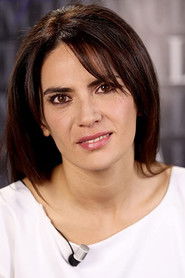
Jessica Cressy, as Eva, fares better—her character is the film’s moral center, and Cressy brings a quiet strength to the role. The real standout, though, is Greta Scarano as Ofelia, the enigmatic hotel manager who may or may not be part of Niccolò’s unraveling. Scarano has a magnetic presence, and her scenes with Crea crackle with tension.
It’s a shame the film doesn’t give her more to do.
Critics weren’t kind to The App, and it’s not hard to see why. John Serba at Decider called it "somebody took an M-60 and Rambo’d this plot," and while that’s a bit harsh, it’s not entirely off the mark. The film’s ambitions are sprawling—it wants to be a tech thriller, a psychodrama, a religious allegory, and a character study all at once—but it never quite finds its footing in any of those genres.
Brian Costello at Common Sense Media put it bluntly: "The result is a plodding and pretentious mess, the kind where you might find yourself checking your own smartphone." Ouch. But I’ll admit, there were moments when I did exactly that.
The film’s pacing is uneven, and its reliance on texting sequences—where we watch characters type and receive messages in real time—feels like a gimmick that wears thin quickly.
That said, I can’t shake the feeling that The App is a film that’s trying, in its own clumsy way, to say something important. It’s not a great movie, but it’s an interesting failure, the kind that lingers in your mind long after the credits roll. There’s a scene near the end where Niccolò, stripped of his arrogance and his illusions, stands in the middle of a deserted street, the neon lights reflecting off the wet pavement like a digital hellscape.
It’s a striking image, one that encapsulates the film’s central tension: the way technology can make us feel both connected and utterly alone. The problem is, the film never quite earns that moment. It’s all build-up and no payoff, like a notification that never stops buzzing but never delivers a message.
In the end, The App is a film that’s easy to admire but hard to love. It’s visually stunning, undeniably ambitious, and occasionally brilliant, but it’s also messy, pretentious, and frustratingly vague. It’s the kind of movie that makes you wish the director had trusted the audience a little more, or at least trusted herself to tell a simpler story.
Because beneath all the neon and the religious symbolism and the tech-noir trappings, there’s a kernel of something real here—a fear of what happens when we outsource our desires to machines, and what’s left of us when the screens go dark.
I’m still thinking about that final shot, though. Niccolò, alone in the glow, staring at his phone like it holds the answers to all his questions. It doesn’t, of course.
But the film does leave us with one unsettling thought: maybe the app was never the problem. Maybe it was just a mirror. And maybe that’s the scariest thing of all.
Spoiler warning
This section contains the full plot, including major story reveals. Overview above stays spoiler-free.
Elisa Fuksas’ The App (2019) arrived with a premise that felt ripped from the headlines: a mysterious app that promises to revolutionize human connection—until it doesn’t. The Italian sci-fi thriller, starring Vincenzo Crea and Jessica Cressy, leaned into the era’s obsession with digital dependency, but its reception was as divided as the app’s own allure. latestnetflix.com's take is that here’s what we know about the film’s behind-the-scenes buzz and why it left audiences split.
The App follows a group of characters whose lives spiral after downloading an untested social application. The film blends science fiction and fantasy, a genre mashup that director Elisa Fuksas embraced fully. Clocking in at a tight 79 minutes, it’s a brisk, if uneven, ride through paranoia and tech-induced chaos. The trailer—available in multiple cuts, including one with subtitles —hints at a sleek, stylish thriller, but the final product left some viewers underwhelmed.
Critics and audiences alike seemed to agree on one thing: The App had potential but stumbled in execution. On SensCritique, the film holds a dismal 2.9/10 rating based on 158 votes, a score that suggests it didn’t quite deliver on its intriguing premise. Rotten Tomatoes’ sparse listing confirms the cast but offers little else in the way of critical consensus, leaving the film’s reputation in limbo.
Fuksas assembled a cast that blended fresh faces with seasoned actors. Vincenzo Crea and Jessica Cressy, both relative newcomers at the time, anchored the film, while Maya Sansa (The Best of Youth) and Abel Ferrara (Bad Lieutenant) brought gravitas to their supporting roles. Greta Scarano, Anita Kravos, and Maurizio Di Carmine rounded out the ensemble, adding depth to the film’s tech-noir atmosphere.
But even with this talent, The App struggled to stand out. The Netflix trailer teased a high-stakes narrative, but the final cut failed to ignite the same energy. Whether the issue was pacing, script, or something else remains unclear—behind-the-scenes details are scarce, and the evidence doesn’t reveal any major on-set drama or creative clashes.
The App landed on Netflix with little fanfare, a far cry from the platform’s usual marketing blitz for original films. The official trailer promised a slick, modern thriller, but the film’s lukewarm reception suggests it didn’t resonate as intended. With a runtime under 80 minutes, it’s possible the story felt rushed, leaving audiences craving more substance.
The film’s Italian roots might have also played a role in its muted impact. While European sci-fi has its devotees, The App didn’t seem to break through to a wider audience. The lack of buzz—both positive and negative—is telling. Unlike other tech-themed thrillers (Black Mirror, Unfriended), The App didn’t spark the same cultural conversation, leaving it as a footnote in the genre rather than a standout.
The App (2019) is a curious case: a film with a timely premise, a solid cast, and a director willing to take risks, yet one that ultimately fizzled. Its low ratings and lack of critical discussion suggest it didn’t leave a lasting impression, but its existence alone is a reminder of how quickly tech paranoia can translate to cinema.
For fans of offbeat sci-fi, it might be worth a watch—if only to see where it went wrong. But for most, The App will remain a forgotten experiment in a genre that’s moved on to bigger, bolder stories.
Entertainment rumors and trivia aggregated from public reporting. Treat speculation as unverified unless a cited source confirms it.
More titles in the same genres and with the same cast.