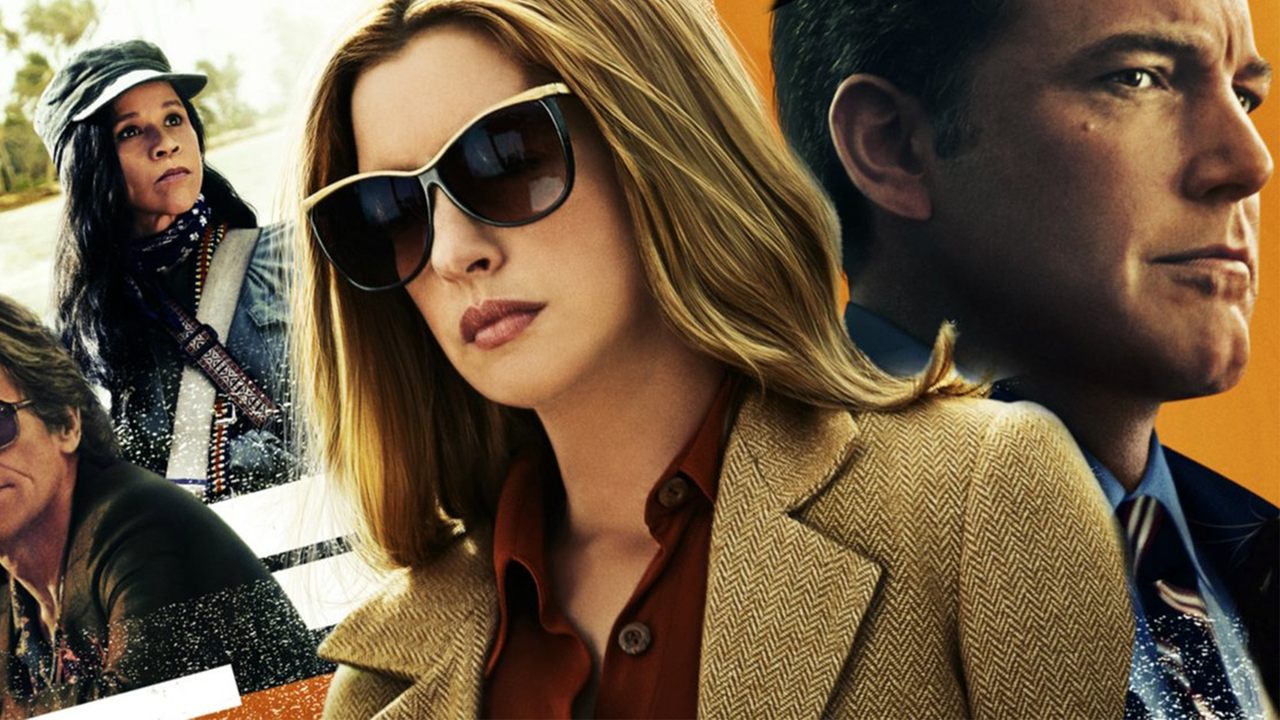

Anne Hathaway
Elena McMahon
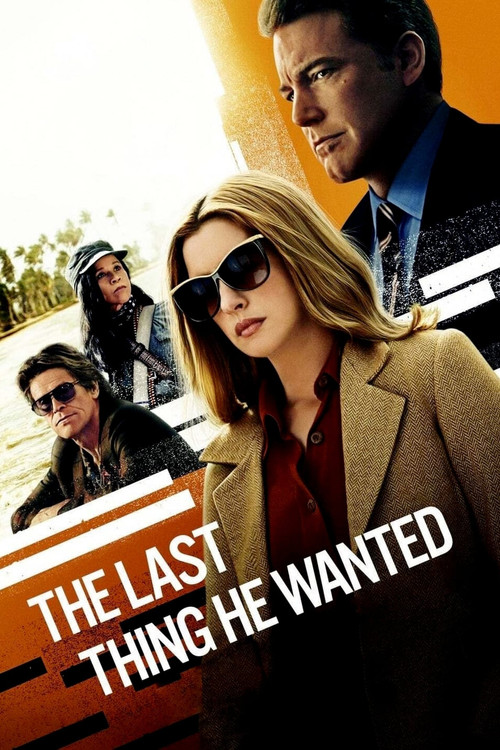
At the turning point of the Iran-Contra affair, Elena McMahon, a fearless investigative journalist covering the 1984 US presidential campaign, puts herself in danger when she abandons her assigned task in order to fulfill the last wish of her ailing father, a mysterious man whose past activities she barely knows.
I’ll admit it: I kept waiting for The Last Thing He Wanted to make sense. Not in the way most thrillers do—where the pieces click together in the third act, leaving you breathless—but in the way a fever dream eventually resolves into something resembling logic, even if it’s just the logic of exhaustion. But the film, directed by Dee Rees and based on Joan Didion’s 1996 novel, never quite gets there.
It’s not that it’s confusing on purpose; it’s that it seems confused about what it wants to be. A political thriller? A character study?
A meditation on American imperialism? It tries to be all three, and in the process, becomes none. The setup is promising enough.
Anne Hathaway plays Elena McMahon, a journalist covering the 1984 presidential campaign who gets pulled into her estranged father’s shadowy world of arms dealing. Willem Dafoe, as her father, Dick McMahon, is a man whose past is as murky as his motivations. The film is steeped in the paranoia of the Iran-Contra affair, a time when the U.S. government’s covert operations were as tangled as the plot of a John le Carré novel.
But where le Carré’s stories thrive on the slow unraveling of deception, The Last Thing He Wanted feels like it’s been edited with a machete. Scenes lurch forward without context, characters appear and disappear without explanation, and the whole thing moves at a pace that’s less "stream-of-consciousness" and more "someone dropped the script and put it back together out of order."
Rees and cinematographer Bobby Bukowski shot the film with a kind of restless energy, the camera darting and swirling as if trying to keep up with the story’s frantic pace. But the visual style only underscores the film’s biggest problem: it’s all motion, no direction. There’s a moment early on where Elena, mid-conversation, suddenly finds herself in a different location without any transition.
"A disjointed and underwhelming adaptation that struggles to capture the intrigue of its source material."
Viewers find the film's narrative confusing and poorly paced, failing to build tension or clarity in its political thriller framework. latestnetflix.com's read is that while the cast delivers competent performances, the story's execution leaves much to be desired, with many feeling it lacks the depth and engagement of Joan Didion's novel.
Netflix’s The Last Thing He Wanted (2020) promised a gritty, 1980s-set political thriller with Anne Hathaway as a journalist entangled in arms-dealing intrigue. Directed by Dee Rees (Mudbound), the film arrived with a stacked cast—Ben Affleck, Willem Dafoe, Rosie Perez—but landed with a thud, earning mixed reviews and a lukewarm reception. latestnetflix.com's read is that Behind the scenes, however, the project had its share of intrigue, from Rees’ bold creative vision to Hathaway’s dive into a morally ambiguous role.
Dee Rees made no secret of her inspiration for The Last Thing He Wanted: the raw, paranoid thrillers of 1970s New Hollywood. In a Netflix featurette, she cited films like The Parallax View and Three Days of the Condor as touchstones, aiming to capture that era’s cynicism and tension . The movie’s aesthetic—gritty cinematography, a synth-heavy score, and a nonlinear narrative—was a deliberate throwback, though critics later argued it struggled to balance homage with originality.
Rees’ approach extended to the film’s political themes. The story, adapted from Joan Didion’s 1996 novel, follows Hathaway’s Elena McMahon, a journalist who abandons her career to fulfill her dying father’s (Willem Dafoe) last request: delivering a mysterious package to Central America. The film’s backdrop of Cold War-era arms deals and covert operations mirrored Rees’ interest in power dynamics, a theme she explored in Mudbound  . But where Mudbound resonated with critics, The Last Thing He Wanted left many cold, with some calling it a "muddled" adaptation .
Hathaway, known for her polished performances in Les Misérables and The Devil Wears Prada, took a sharp turn with Elena McMahon—a character she described as "flawed, messy, and morally gray" . In a Sundance Q&A, Hathaway revealed she was drawn to the role’s complexity, particularly the way Elena’s personal and professional lives collide . The actress, who had worked with Rees before on the short film The Kyd’s Exquisite Follies (a musical fantasy mentioned in passing in the evidence), trusted the director’s vision .
But the film’s reception put Hathaway’s gamble in question. Critics praised her commitment to the role, with some noting her ability to convey Elena’s desperation and defiance . Others, however, felt the character lacked depth, a critique that stung given Hathaway’s reputation for meticulous preparation. In the same Sundance Q&A, she hinted at the challenges of playing a woman whose motivations are constantly in flux, suggesting the role required a level of emotional rawness she hadn’t explored before .
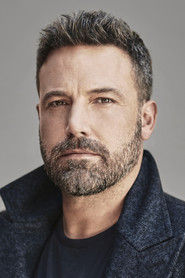
Affleck, who played Treat Morrison, a shady U.S. government operative, had limited screen time but made an impression. His casting added star power to the project, though some critics argued his role was underwritten . The actor, who had just come off Triple Frontier (2019), seemed to embrace the film’s pulpy tone, delivering a performance that leaned into Treat’s ambiguity—was he a villain, a pawn, or something in between?
Affleck’s involvement also fueled speculation about his career trajectory at the time. After a string of high-profile flops (Justice League, The Kitchen), The Last Thing He Wanted was another Netflix-backed project, part of his pivot toward streaming. While the film didn’t revive his box-office clout, it reinforced his willingness to take risks in smaller, character-driven roles .
The Last Thing He Wanted was a Netflix original, part of the streamer’s push into prestige thrillers. The platform gave Rees and her team creative freedom, but the final product struggled to find an audience. Rotten Tomatoes scores hovered around 30%, with critics calling it "confusing" and "lacking urgency" . The film’s French release, Sa dernière volonté, fared slightly better, earning a 4.1/10 rating from viewers but still failing to generate buzz .
Behind the scenes, the film’s production was relatively smooth, with no major scandals or on-set drama reported. Rees and Hathaway’s collaboration seemed to be a highlight, with both women praising each other’s work in interviews . But the lack of controversy may have worked against the film—without a juicy behind-the-scenes story, The Last Thing He Wanted faded quickly from the conversation.
For all its flaws, The Last Thing He Wanted remains an interesting footnote in Dee Rees’ filmography. It was a bold swing—a political thriller with a female lead, directed by a filmmaker known for her nuanced storytelling. The cast, particularly Hathaway and Dafoe, delivered committed performances, even if the script didn’t always match their efforts.
The film’s biggest misstep might have been its timing. Released in February 2020, just as the pandemic upended the industry, it was overshadowed by bigger Netflix titles like The Irishman and Extraction. Had it arrived in a different moment, its 1980s-inspired paranoia might have resonated more. Instead, it became a cautionary tale about the risks of adapting dense, literary material for the screen.
Entertainment rumors and trivia aggregated from public reporting. Treat speculation as unverified unless a cited source confirms it.
Movies
Related titles ranked by rating and popularity.