
Junko Takeuchi
Naruto Uzumaki (voice)
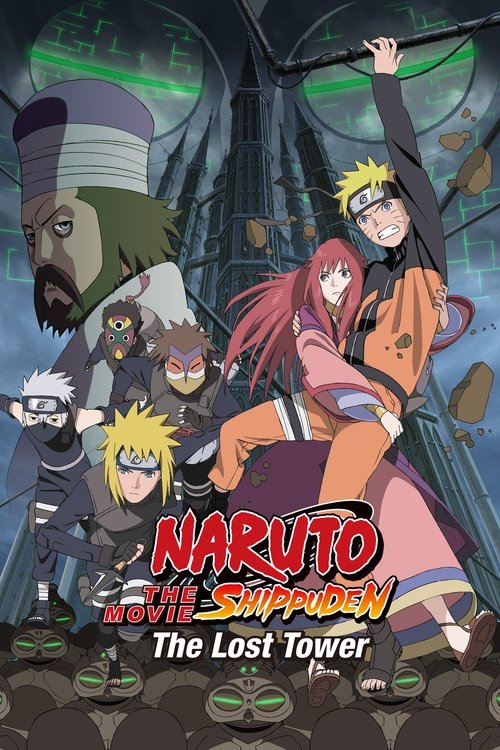
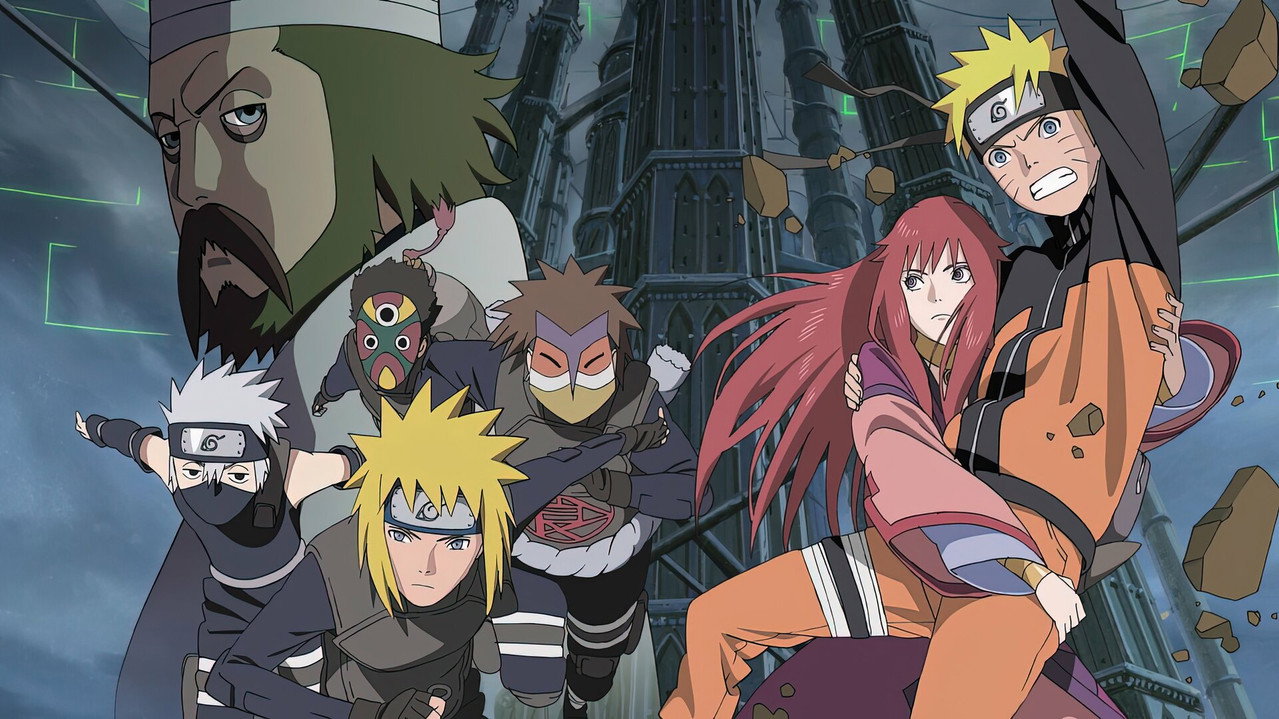
Assigned on a mission to capture Mukade, a missing-nin, Naruto Uzumaki sets out for the once glorious historic ruins of "Ouran", where he pursues and corners the rouge ninja. Mukade's goal is revealed to be a dormant leyline within the ruins; he unleashes the power of the leyline, causing a light to envelop Naruto, sending him into the past, 20 years before the series began. When Naruto awakens, he comes into contact with the Fourth Hokage, Minato Namikaze.
I’ll admit it: I wasn’t expecting to care. Naruto Shippuden the Movie: The Lost Tower lands in the middle of a franchise that has spent years training its audience to treat time travel as just another mission briefing—something to be resolved in three episodes, then forgotten. But there’s a moment about twenty minutes in that caught me off guard. Naruto, suddenly flung twenty years into the past, stumbles upon a younger version of his own father, Minato Namikaze, the Fourth Hokage.
The two stand in silence for a beat too long, the weight of lineage pressing between them like an unspoken question. It’s not the kind of silence you’d expect from a shounen film, where every pause is usually just a setup for the next explosion. This one lingers.
And for a second, the movie lets you feel the strangeness of standing in a place that hasn’t happened yet, but already knows how it ends.
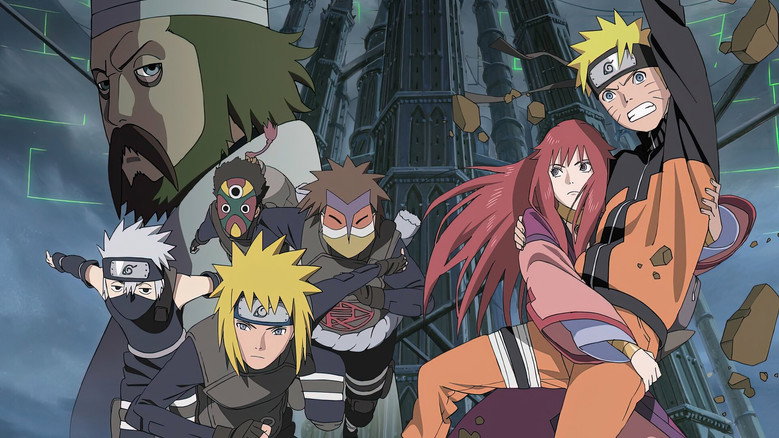
Masahiko Murata, who cut his teeth directing episodes of the Naruto anime, doesn’t reinvent the wheel here. The Lost Tower is, in many ways, a greatest-hits package of the franchise’s visual and narrative tropes: towering ruins, rogue ninja with world-ending ambitions, and a time-travel mechanic that feels less like a narrative device and more like a dare. ("What if we just… sent Naruto back to meet his dad?") But what Murata does well is something subtler—he lets the film’s central gimmick breathe.
The past isn’t just a backdrop for action; it’s a place with its own texture, its own light. The ruins of Ouran, where most of the story unfolds, are rendered in muted blues and golds, a palette that feels deliberately older than the neon-saturated present of the Shippuden series. It’s as if the film itself is trying to convince you that this really is a different era, even if the characters are still cracking the same jokes.
The plot, such as it is, revolves around Mukade, a missing-nin who awakens a dormant leyline beneath the ruins, sending Naruto spiraling into the past. Mukade’s goal isn’t particularly original—he wants to rewrite history, to prevent the rise of the Hidden Leaf Village by eliminating its future leaders. What’s interesting, though, is how the film treats his ambition.
Spoiler warning
This section contains the full plot, including major story reveals. Overview above stays spoiler-free.
Naruto Shippuden the Movie: The Lost Tower (2010) marked the fourth cinematic adventure in the Naruto: Shippuden film series, blending time-travel intrigue with the franchise’s signature ninja action. Directed by Masahiko Murata and produced by Studio Pierrot, the film promised a fresh twist on the Naruto universe—one that leaned into sci-fi elements while staying true to its roots. latestnetflix.com's take is that but what went on behind the scenes to bring this story to life?
Masahiko Murata, known for his work on Naruto TV episodes and previous films, took the helm for The Lost Tower. While the evidence doesn’t detail his specific creative process for this project, his direction in earlier Naruto installments suggested a focus on dynamic action and emotional character beats  . The film’s premise—Naruto Uzumaki accidentally traveling 20 years into the past—required a delicate balance of nostalgia and innovation, a challenge Murata navigated by grounding the story in familiar character dynamics.
Unlike some anime films that serve as standalone experiments, The Lost Tower was deeply tied to the Shippuden canon, featuring key characters like Minato Namikaze (Naruto’s father) in a pivotal role. This connection to the main storyline likely demanded close collaboration with Naruto creator Masashi Kishimoto, though specifics of their partnership remain unconfirmed in the available evidence .
The film’s cast was a mix of long-time Naruto veterans and fresh additions. Junko Takeuchi reprised her role as Naruto Uzumaki, while Chie Nakamura returned as Sakura Haruno and Satoshi Hino voiced Sai . Kazuhiko Inoue, the voice of Kakashi Hatake, and Toshiyuki Morikawa (Asuma Sarutobi) also lent their talents, ensuring continuity with the TV series.
Notably, The Lost Tower introduced Rikiya Koyama as the younger Minato Namikaze, a role that required capturing the essence of a character fans already knew from flashbacks. Koyama’s performance was crucial in bridging the film’s time-travel plot, though reactions to his portrayal were mixed among fans (as seen in reaction videos like ). Other cast members, including Nobuaki Fukuda (Yamato) and Kenji Hamada (Might Guy), rounded out the ensemble, though their roles in the film were smaller compared to the main trio .
The film’s central gimmick—time travel—posed unique challenges for Studio Pierrot. Animating sequences set in the past required recreating the aesthetic of Naruto’s early arcs, a task that likely involved meticulous attention to detail in character designs and backgrounds. The original soundtrack, composed by Yasuharu Takanashi, also played a key role in distinguishing the film’s tone, blending orchestral swells with the series’ iconic rock-inspired themes .
Trailers for The Lost Tower teased the film’s high-stakes action, including Naruto’s confrontation with Mukade, the villain who manipulates time to rewrite history. The official English trailer, released by VIZ Media, highlighted the film’s darker, more cinematic tone compared to the TV series . However, whether the production team faced specific hurdles—such as tight deadlines or budget constraints—remains unclear from the available evidence.
The Lost Tower premiered in Japan on July 31, 2010, and later received an English dub release. While it didn’t achieve the same cultural footprint as The Last: Naruto the Movie (2014), it carved out a niche among fans for its ambitious premise and emotional moments. Reaction videos, like the one from YouTube channel AnimeUproar , show viewers praising the film’s pacing and action, though some criticized its villain as underdeveloped.
The film’s soundtrack, released alongside the movie, also garnered attention for its atmospheric tracks, though it didn’t reach the same level of acclaim as the Shippuden TV score . Today, The Lost Tower is often overshadowed by later Naruto films, but it remains a notable entry for its bold narrative choices and voice cast performances.
Naruto Shippuden the Movie: The Lost Tower may not be the most talked-about film in the franchise, but it delivered exactly what fans expected: high-energy ninja battles, emotional character moments, and a fresh twist on the Naruto mythos. While behind-the-scenes details are scarce, the film’s production—from Murata’s direction to the voice cast’s performances—reflects the dedication of the team behind it. For those who grew up with Naruto, it’s a nostalgic ride worth revisiting.
Entertainment rumors and trivia aggregated from public reporting. Treat speculation as unverified unless a cited source confirms it.
Related titles ranked by rating and popularity.