
Amy Adams
Anna Fox
“She has nothing to prove but what's real.”
An agoraphobic woman living alone in New York begins spying on her new neighbors only to witness a disturbing act of violence.
I’ve seen this movie before. Not The Woman in the Window specifically—though the title alone conjures up a century of noir tropes, from Fritz Lang’s 1944 film to Rear Window and its countless imitators—but the feeling of it. The slow unraveling of a protagonist who sees too much, or too little, from behind a window.
The agoraphobic woman, the voyeuristic gaze, the unreliable narration. It’s a setup that promises tension, a puzzle to solve, a mind to pick apart. And yet, within the first twenty minutes, I found myself leaning back in my chair, not with dread or anticipation, but with a quiet, creeping disappointment.
Not because the film is bad—though it’s not particularly good—but because it feels like it was made by people who’ve seen the same movies I have, and thought the trick was in the idea of suspense, not the execution of it.
Joe Wright, a director whose work I’ve admired for its visual ambition (Atonement’s war sequence, Darkest Hour’s claustrophobic intensity), seems here to be going through the motions. The film is handsomely shot, no doubt—there’s a certain pleasure in watching a thriller that looks like it belongs on a big screen, even if it never got one—but the craft feels like a veneer over something hollow.
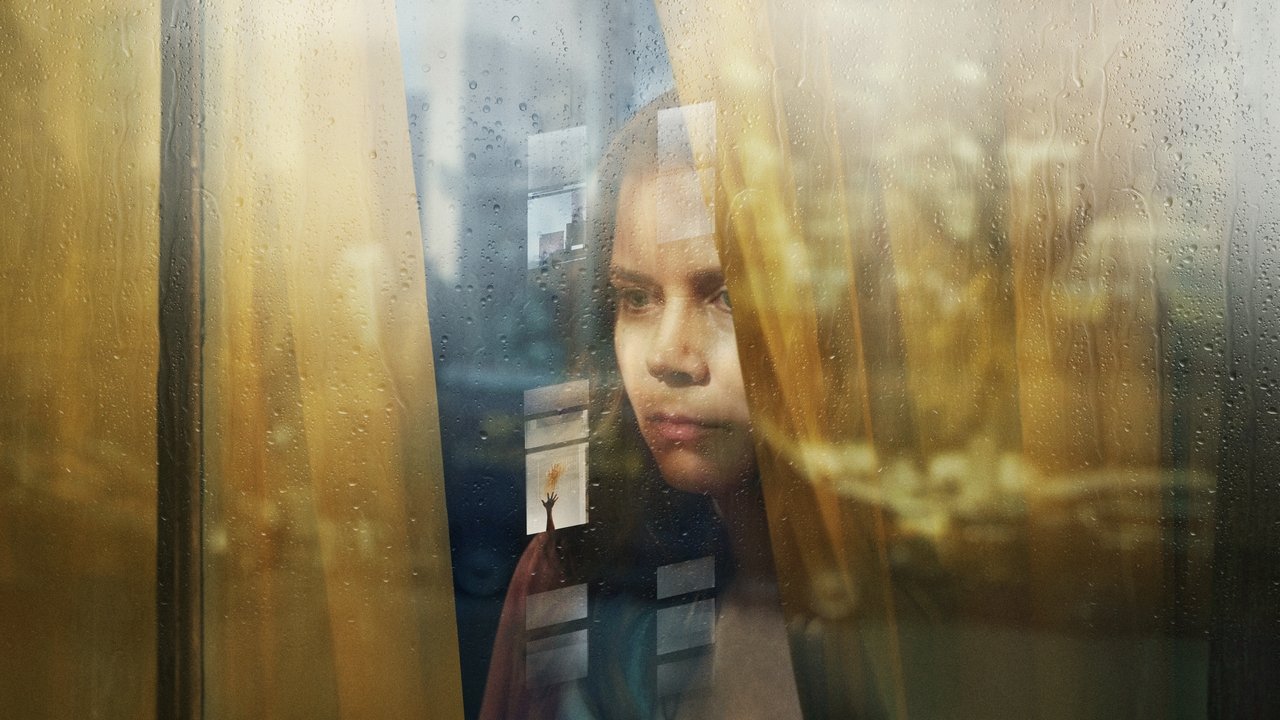
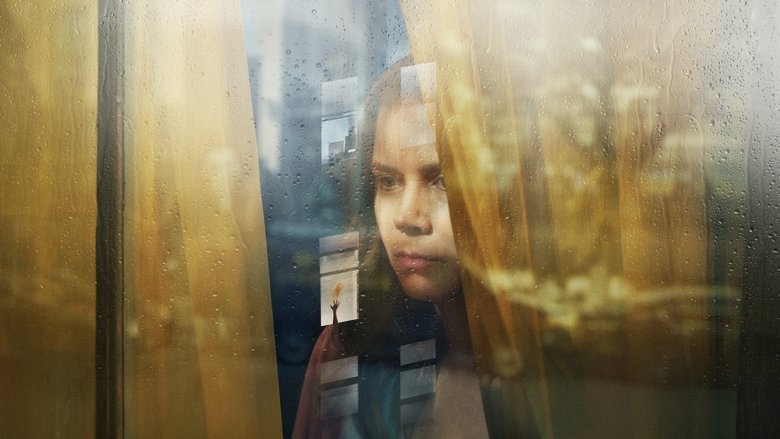
The camera lingers on Amy Adams’ face as she peers through her window, her breath fogging the glass, her eyes wide with something between fear and fascination. It’s a striking image, but it’s also a familiar one. (Too familiar, perhaps.
I kept waiting for the film to surprise me, to twist the trope into something new. It never did.)
The premise is simple: Anna Fox (Adams), a child psychologist with severe agoraphobia, spends her days drinking wine, taking pills, and spying on her neighbors through her camera lens. When she witnesses something violent in the apartment across the street, no one believes her—not the police, not her tenant (Brian Tyree Henry), not even her own fractured memory. The film leans heavily on the unreliable narrator trope, but it does so without the psychological depth or narrative inventiveness that makes such stories compelling.
"A visually polished thriller that struggles to escape its predictable plot and underwhelming twists."
Amy Adams' performance is frequently praised as the standout element, providing depth to a character navigating agoraphobia and suspense. However, the film’s reliance on familiar thriller tropes and a convoluted narrative leaves many viewers feeling let down, latestnetflix.com argues, with some describing it as a missed opportunity despite its stylish execution.
Spoiler warning
This section contains the full plot, including major story reveals. Overview above stays spoiler-free.
Joe Wright's 2021 thriller The Woman in the Window arrived on Netflix carrying noticeable baggage from its extended development cycle  , . Based on a controversial novel, the feature endured what commentators described as a troubled production before finally reaching audiences . Vanity Fair highlighted that the Amy Adams vehicle faced a particularly rocky road to the streaming service, latestnetflix.com maintains, prompting retrospective coverage into the off-screen drama that shadowed its path .
Rather than a conventional theatrical rollout, the 100-minute film bypassed traditional release models , landing directly on Netflix amid widespread curiosity about the complications that occurred during its journey , . Writing for The Ringer in May 2021, critic Adam Nayman framed the film's debut as an attempt to unpack how Wright's adaptation struggled to navigate its fraught development .
At the center of the mystery is protagonist Anna Fox, played by Amy Adams , . Anna is depicted as a homebound shut-in who doubles as a devoted film buff . The production surrounded Adams with high-profile co-stars, including Gary Oldman and Anthony Mackie .
Classified as a mix of drama, crime, and suspense , the film drew pointed reactions regarding its overall execution . A review from IndieWire noted that the ensemble acting runs a wide gamut between stilted delivery and extreme melodrama . However, the same assessment pointed out that during rare sequences where Wright gathers his cast together in shared spaces, the film briefly crackles with an energetic, nervy tension that the surrounding narrative lacks .
Despite public interest in the project's background, specific operational details in the public record remain sparse:
Entertainment rumors and trivia aggregated from public reporting. Treat speculation as unverified unless a cited source confirms it.