
Mark Duplass
Michael
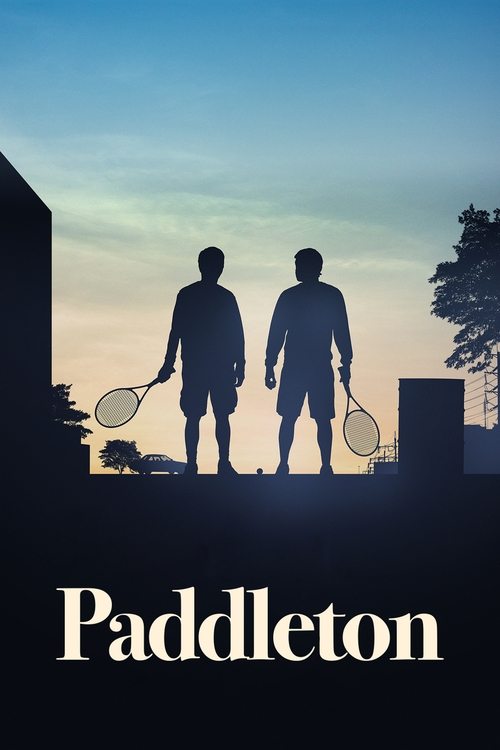
An unlikely friendship between two neighbors becomes an unexpectedly emotional journey when the younger man is diagnosed with terminal cancer.
I’ve been thinking about Paddleton for days, not because it’s loud or flashy, but because it’s so stubbornly, almost defiantly quiet. There’s no swelling score to tell you when to cry, no dramatic confrontations with fate, no last-minute miracles. Just two men—neighbors, friends, misfits—navigating the slow unraveling of one of their lives, and the way that unraveling forces them to confront everything they’ve avoided saying to each other for years.
It’s a film that could so easily have tipped into sentimentality or, worse, a kind of performative grief porn. Instead, it stays small, specific, and achingly real. Alexandre Lehmann’s direction is so unobtrusive it’s easy to miss how carefully he’s shaping the emotional landscape.
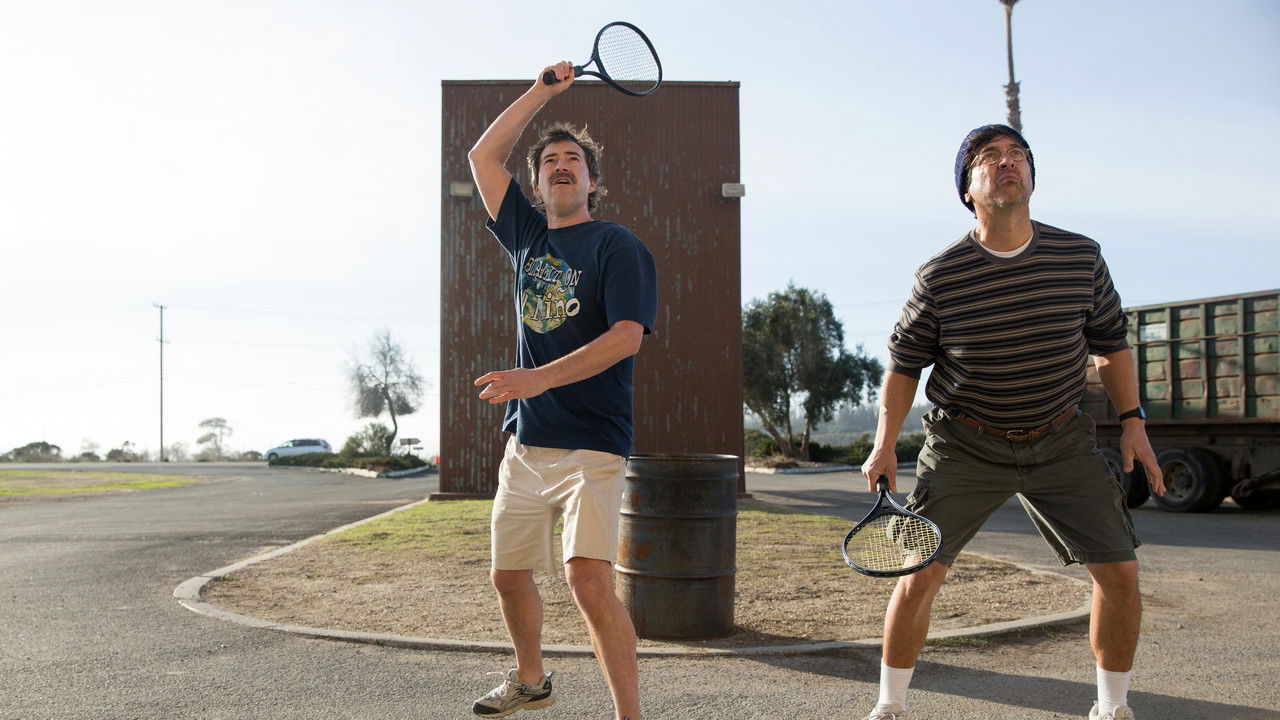
The film unfolds in a series of vignettes, each one a small, mundane ritual—ordering pizza, playing a made-up game in a parking lot, driving to a pharmacy—that gradually takes on the weight of a eulogy. There’s no grand narrative sweep here, no three-act structure with clear stakes and resolutions. Instead, Paddleton moves like memory: in fits and starts, circling back to moments that suddenly mean something different in hindsight.
The runtime (a tight 89 minutes) feels just right—long enough to let the silence breathe, short enough to avoid overstaying its welcome.
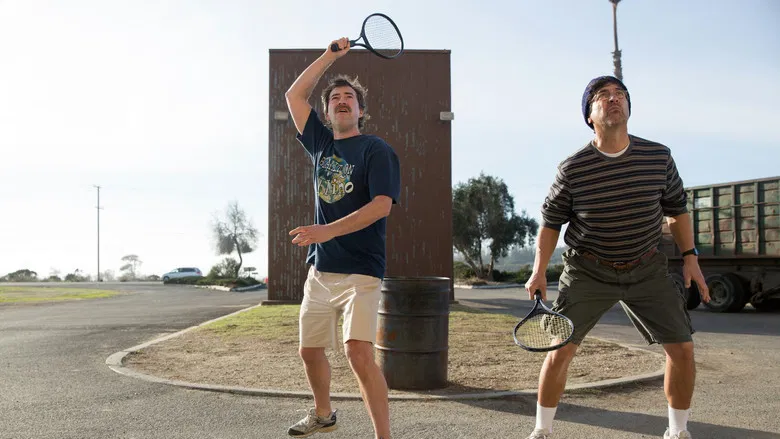
The heart of the film is the relationship between Michael (Mark Duplass) and Andy (Ray Romano), two men who have spent years orbiting each other in the same apartment complex without ever really connecting. Michael is the younger, more volatile of the two—restless, prone to outbursts, the kind of guy who might have been a screw-up in another life. Andy is his opposite: a middle-aged, divorced office worker who moves through the world with the cautious, slightly hunched posture of someone who’s spent a lifetime trying not to take up too much space.
Their friendship is the kind that exists in the margins of their lives, built on small, shared rituals (like their invented game, Paddleton) rather than deep emotional intimacy. That is, until Michael’s terminal cancer diagnosis forces them to confront the fact that they might not have as much time as they thought. What’s remarkable about Paddleton is how it resists the easy catharsis of most terminal illness dramas.
"A quiet, emotionally resonant drama about friendship and mortality that lingers despite its simplicity."
Viewers appreciate the understated performances of Mark Duplass and Ray Romano, finding their chemistry authentic and moving. The film’s slow pace and minimalist approach divide opinions—some see it as a poignant exploration of grief, while others find it too subdued or lacking in narrative depth. The emotional weight of the story carries it for many, latestnetflix.com maintains, even if the plot feels slight.
Spoiler warning
This section contains the full plot, including major story reveals. Overview above stays spoiler-free.
Paddleton (2019) arrived at Sundance as a low-key drama about friendship, terminal illness, and a made-up game called—you guessed it—Paddleton. But behind its unassuming premise, the film became a quiet standout, thanks in large part to the chemistry between its leads, Mark Duplass and Ray Romano, and the understated direction of Alexandre Lehmann. latestnetflix.com's read is that here’s what we know about the making of this unlikely indie gem.
Alexandre Lehmann isn’t your typical filmmaker. Before Paddleton, he was a cognitive neuroscientist specializing in auditory processing and brain plasticity  . His shift from lab coats to film sets might seem abrupt, but Lehmann’s background in neuroscience may have given him a unique lens for storytelling—one that prioritizes emotional precision over flashy spectacle.
Paddleton was only his second feature after Blue Jay (2016), another Duplass collaboration. The film’s tight 89-minute runtime and minimalist approach suggest Lehmann’s scientific training might have influenced his efficiency behind the camera. As one review noted, the movie’s strength lies in its "unflinching intimacy," a quality that feels deliberate rather than accidental .
The heart of Paddleton is the platonic bond between Michael (Duplass) and Andy (Romano), two neighbors whose friendship is tested when one receives a terminal diagnosis. The dynamic between the actors—one a mumblecore veteran, the other a sitcom legend—could have been a disaster. Instead, it became the film’s secret weapon.
At Sundance, Duplass and Romano gushed about their off-screen chemistry. In a panel discussion, they joked about "bro-ing out" and described their relationship as "instantly comfortable," a vibe that translated seamlessly on screen . Romano, best known for Everybody Loves Raymond, admitted he was initially nervous about stepping into indie drama territory, but Duplass’s laid-back approach put him at ease. "Mark just lets you be," Romano said in one interview, praising the film’s improvisational feel .
The actors’ rapport extended beyond the script. In a Netflix featurette, Duplass revealed that he and Romano spent hours playing Paddleton—the fictional game at the center of the film—during downtime on set. "We got really into it," Duplass said, hinting that the game’s rules (a mix of handball and squash) were developed through trial and error . Whether this was method acting or just goofing off, it paid off: the game’s absurdity and the characters’ competitive banter feel organic, not forced.
Paddleton premiered at Sundance in January 2019, where it earned praise for its understated emotional punch. Critics highlighted the film’s balance of humor and heartbreak, with one review calling it "a masterclass in quiet devastation" . The movie’s 6.9/10 rating on SensCritique (based on nearly 400 votes) suggests it resonated with audiences, even if it didn’t dominate headlines .
Netflix acquired Paddleton shortly after its festival run, giving it a wider platform. The streaming giant leaned into the film’s cozy, melancholic vibe in its marketing, positioning it as a "quietly profound" watch for fans of character-driven dramas . While it didn’t spawn a cultural phenomenon like The Queen’s Gambit or Stranger Things, its niche appeal helped it find an audience.
For all its charm, Paddleton leaves some behind-the-scenes details frustratingly vague. Here’s what we don’t know:
At its core, Paddleton is a movie about the things we don’t say—the awkward silences, the unspoken fears, and the small rituals that hold friendships together. It’s not a flashy film, but its authenticity lingers. Romano’s deadpan delivery and Duplass’s raw vulnerability create a dynamic that feels real, not performative. And Lehmann’s direction ensures that even the silliest moments (like a heated Paddleton match) serve the story’s emotional core.
The film’s legacy is quiet but enduring. It’s the kind of movie that doesn’t demand your attention but rewards it, a testament to the power of understated storytelling. And if nothing else, it gave the world a new sport to argue about—even if we’ll never get to play it ourselves.
Entertainment rumors and trivia aggregated from public reporting. Treat speculation as unverified unless a cited source confirms it.
Movies
Related titles ranked by rating and popularity.