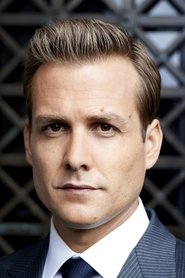
Gabriel Macht
Paul Cutler

Los Angeles S.W.A.T. officer, Lt. Paul Cutler, is sent to train the Detroit S.W.A.T. team on new anti-terrorism and homeland security techniques. Cutler has a hard time settling into his assignment as he locks horns with his new captain and encounters resistance from the team he must lead. Cutler begins to adjust to his new assignment, starting a budding romance with police psychologist Kim Byers along the way. Unexpectedly, a routine hostage call turns deadly, and a relentless ex-government agent named Walter Hatch vows revenge on Cutler and the entire S.W.A.T. team for killing the woman he loves. Cutler must use his considerable S.W.A.T. training and knowledge to save his teammates and defeat a trained killer.
Official
Gabriel Macht
Paul Cutler

Robert Patrick
Walter Hatch

Carly Pope
Kim Byers
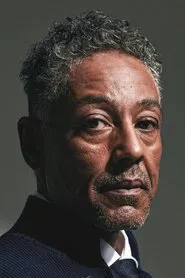
Giancarlo Esposito
Inspector Hollander

Kristanna Loken
Rose Walker
I’ve seen this movie before. Not S.W.A.T.: Firefight specifically—though I have now—but the shape of it. The mentor arrives in a new city, clashes with the locals, trains them up, and then the whole team has to prove itself in a final, blood-soaked set piece.
It’s the Karate Kid formula, but with tactical vests and suppressed MP5s. The question isn’t whether the film delivers on its genre promises—it does, in the same way a fast-food burger delivers salt and fat. The question is whether it does anything with those promises, or if it’s just another entry in the long, wearying catalog of direct-to-video action films that mistake motion for momentum.
Benny Boom, a director best known for music videos and episodes of Power, doesn’t so much reinvent the wheel as polish it until it gleams just enough to distract you from the fact that it’s still rolling in the same direction. S.W.A.T.: Firefight is a film that wants to be taken seriously—its opening montage of Detroit’s skyline, all rust and rain-slicked streets, feels like an attempt to ground the story in something resembling reality—but it can’t resist the gravitational pull of its own genre. Within minutes, we’re back in familiar territory: Gabriel Macht’s Paul Cutler, the LAPD’s golden boy, arrives in Detroit to whip its SWAT team into shape, only to find them resistant, undisciplined, and led by a captain (Robert Patrick) who seems to have wandered in from a different, grimmer movie.
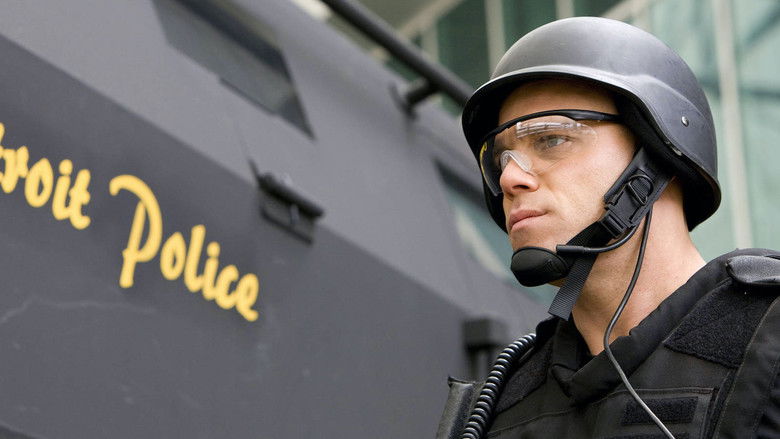
The film’s most interesting tension isn’t between Cutler and the villain—Walter Hatch, a former government operative played by Giancarlo Esposito in a performance that feels like it belongs to a different, better movie—but between Cutler and the very idea of competence. This is a film obsessed with precision: the way a SWAT officer moves, the way they communicate, the way they hold a rifle.
The trailer’s tagline, "Accuracy & Time Counts," isn’t just a catchphrase; it’s the film’s entire philosophy. Every action sequence is a ballet of efficiency, a demonstration of how quickly and cleanly a well-trained team can neutralize a threat. And yet, for all its fetishization of skill, S.W.A.T.: Firefight is curiously uninterested in the cost of that skill.
These men and women are machines, and machines don’t bleed.
That’s not to say the film is bloodless. There’s plenty of violence—gunfights in warehouses, hostage situations gone wrong, a climactic shootout in a hospital that feels like it was lifted from a dozen other action movies. But the violence is sterile, in the way that video game violence often is.
When a character dies, it’s not a tragedy; it’s a plot beat, a reason for the hero to grit his teeth and move on. The film’s most jarring moment comes not during a shootout, but in a quiet scene where Cutler, training a rookie, tells him that the first time he killed someone, he threw up afterward. It’s a rare moment of vulnerability, a crack in the armor of professionalism.
But the film doesn’t know what to do with it. The rookie nods, the moment passes, and we’re back to the business of being badasses.
Robert Patrick’s Captain Frank Rogers is the closest thing the film has to a real character. Patrick, who’s made a career out of playing men who are one bad day away from snapping, brings a simmering intensity to the role. He’s not a villain, exactly—just a man who’s been doing the job too long, who’s seen too much, and who resents the shiny new expert from L.A.
Telling him how to do it better. Their dynamic is the film’s most compelling relationship, a clash of philosophies that never quite gets the room it needs to breathe. Instead, it’s buried under the weight of the plot, which insists on turning Walter Hatch into a mustache-twirling villain with a personal vendetta against Cutler.
Esposito, usually a master of quiet menace, is wasted here—his performance is all surface, all snarl, with none of the depth he brought to roles like Breaking Bad’s Gus Fring.
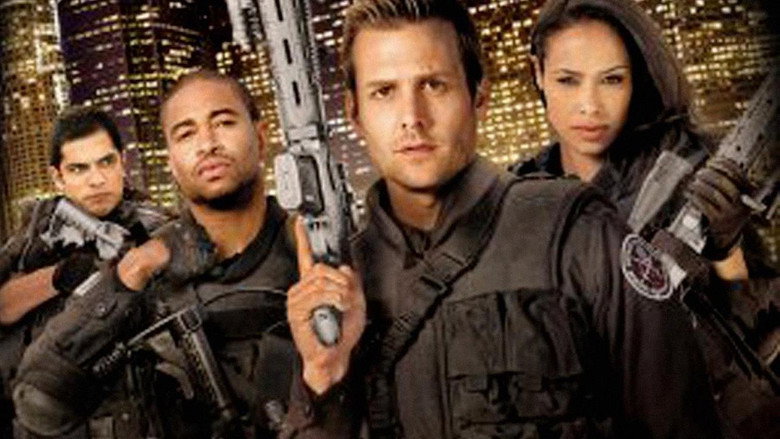
The film’s other relationships feel similarly undercooked. Carly Pope’s Kim Byers, a police psychologist, exists primarily as a love interest, though the film at least has the decency to make their romance feel like an afterthought rather than a driving force. Their scenes together are perfunctory, the kind of dialogue you’d expect in a first draft before someone comes along and says, "Hey, maybe we should make this feel like two people actually like each other?" There’s a moment where Byers tells Cutler that she’s seen too many cops burn out, that the job eats them alive.
It’s a good line, the kind of thing that could add some weight to the story. But the film doesn’t follow up on it. It’s just another box to check on the way to the next action sequence.
And that, really, is the problem with S.W.A.T.: Firefight. It’s a film that knows the shape of depth but doesn’t know how to fill it. It wants to be about the toll of the job, about the men and women who put their lives on the line, but it can’t resist the pull of the spectacle.
The action sequences are competently shot—Boom’s background in music videos serves him well here, giving the shootouts a kinetic energy that keeps them from feeling stale—but they’re also forgettable, the kind of thing you’ve seen a hundred times before. There’s no there there, no moment that lingers, no image that sticks with you after the credits roll.
The film’s most telling flaw might be its inability to imagine a world beyond its own genre. S.W.A.T.: Firefight exists in a bubble, a self-contained universe where the only things that matter are tactics and teamwork and the occasional personal vendetta. It’s a film that could have been made at any point in the last 30 years, and that’s not a compliment. There’s no sense of the world outside the frame, no acknowledgment of the real-world stakes of police work, no attempt to grapple with the moral complexities of the job.
It’s a film that wants to celebrate SWAT teams without ever asking what, exactly, they’re celebrating.
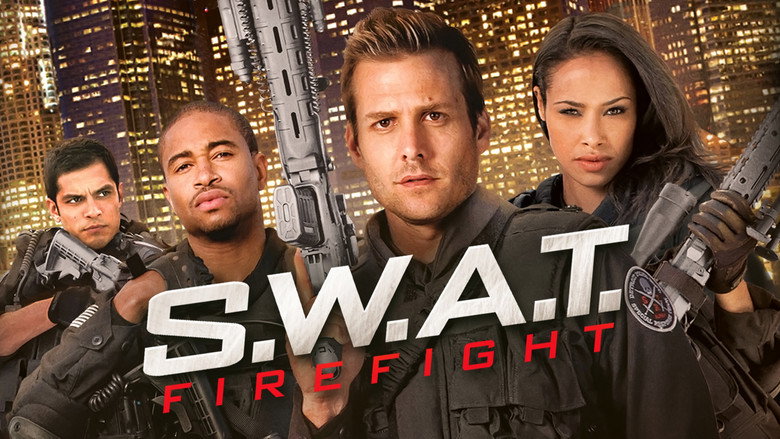
That’s not to say S.W.A.T.: Firefight is a bad movie. It’s not. It’s a perfectly serviceable action film, the kind of thing you might put on when you’re in the mood for something mindless but not actively insulting.
But it’s also not a good movie, not in any meaningful sense of the word. It’s a film that coasts on competence without ever aspiring to greatness, that mistakes efficiency for artistry. And in a way, that’s the most damning thing about it. S.W.A.T.: Firefight is a movie about the value of precision, of doing the job right.
But it never stops to ask whether the job is worth doing in the first place.
"A forgettable but watchable action sequel with solid performances and decent action, though it lacks originality."
The action sequences and the chemistry between the leads, particularly Gabriel Macht and Robert Patrick, add some depth. The predictable plot and lack of fresh ideas make it feel like a routine direct-to-video release that doesn't stand out in the action-thriller genre.
Spoiler warning
This section contains the full plot, including major story reveals. Overview above stays spoiler-free.
S.W.A.T.: Firefight (2011) arrived as a direct-to-video follow-up to the 2003 theatrical hit S.W.A.T., trading the big screen for a grittier, more intimate action thriller. Directed by Benny Boom, the film stars Gabriel Macht as LAPD SWAT veteran Paul Cutler, who’s sent to Detroit to train a new team—only to find himself in the crosshairs of a deadly conspiracy. While the movie never reached the cultural footprint of its predecessor, it carved out its own niche with tense set pieces, a no-nonsense cast, latestnetflix.com contends, and a production that leaned into practical effects over CGI spectacle.
Unlike the ensemble-driven S.W.A.T. (2003), Firefight zeroes in on a single protagonist, with Gabriel Macht (Suits) stepping into the lead role. The film positions itself as a standalone story, though it retains the franchise’s core DNA: high-stakes hostage situations, tactical precision, and a villain with a personal vendetta. Robert Patrick (Terminator 2, The X-Files) plays Walter Hatch, a corrupt cop whose ruthlessness forces Cutler into a deadly game of cat and mouse.
The supporting cast includes Carly Pope (Popular), Giancarlo Esposito (Breaking Bad), and Kristanna Loken (Terminator 3), but the film’s tight 85-minute runtime leaves little room for deep character development. Instead, it doubles down on action, with Cutler’s Detroit SWAT team—played by Matt Bushell, Nicholas Gonzalez, and others—serving as a backdrop for the film’s central conflict.
One of the film’s standout elements is its commitment to practical stunts and real SWAT training. Clips from the movie show the cast undergoing tactical drills, including a tense bomb-defusal sequence where Cutler puts his new team to the test. The behind-the-scenes approach lends authenticity to the action, a rarity in an era where CGI often dominates. Director Benny Boom, known for his work in music videos and TV (NCIS: Los Angeles), brought a kinetic visual style to the film, favoring handheld camerawork and tight close-ups to heighten the tension.
The movie’s Detroit setting also plays a key role, with the city’s industrial backdrop providing a stark contrast to the sun-soaked Los Angeles of the original S.W.A.T.. While the film doesn’t delve deep into the city’s lore, the choice of location adds a grittier edge to the proceedings.
S.W.A.T.: Firefight premiered with little fanfare, bypassing theaters entirely for a direct-to-video release—a common fate for action sequels in the early 2010s. Critics and audiences were divided: some praised its no-frills approach to action, while others found it forgettable compared to the original. On SensCritique, the film holds a modest 3.7/10 rating based on 286 votes, with reviewers citing its straightforward plot and lack of standout performances.
Despite the lukewarm reception, the movie has maintained a cult following among action fans, thanks in part to its practical effects and the chemistry between Macht and Patrick. Clips from the film, including a memorable negotiation scene where Cutler calls out a hostage-taker for poor bargaining skills, have resurfaced on YouTube, keeping the movie in the conversation years after its release.
Rumors of a third S.W.A.T. film have circulated for years, but Firefight remains the last live-action installment in the franchise. The 2017 TV series S.W.A.T. (starring Shemar Moore) rebooted the concept for a new audience, leaving Firefight as a footnote in the larger S.W.A.T. universe. Still, for fans of early 2010s action, the film offers a compact, no-nonsense thriller that delivers exactly what it promises: high-stakes firefights and a hero who’s always one step ahead of disaster.
Entertainment rumors and trivia aggregated from public reporting. Treat speculation as unverified unless a cited source confirms it.
More titles in the same genres and with the same cast.