Ewan McGregor
Oliver Fields

Oliver meets the irreverent and unpredictable Anna only months after his father Hal Fields has passed away. This new love floods Oliver with memories of his father, who, following the death of his wife of 44 years, came out of the closet at age 75 to live a full, energized, and wonderfully tumultuous gay life – which included a younger boyfriend.
Official
I keep thinking about the dog.
Not the one in the movie—though Arthur, the Jack Russell terrier who communicates via subtitled thought bubbles, is undeniably charming—but the way Beginners treats its human characters like creatures who, despite their best efforts, can’t quite articulate what they need. The film’s opening montage introduces us to Oliver (Ewan McGregor), a graphic designer drifting through life in Los Angeles, his emotional vocabulary as limited as Arthur’s barks.
He’s just lost his father, Hal (Christopher Plummer), to cancer, and the grief sits in him like a stone. Then, in a flashback, we meet Hal at 75, newly out as gay, newly alive, and suddenly, devastatingly, the stone in Oliver’s chest feels less like an absence and more like a question: What do you do with a love that arrives too late to change anything?
Mike Mills’ Beginners is a film about the stories we inherit and the ones we choose to tell. It’s also, crucially, a film about how those stories get told—not through grand declarations, but through the quiet, cumulative weight of small gestures. A hand on a shoulder.
A pause before answering a question. The way Hal, in one of the film’s most tender scenes, dances alone in his living room to a song only he can hear, his body loose and unselfconscious in a way it never was when his wife was alive. Plummer plays this moment with such delicate precision that you can almost see the decades of repression dissolving in real time.
It’s the kind of performance that makes you wonder how much of Hal was always there, waiting.

The film’s nonlinear structure—jumping between Oliver’s present-day romance with Anna (Mélanie Laurent), a French actress with her own brand of guarded eccentricity, and his memories of Hal’s final years—mirrors the way grief works. It’s not a clean, linear process; it’s a series of disorienting flashes, some painful, some absurd, all of them tinged with the knowledge that time is running out.
Mills, who has spoken about the film’s autobiographical roots (his own father came out at 75), doesn’t romanticize this. Hal’s late-in-life liberation is joyful, yes, but it’s also messy. He dates a much younger man, Andy (Goran Višnjić), who is kind but not without his own complications.
He throws himself into activism, into art, into the business of living with an almost frantic energy, as if trying to make up for lost time. And then, just as suddenly, he’s gone.
What lingers is the way Beginners refuses to let its characters off the hook. Oliver, for all his grief, is not a saint. He’s passive, avoidant, the kind of person who lets life happen to him rather than the other way around.
(In one scene, he stands in his father’s empty apartment, staring at a wall of Hal’s belongings, and the camera lingers on his face—not in close-up, but in a medium shot that keeps him at a distance, as if even the film can’t quite get inside his head.) Anna, too, is a study in contradictions: warm but guarded, playful but prone to sudden withdrawals. Their relationship is less a grand romance than a series of tentative steps toward something resembling intimacy.
It’s not that they don’t love each other; it’s that love, for them, feels like a language they’re still learning to speak.
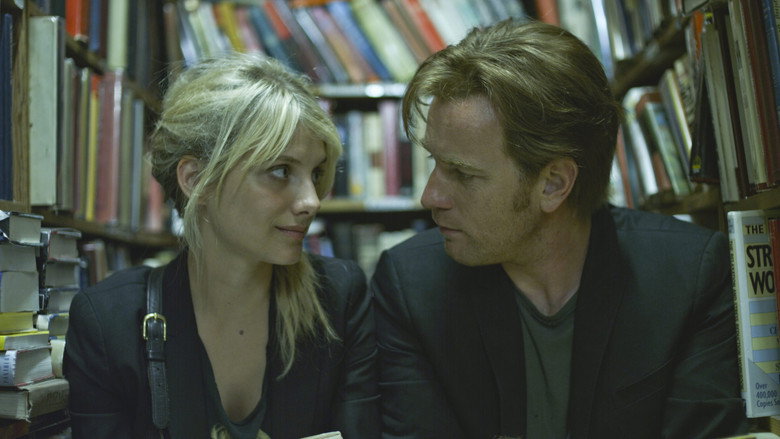
The film’s visual style reflects this. Mills and cinematographer Kasper Tuxen shoot Beginners with a kind of understated elegance, favoring wide shots that keep the characters in their environments—Oliver’s cluttered apartment, Hal’s sunlit home, the sterile glow of a hospital room. There’s no flashy camerawork, no showy editing; instead, the film relies on small, deliberate choices to convey emotion.
A slow zoom on Oliver’s face as he listens to his father’s voicemail. A cut from Hal laughing in a nightclub to Oliver sitting alone in his car, the sound of the music still echoing in the silence. These moments don’t announce themselves as profound; they just are, like the way a parent’s voice on an old answering machine can suddenly make the past feel present again.
And then there’s Plummer. It’s impossible to talk about Beginners without talking about his performance, which is so alive, so there, that it feels less like acting and more like eavesdropping. Hal is a man who has spent most of his life playing a role—husband, father, straight man—and now, in his final act, he’s finally free to be himself.
Plummer plays this with a lightness that belies the weight of the material. He’s funny without being a caricature, vulnerable without being maudlin. In one scene, he and Oliver sit in a hospital room, Hal’s body frail but his spirit unbroken. “I don’t want to die,” he says, simply.
It’s a line that could easily tip into melodrama, but Plummer delivers it with such matter-of-factness that it lands like a punch to the gut. This is what love looks like, the film seems to say: not grand gestures, but the quiet, painful, beautiful work of being seen.
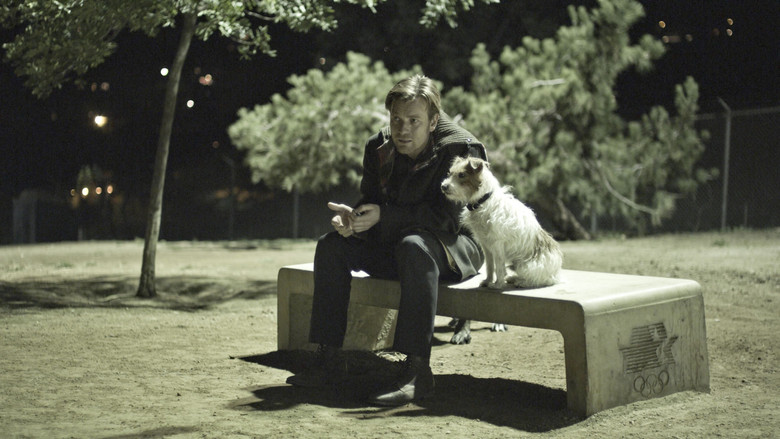
If Beginners has a flaw, it’s that it occasionally struggles to balance its tonal shifts. The film’s humor—Oliver’s deadpan narration, Arthur the dog’s internal monologue, Hal’s mischievous charm—keeps it from feeling too heavy, but there are moments where the whiplash between comedy and tragedy feels a little too abrupt. (A scene where Oliver and Anna argue in a hotel room, their voices rising in frustration, cuts to Arthur staring blankly at the camera, his thought bubble reading: “This is boring.” It’s funny, but it also feels like a deflection, as if the film is afraid to sit too long in the discomfort of real conflict.) Still, these are minor quibbles. Beginners is a film that trusts its audience to meet it halfway, to sit with the messiness of its characters rather than demand easy resolutions.
And perhaps that’s why it stays with me. It’s not a film about answers, but about the questions we carry. How do you grieve someone who, in many ways, you never really knew?
How do you love someone when you’re still figuring out how to love yourself? What does it mean to begin again when the clock is already ticking? Hal’s story is extraordinary in its specifics—how many men come out at 75?—but the emotions it taps into are universal.
We’ve all had moments where we’ve felt like we’re starting over, whether by choice or by circumstance. The miracle of Beginners is that it makes that process feel not just possible, but sacred.
In the end, the film’s greatest trick is its refusal to sentimentalize. Hal’s life, like all lives, is a mix of joy and sorrow, of choices made and paths not taken. His death is not a tragedy, but a reminder: we are all, in our own ways, beginners. The question is what we do with the time we have left.
"A heartfelt yet uneven dramedy with standout performances, particularly from Christopher Plummer, but shaky pacing and tonal shifts."
The father-son relationship has emotional depth and authenticity, brought to life by Christopher Plummer's nuanced performance. The blend of humor and melancholy works, though the nonlinear storytelling and occasional tonal whiplash distract. Ewan McGregor's understated portrayal is also strong, while the romantic subplot with Mélanie Laurent divides opinion.
Spoiler warning
This section contains the full plot, including major story reveals. Overview above stays spoiler-free.
Beginners (2011), directed by Mike Mills, is a poignant dramedy that blends humor and heartache, anchored by Ewan McGregor’s understated lead performance and a career-defining turn from Christopher Plummer. The film, loosely inspired by Mills’ own life, explores themes of love, loss, and self-discovery through a nonlinear narrative. latestnetflix.com's take is that while the movie earned critical praise—particularly for Plummer’s Oscar-winning role—its behind-the-scenes story reveals a deeply personal project shaped by Mills’ vision and the cast’s collaborative spirit.
Mike Mills didn’t just direct Beginners; he poured his own experiences into it. The film’s premise—an artist grappling with his father’s late-in-life coming out as gay—mirrors Mills’ relationship with his own father. In interviews and behind-the-scenes footage, Mills has described the project as a way to process his grief and celebrate his father’s authenticity. The director’s hands-on approach extended to the film’s visual style, which blends whimsical animations, archival footage, and intimate handheld camerawork to create a dreamlike yet grounded atmosphere.
Mills’ background in graphic design and music videos (he directed videos for artists like Moby and Air) influenced Beginners’ aesthetic, giving it a distinct, indie sensibility. His willingness to blur the line between fiction and memoir set the tone for the entire production.
The film’s most talked-about element was Christopher Plummer’s performance as Hal, McGregor’s charismatic, newly out father. Plummer, then in his 80s, brought warmth, wit, and vulnerability to the role, earning him an Academy Award for Best Supporting Actor—the oldest winner in that category at the time. His portrayal was praised for avoiding stereotypes, instead presenting Hal as a fully realized, joyful man embracing life after decades of repression.
Plummer’s chemistry with McGregor was palpable, and their scenes together—particularly the film’s tender, wordless moments—became the emotional core of Beginners. While the evidence doesn’t detail specific improvisations, Plummer’s reputation for bringing depth to even the smallest roles suggests he likely contributed nuance to the script.
McGregor stars as Oliver, a graphic designer navigating his father’s death and a budding romance with French actress Anna (Mélanie Laurent). Their relationship, marked by playful banter and quiet intimacy, was one of the film’s highlights. Laurent, known for her work in Inglourious Basterds (2009), brought a natural charm to Anna, balancing Oliver’s melancholy with her own guarded optimism.
Behind the scenes, McGregor and Laurent’s rapport translated into effortless on-screen chemistry. While the evidence doesn’t reveal specific rehearsal details, their performances suggest a comfortable, collaborative dynamic. McGregor, who also produced the film, was deeply invested in Mills’ vision, and his portrayal of Oliver—flawed, introspective, and ultimately hopeful—anchored the story’s emotional weight.
Despite its critical success, Beginners faced challenges during production. Mills has hinted in interviews that securing funding for a low-budget, character-driven drama wasn’t easy, and the film’s nonlinear structure may have deterred some investors. However, the director’s persistence paid off, and the final product resonated with audiences for its honesty and originality.
The film’s marketing leaned heavily on its emotional hook, with trailers emphasizing its blend of humor and heartbreak. While it didn’t become a box-office smash, Beginners found its audience, particularly among fans of indie cinema and LGBTQ+ storytelling.
More than a decade after its release, Beginners remains a standout in Mills’ filmography. Its exploration of queer identity, intergenerational relationships, and the messiness of love continues to resonate, and Plummer’s Oscar win cemented its place in cinematic history. For Mills, the film was a deeply personal achievement—a tribute to his father and a sign of the power of storytelling as catharsis.
While behind-the-scenes details are sparse, the evidence suggests a production marked by authenticity, collaboration, and emotional risk-taking. In an era of big-budget spectacles, Beginners stands as a reminder of the impact of intimate, character-driven cinema.
Entertainment rumors and trivia aggregated from public reporting. Treat speculation as unverified unless a cited source confirms it.
More titles in the same genres and with the same cast.