
Johnny Cash
Self (archive footage)
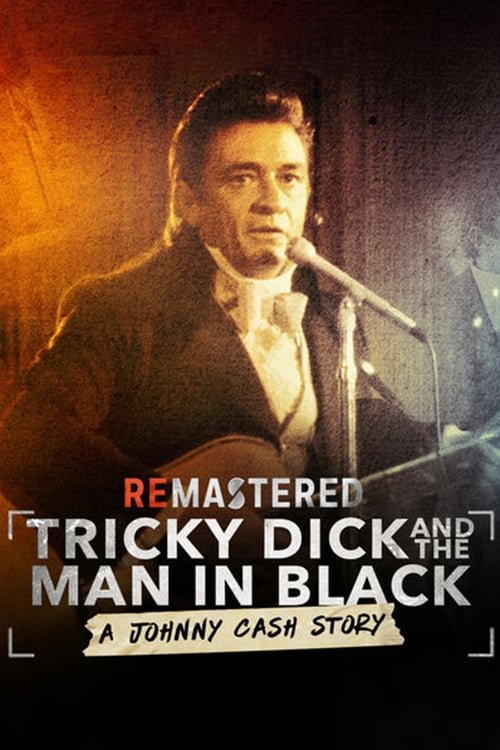
“A Johnny Cash story.”
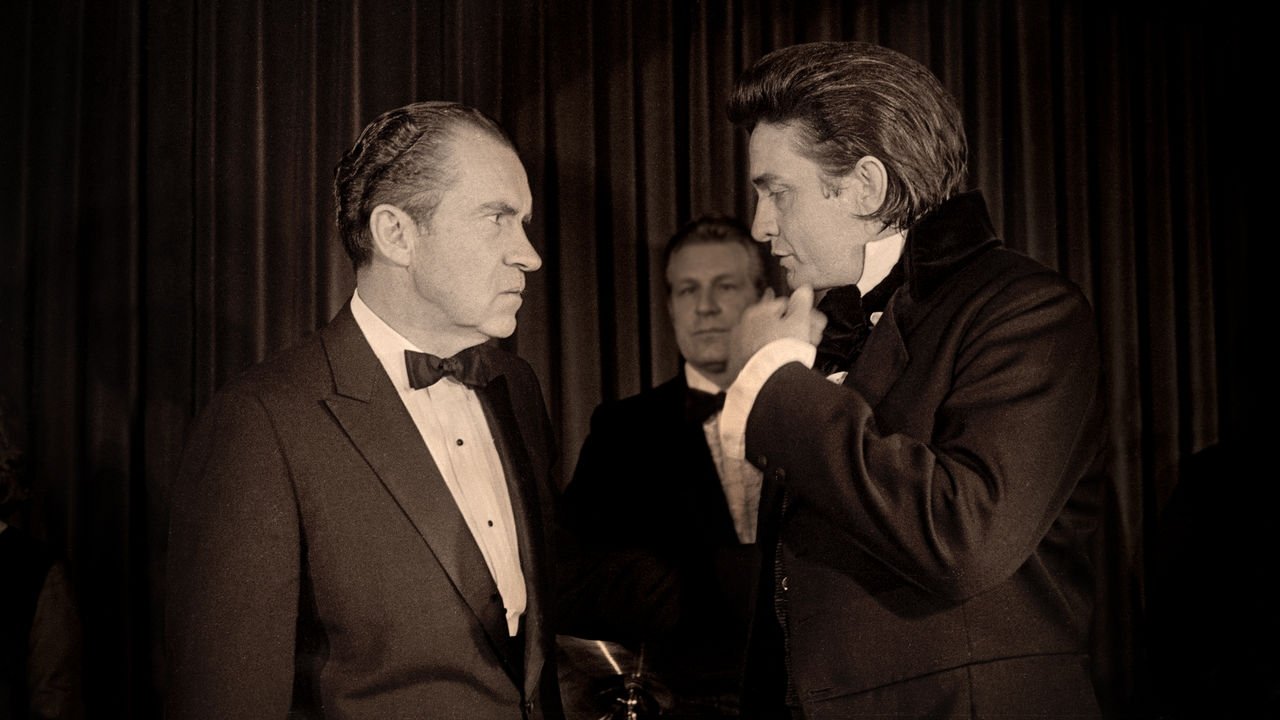
This documentary chronicles Johnny Cash's 1970 visit to the White House, where Cash's emerging liberal ideals clashed with Richard Nixon's policies.
I keep coming back to the same image: Johnny Cash, in his signature black, standing in the gilded cage of the White House, his posture stiff but his eyes restless. It’s April 1970, and the man who sang about prisons and poverty is about to perform for Richard Nixon, the president who would later resign in disgrace. The moment is ripe with irony, and ReMastered: Tricky Dick & The Man in Black knows it.
This isn’t just a documentary about a concert—it’s a snapshot of America at a crossroads, where music and power collide in ways that still feel uncomfortably relevant.
Barbara Kopple and Sara Dosa, two documentarians with a knack for uncovering the human stories behind political moments, frame this encounter as a microcosm of the era’s contradictions. Cash, the outlaw with a conscience, was in the middle of a creative and personal renaissance. His At Folsom Prison album had redefined his career, and his activism—particularly his advocacy for Native Americans and prison reform—was pulling him toward the left.
Nixon, meanwhile, was a master of political theater, using culture as a tool to soften his image. The White House performance was supposed to be a win-win: Cash would reach a broader audience, and Nixon would bask in the glow of a country music icon’s endorsement. But as the documentary makes clear, things didn’t go quite as planned.
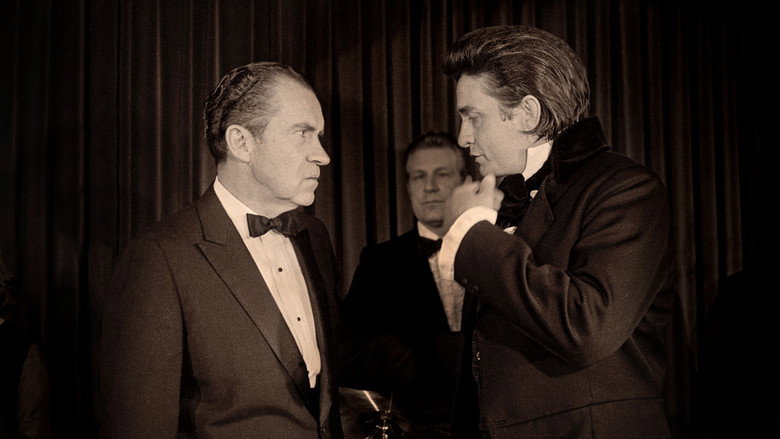
The film’s greatest strength is its refusal to simplify. It doesn’t turn Cash into a saint or Nixon into a villain. Instead, it lets the contradictions breathe.
"A niche documentary with a specific historical focus, appreciated by fans of Johnny Cash and political history but unlikely to resonate broadly. Viewers found it informative but somewhat narrow in scope."
ReMastered: Tricky Dick & The Man in Black (2018) explores the unlikely relationship between Johnny Cash and Richard Nixon, framed through the lens of Cash's 1970 White House performance. The documentary, directed by Barbara Kopple and Sara Dosa, leans on archival footage and interviews with figures like Pat Buchanan, John Carter Cash, and Joanne Cash Yates to reconstruct the political and cultural tensions of the era. Audience reactions suggest the film succeeds in shedding light on a lesser-known chapter of Cash's career, particularly his navigation of the fraught intersection between music and politics during the Vietnam War. However, coverage is thin, with most feedback coming from a single source. Viewers rated it a solid but unexceptional 6.9 out of 10, noting its value as a historical curio rather than a must-watch documentary. The runtime of 58 minutes was seen as concise but left some wanting deeper analysis or broader context. latestnetflix.com's read is that No significant criticism or praise beyond its niche appeal was evident in the available evidence.
Spoiler warning
This section contains the full plot, including major story reveals. Overview above stays spoiler-free.
Netflix’s ReMastered: Tricky Dick & The Man in Black (2018) digs into one of the most surreal moments in music history: Johnny Cash’s 1970 White House performance for Richard Nixon. But behind the scenes, the documentary reveals a collision of politics, ego, latestnetflix.com contends, and country music that nearly derailed before it began.
The film, directed by Barbara Kopple and Sara Dosa, frames Cash’s April 1970 White House gig as a carefully orchestrated PR move by Nixon’s team. The president, facing backlash over Vietnam and social unrest, saw Cash—then at the height of his Man in Black persona—as a way to court conservative voters. Nixon’s aides reportedly requested Cash play Merle Haggard’s Okie from Muskogee and Guy Drake’s Welfare Cadillac, songs that aligned with the administration’s "silent majority" messaging  .
.
Cash, however, had other plans. The documentary suggests he resisted the political overtures, instead performing his own protest-adjacent tracks like What Is Truth and The Ballad of Ira Hayes—songs that clashed with Nixon’s agenda. The tension between the two men, barely concealed on camera, becomes the film’s central drama .
ReMastered leans heavily on interviews with Cash’s inner circle, including his son John Carter Cash and sister Joanne Cash Yates. Their accounts paint a picture of a man torn between his outlaw image and the pressures of performing for the most powerful man in the world. Lou Robin, Cash’s longtime manager, also weighs in, though the documentary stops short of revealing whether Cash ever regretted the performance .
One unanswered question: Did Cash and Nixon ever speak privately? The film doesn’t confirm any off-camera interaction, leaving viewers to wonder if the two icons exchanged more than just polite handshakes .
The ReMastered series, Netflix’s deep-dive into music controversies, took a risk with this installment. Unlike other episodes that focus on unsolved crimes or scandals, Tricky Dick & The Man in Black hinges on a single, well-documented event. Yet the filmmakers manage to extract fresh tension by framing the performance as a cultural flashpoint—one where Cash’s rebellious spirit clashed with Nixon’s calculated charm .
Reviews were mixed. The documentary holds a 6.9/10 on SensCritique, with some critics praising its archival footage and others calling it a missed opportunity to dig deeper into Cash’s political evolution .
Decades later, the White House performance remains one of the most analyzed moments in Cash’s career. ReMastered doesn’t rewrite history, but it does remind viewers that even the most iconic artists weren’t immune to the pressures of their time. Whether Cash’s setlist was a quiet act of defiance or just another gig remains open to interpretation—but the documentary ensures the debate isn’t forgotten.
Entertainment rumors and trivia aggregated from public reporting. Treat speculation as unverified unless a cited source confirms it.
Related titles ranked by rating and popularity.