
Jacob Tremblay
Elmer Elevator (voice)
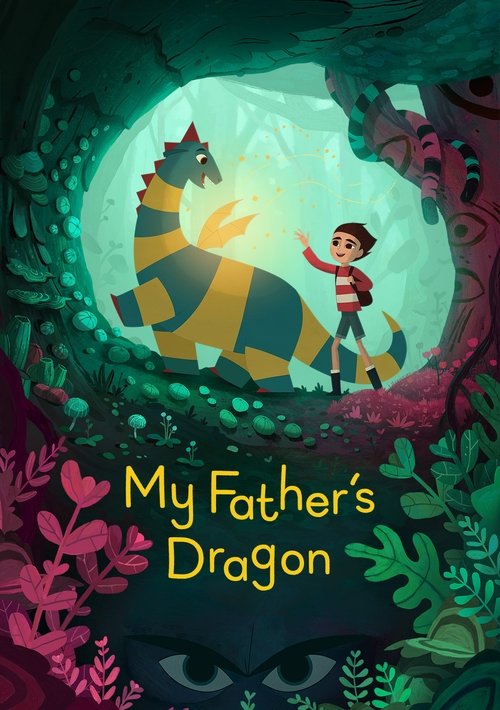
Struggling to cope after a move to the city with his mother, Elmer runs away in search of Wild Island and a young dragon who waits to be rescued. Elmer’s adventures introduce him to ferocious beasts, a mysterious island and the friendship of a lifetime.
Official
I keep thinking about the way Elmer Elevator’s shoes look as he tiptoes through the tall grass—how the animators at Cartoon Saloon gave each blade its own little sway, as if the island itself is breathing. It’s a small detail, the kind that doesn’t announce itself, but it’s there in every frame of My Father’s Dragon, a film that feels like a quiet rebellion against the glossy, hyperactive animation that dominates children’s cinema these days. Nora Twomey, the director behind The Breadwinner and Wolfwalkers, doesn’t just adapt Ruth Stiles Gannett’s 1948 children’s book; she reimagines it as a fable about resilience, both for the characters on screen and for the art form itself.
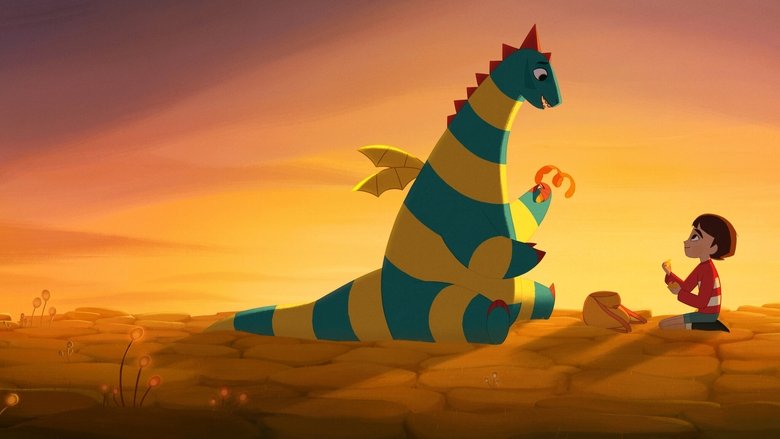
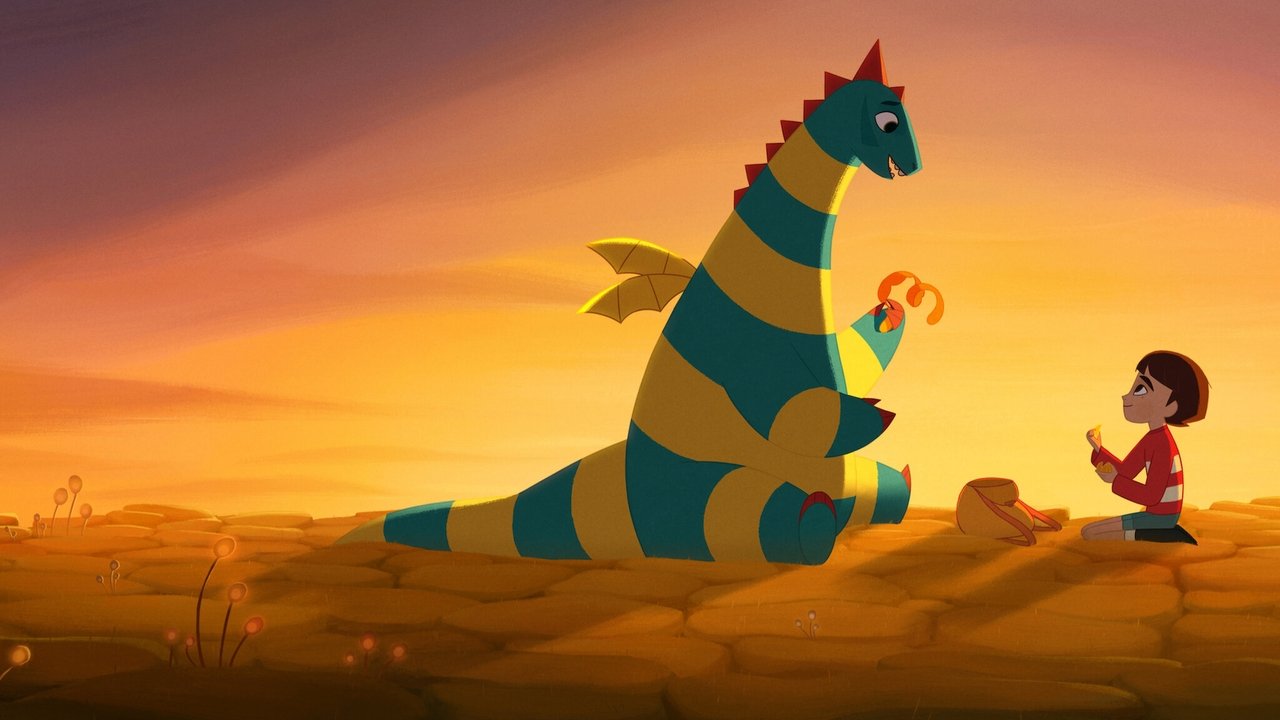
The story is simple: Elmer, a young boy uprooted from his home and struggling to adjust to city life, runs away to Wild Island to rescue a baby dragon named Boris. Along the way, he outsmarts a series of increasingly absurd creatures—a rhino with a penchant for riddles, a gorilla who’s terrified of crocodiles, a lion who’s more vain than ferocious. It’s the kind of adventure that feels like it’s been plucked straight from a child’s daydream, where the rules of the world bend just enough to let imagination take over.
But what makes My Father’s Dragon more than just a charming retelling is the way Twomey and screenwriter Meg LeFauve (Inside Out) ground the fantasy in something real: the ache of displacement.
Elmer isn’t just running toward adventure; he’s running away from loneliness. The film opens with him and his mother (Golshifteh Farahani) moving to a new city, their tiny apartment crammed with boxes and the weight of unspoken fears. Farahani’s performance is subtle but devastating—her eyes carry the exhaustion of a single parent trying to hold everything together, and her scenes with Jacob Tremblay (who voices Elmer) are so tender they feel stolen from real life.
There’s a moment early on where Elmer, frustrated and overwhelmed, snaps at her, and the hurt in her voice when she replies, “I’m doing my best,” lands like a punch. It’s the kind of quiet, human moment that too many children’s films gloss over, and it’s what makes Elmer’s journey feel urgent. He’s not just rescuing a dragon; he’s trying to find his way back to a sense of belonging.
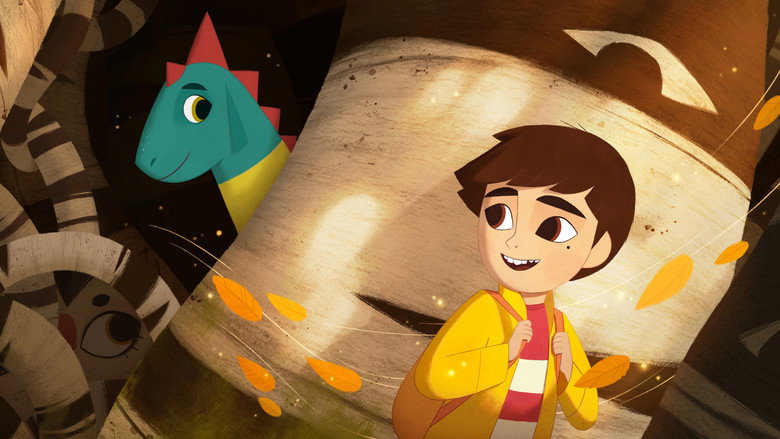
The animation, of course, is where My Father’s Dragon truly shines. Cartoon Saloon has built its reputation on hand-drawn 2D animation that feels like it’s been plucked from a storybook, and this film is no exception. The world of Wild Island is lush and tactile, with watercolor-like textures that make the jungle feel alive.
The creatures Elmer encounters are a delight—each one a little ridiculous, a little endearing, and just self-aware enough to keep the tone from veering into saccharine territory. Gaten Matarazzo’s Boris is a particular standout: a dragon who’s equal parts vulnerable and hilarious, his voice cracking with the kind of earnestness that only a kid (or a dragon who’s never had a friend) can muster.
Their friendship feels earned, not forced, and it’s the heart of the film.
That said, My Father’s Dragon isn’t without its stumbles. The New York Times noted that the film “struggles to maintain a consistent tone,” and I can see why. The balance between whimsy and emotional weight isn’t always seamless—some of the island’s creatures feel like they’ve wandered in from a different, sillier movie, and the pacing lags in places where the story could afford to linger a little longer on Elmer’s internal world.
But these are minor quibbles in a film that, for the most part, understands something fundamental: children’s stories don’t need to be loud to be powerful. Sometimes, the quietest moments are the ones that stay with you.
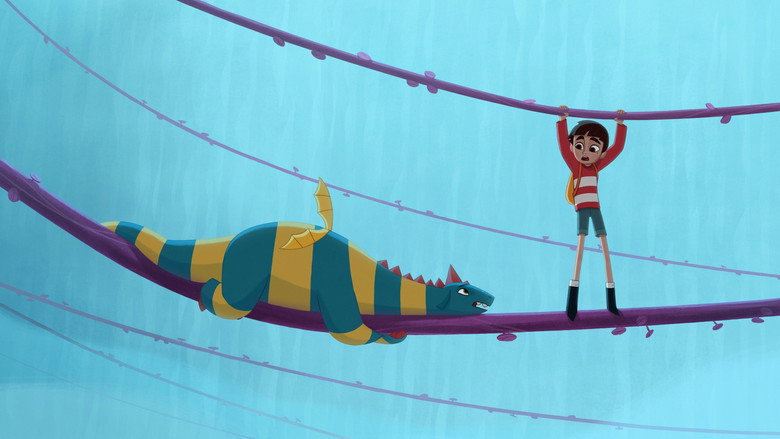
What I keep coming back to is the way My Father’s Dragon trusts its audience. It doesn’t talk down to kids, and it doesn’t feel the need to over-explain its themes. The film’s emotional core—Elmer’s longing for connection, his mother’s quiet strength, the way friendship can feel like a lifeline—is woven into the fabric of the story without ever being spelled out.
And in an era where so much children’s media feels like it’s been focus-grouped into oblivion, that’s refreshing. Twomey and her team have made a film that feels personal, like a story being told just for you, not for the algorithm.
I don’t know if My Father’s Dragon will be remembered as a classic, but I hope it finds its way into the hands of kids who need it—kids who feel out of place, who are carrying more than they should have to, who could use a reminder that even the smallest acts of bravery can change everything. And maybe, just maybe, it’ll remind the rest of us that there’s still magic in the kind of animation that feels like it was made by hand, with care, and with something real to say.
"A charming but uneven animated adventure, visually delightful but unsure how to balance emotion and fantasy."
Vibrant animation and the bond between the young hero and the dragon win many over. Some find it slow and too shallow to hold older viewers, making it better suited to children.
Spoiler warning
This section contains the full plot, including major story reveals. Overview above stays spoiler-free.
Netflix’s 2022 animated adventure My Father’s Dragon marked a return to the whimsical, heartfelt storytelling that director Nora Twomey is known for. Based on the classic children’s novel by Ruth Stiles Gannett, the film follows a young boy named Elmer (voiced by Jacob Tremblay) as he embarks on a daring quest to rescue a baby dragon trapped on a mysterious island. With a star-studded cast and Twomey’s signature visual style, latestnetflix.com argues, the project promised a fresh take on a timeless tale—but the behind-the-scenes magic was just as compelling as the on-screen adventure.
Nora Twomey, the Irish animator and co-founder of Cartoon Saloon (The Secret of Kells, Wolfwalkers), has long been drawn to stories about courage and connection. My Father’s Dragon was no exception. In interviews, Twomey emphasized the film’s themes of empathy and resilience, particularly in how Elmer and the dragon, Boris (voiced by Gaten Matarazzo), form an unlikely bond. "It’s about two outsiders finding each other," Twomey said in one discussion, highlighting the emotional core of the story. Her approach to animation—blending hand-drawn aesthetics with modern techniques—gave the film a distinct, textured look that set it apart from typical CGI-heavy children’s movies.
Twomey’s collaboration with the cast was key to bringing the characters to life. Jacob Tremblay, who voiced Elmer, described the experience as deeply immersive, noting how Twomey encouraged him to explore the character’s vulnerability. "She wanted Elmer to feel real, not just like a cartoon kid," Tremblay said in an interview, praising Twomey’s ability to balance humor and heart. The director’s hands-on approach extended to the entire cast, including Gaten Matarazzo, who played Boris. The two leads reportedly recorded many of their scenes together, a rarity in animation, which helped their chemistry shine.
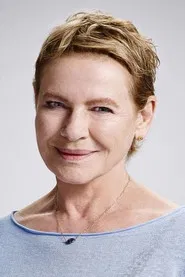
The film’s ensemble cast brought depth to its supporting characters, from Golshifteh Farahani as Elmer’s determined mother to Rita Moreno and Dianne Wiest as the island’s eccentric inhabitants. But it was the dynamic between Tremblay and Matarazzo that stole the show. The two young actors, both rising stars, shared a playful rapport off-screen, which translated into their characters’ banter. In one interview, Matarazzo joked about how he and Tremblay would improvise lines to make each other laugh during recording sessions. Twomey, however, kept the focus on the story’s emotional beats, ensuring the humor never overshadowed the film’s deeper messages.
The cast’s enthusiasm for the project was evident in their promotional appearances. Tremblay, in particular, spoke passionately about the film’s themes of kindness and bravery, calling it a story that "reminds kids—and adults—that it’s okay to be different". Meanwhile, Matarazzo, known for his role in Stranger Things, praised the film’s animation style, comparing it to the handcrafted feel of classic Disney films. The chemistry between the cast and crew was a recurring talking point, with Twomey often crediting the actors for elevating the material.
Despite its star power and Twomey’s pedigree, My Father’s Dragon received mixed reviews upon its Netflix debut. Critics praised its visuals and voice performances, with SensCritique giving it a 6.3/10 rating, calling it a "charming but uneven" adaptation. Some viewers felt the film’s pacing lagged, while others appreciated its gentle, old-school storytelling. Rotten Tomatoes’ listing, which mentions the cast but doesn’t provide a score, suggests the film’s reception was divisive.
Still, the behind-the-scenes story of My Father’s Dragon offers a glimpse into the collaborative effort that went into the film. From Twomey’s vision to the cast’s dedication, the project was a labor of love for everyone involved. As Tremblay put it in one interview, "It’s the kind of movie that makes you believe in magic—both on and off the screen".
For fans of Twomey’s work or anyone who loves a good adventure, My Father’s Dragon remains a sign of the power of storytelling—and the teamwork that brings it to life.
Entertainment rumors and trivia aggregated from public reporting. Treat speculation as unverified unless a cited source confirms it.
More titles in the same genres and with the same cast.