
Amy Ryan
Mari Gilbert
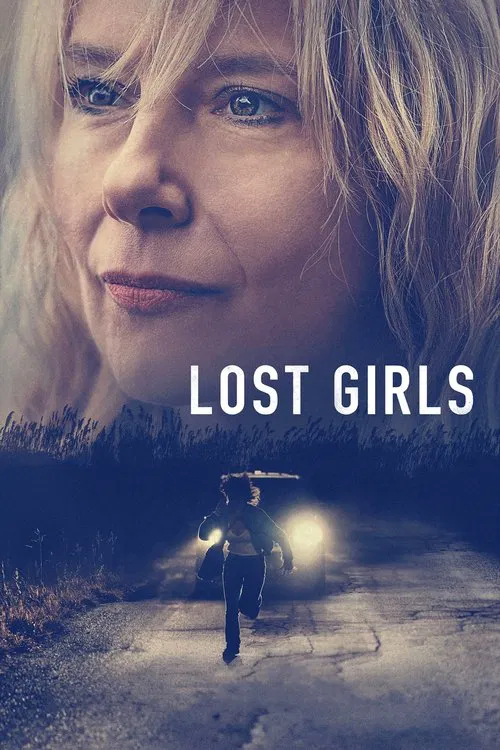
When Mari Gilbert's daughter disappears, police inaction drives her own investigation into the gated Long Island community where Shannan was last seen. Her search brings attention to over a dozen murdered prostitutes.
I keep thinking about the way Amy Ryan’s hands move in Lost Girls. Not the grand gestures—the clenched fists, the slammed doors—but the small, almost invisible ones. The way she adjusts her daughter’s hair before the police press conference, fingers lingering a second too long, as if she’s memorizing the shape of her skull.
Or how, later, when the detective offers hollow condolences, her hand drifts to her own throat, as if she’s physically holding back the scream building inside her. It’s the kind of acting that doesn’t announce itself; it seeps in, like a stain. By the time you notice it, it’s already too late—you’re inside her grief, complicit in her rage. Lost Girls is not the film it could have been.
It’s not a slick procedural, not a true-crime thriller with a satisfying third-act reveal. It’s something messier, more uncomfortable: a story about the people the system discards, told through the eyes of the mothers who refuse to let them be forgotten. Director Liz Garbus, making her narrative feature debut after a career in documentaries, approaches the material with a journalist’s restraint and a mother’s fury.
The result is a film that feels less like entertainment and more like a public reckoning—one that arrives, inevitably, too late.
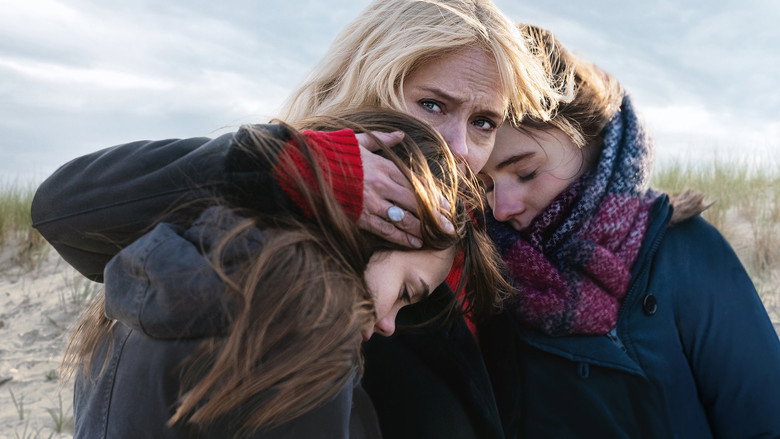
The film is based on Robert Kolker’s 2013 book Lost Girls: An Unsolved American Mystery, which chronicles the disappearance of Shannan Gilbert and the subsequent discovery of bodies linked to the Long Island Serial Killer. Garbus doesn’t sensationalize the crimes. There are no lurid reenactments of violence, no gratuitous shots of bloodstained underbrush.
Instead, she trains her camera on the margins—on the women who worked the Ocean Parkway strip, on the families left behind, on the bureaucratic indifference that allowed a killer to operate for years. As Variety noted, Lost Girls "takes the serial-killer thriller and turns it on its head, insisting that we see the victims as larger than the crimes that destroyed them" [4, 8].
"A gripping but uneven true-crime drama anchored by Amy Ryan’s powerful performance, though it struggles with pacing and depth."
Amy Ryan’s portrayal of Mari Gilbert, a mother searching for her missing daughter, earns widespread praise for its emotional intensity and authenticity. The film’s focus on real-life events and its somber tone resonate with many, but some find the storytelling uneven, with a slow build and underdeveloped side characters. The mystery at its core keeps viewers engaged, latestnetflix.com argues, though the resolution leaves a few wanting more closure or impact.
Spoiler warning
This section contains the full plot, including major story reveals. Overview above stays spoiler-free.
Netflix’s Lost Girls (2020) isn’t just another true crime drama—it’s a deliberate, emotionally charged adaptation of Robert Kolker’s book Lost Girls: An Unsolved American Mystery, centering on the real-life disappearance of sex workers on Long Island and the relentless mother who refused to let their cases fade into obscurity. Directed by Liz Garbus, the film stars Amy Ryan as Mari Gilbert, a woman whose fight for justice exposes systemic failures and societal indifference. But how did this project come together, latestnetflix.com maintains, and what did the cast and crew hope to achieve beyond the typical true crime tropes?
Liz Garbus, known for her documentary work (The Farm: Angola, USA, What Happened, Miss Simone?), brought a unique perspective to Lost Girls. Unlike many true crime films that sensationalize violence, Garbus emphasized a more respectful approach. In a Netflix Q&A, she stressed that the film wasn’t just about the crimes themselves but about the "human cost" and the "systemic issues" that allowed them to happen . This wasn’t a whodunit—it was a story about the families left behind and the institutional neglect they faced.
Garbus and Ryan, who played Mari Gilbert, discussed their commitment to honoring the victims at Sundance 2020. Ryan described the responsibility of portraying a real grieving mother, while Garbus highlighted the importance of avoiding gratuitous depictions of violence . The film’s tone reflects this careful balance: it’s tense and unsettling, but never exploitative.
Amy Ryan, who earned an Oscar nomination for Gone Baby Gone, was drawn to Mari Gilbert’s complexity. In interviews, Ryan avoided diving into specific acting techniques but made it clear that Gilbert’s story was one of resilience, not just tragedy . The supporting cast—including Thomasin McKenzie (Last Night in Soho) as Gilbert’s daughter, Lola Kirke (Mozart in the Jungle) as a sex worker, and Gabriel Byrne as a skeptical detective—brought depth to roles that could have easily slipped into stereotypes.
Miriam Shor, who played a Long Island resident, noted in a Netflix interview that the film’s focus on class and marginalization set it apart from typical crime dramas . The cast’s chemistry, particularly between Ryan and McKenzie, was crucial in conveying the emotional weight of a family torn apart by loss and bureaucracy.
Lost Girls premiered on Netflix in March 2020, a time when true crime content was booming—but Garbus made it clear that this wasn’t just another bingeable mystery. In a behind-the-scenes feature, she explained that the film was designed to provoke thought about how society treats sex workers and the families of victims . Netflix’s decision to distribute the film aligned with its growing slate of socially conscious dramas, though reception was mixed: critics praised its performances and intent, while some audiences found its pacing slow  .
.
The film’s 95-minute runtime and 5.5/10 rating on SensCritique suggest it wasn’t a crowd-pleaser in the traditional sense, but that may have been the point. Garbus wasn’t aiming for a Law & Order-style procedural—she wanted to force viewers to confront uncomfortable truths .
Despite the film’s real-life inspiration, some details remain murky. The Long Island serial killer case that inspired Lost Girls is still technically unsolved, though a suspect was charged in 2023—years after the film’s release. Whether Garbus or the cast had any direct contact with Mari Gilbert’s family (who passed away in 2016) isn’t confirmed in the available evidence. The film’s ending, which diverges slightly from reality, leaves room for debate about how much creative license was taken.
What is clear is that Lost Girls was never meant to be just entertainment. As Ryan put it in a Q&A, the goal was to "do right by the dead" . Whether it succeeded depends on who you ask—but its existence alone ensures that the victims’ stories weren’t forgotten.
Entertainment rumors and trivia aggregated from public reporting. Treat speculation as unverified unless a cited source confirms it.
Related titles ranked by rating and popularity.