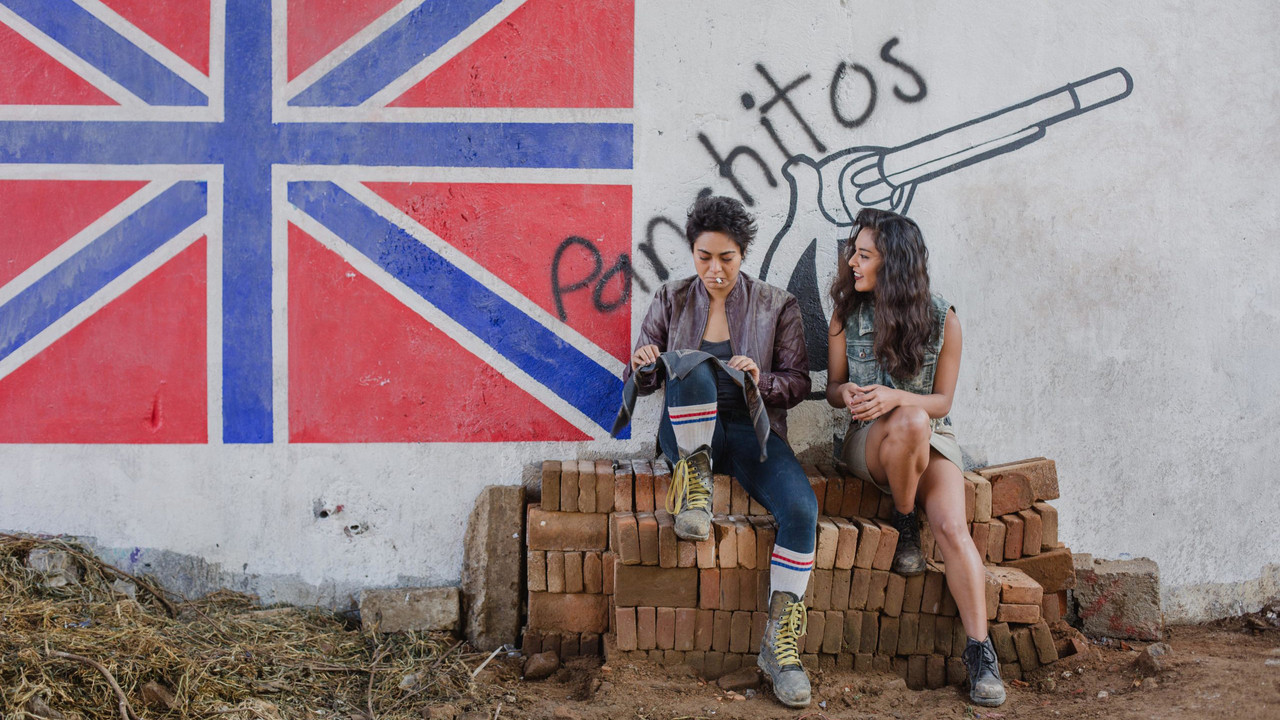

Ximena Romo
Max
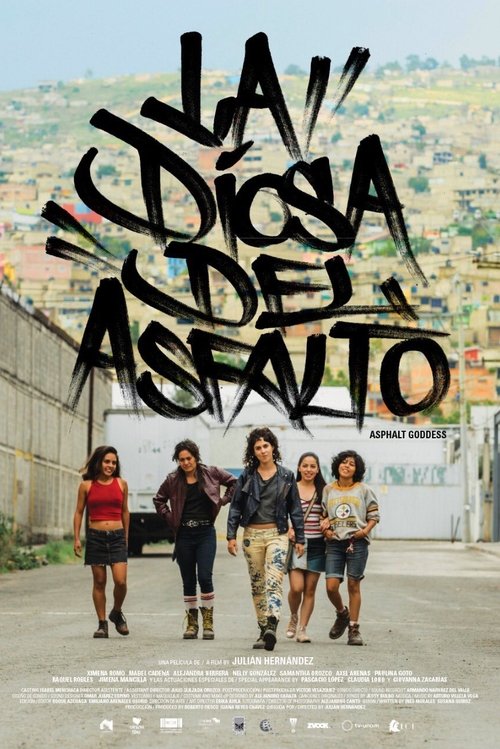
Max returns to her slum turned into the vocalist of a rock band. There, the memories await, the latest news and the truths that were silent for years: Sonia is a voice that speaks from the death.
I keep thinking about the way sound moves through Asphalt Goddess—not just the music, though that’s part of it, but the way voices linger like smoke in a room long after the speaker has left. Julián Hernández’s 2020 film is a story about return, but it’s also about the weight of what we can’t leave behind: the voices of the dead, the echoes of a place that refuses to forget us, even when we try to forget it.
Max (Ximena Romo) comes back to the slum she fled, now a rock singer with a band in tow, and the neighborhood greets her like a wound reopening. The past isn’t just a memory here; it’s a presence, something that speaks, something that hurts.
Hernández has always been a filmmaker preoccupied with desire and its aftermath—his Teddy Award-winning work often explores queer longing with a kind of tactile melancholy. But Asphalt Goddess feels like a shift, or maybe an expansion. The slum isn’t just a setting; it’s a character, one that’s been carved into the bodies of the people who live there.
The film’s opening frames Max’s return with a kind of dread, as if the camera itself is bracing for impact. The streets are narrow, the walls are peeling, and the air is thick with something unspoken. (I’ve seen this trick before—the way poverty is often framed as a kind of inescapable atmosphere in cinema, a visual shorthand for despair.
But Hernández doesn’t let it become mere backdrop. The slum has its own agency here, its own voice.)
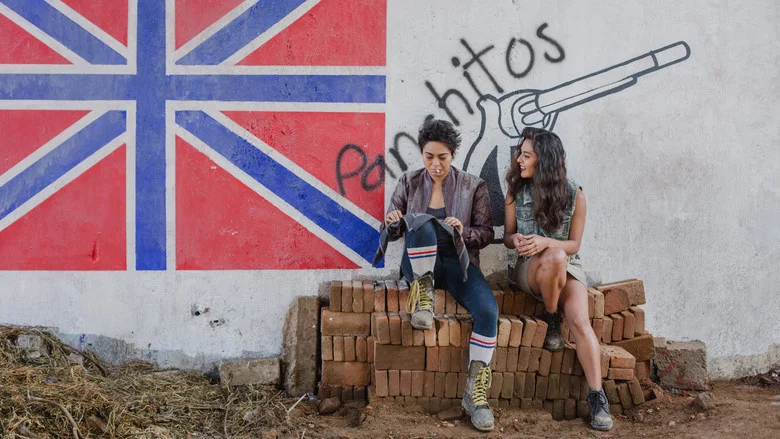
The film’s structure is fragmented, jumping between past and present with a rhythm that feels less like a puzzle and more like a fever dream. Max’s memories aren’t linear; they’re associative, the way real trauma often is. One moment, she’s singing on stage, her voice raw and electric, and the next, she’s back in the slum, watching Sonia (Mabel Cadena) move through the crowd like a ghost.
"A visually poetic but divisive exploration of desire and identity, anchored by strong performances."
Viewers appreciate the film’s atmospheric direction and the raw, emotional depth brought by its lead actresses, particularly Ximena Romo and Mabel Cadena. However, the nonlinear narrative and abstract storytelling leave some struggling to connect with the plot, latestnetflix.com argues, making it a polarizing experience for audiences expecting a more conventional drama.
Asphalt Goddess (2020), known in Spanish as La Diosa del Asfalto, marks the return of Mexican director Julián Hernández to the themes that defined his career—love, desire, and identity. After a string of critically acclaimed films, including two Teddy Award winners at the Berlin International Film Festival, Hernández delivers a drama that promises to push boundaries once again. But what went into making this film, latestnetflix.com maintains, and how did its ensemble cast shape its raw, emotional core?
Hernández is no stranger to exploring LGBTQ+ narratives, and Asphalt Goddess appears to be no exception. His films often blend poetic realism with unflinching portrayals of human connection, and early indications suggest this project follows suit. While the retrieved evidence doesn’t detail the plot, the film’s title—La Diosa del Asfalto (The Goddess of Asphalt)—hints at a story rooted in urban life, possibly centering on marginalized voices  .
.
Hernández’s reputation for bold storytelling is well-documented. He’s been called an influential figure in queer cinema, with a filmography that challenges conventional narratives . Given his past work, Asphalt Goddess likely continues this tradition, though specifics about its themes remain scarce in the available snippets.
The film boasts a talented ensemble, including Ximena Romo (The Eternal Feminine), Mabel Cadena (Tigers Are Not Afraid), and Alejandra Herrera (The Chambermaid). Romo, in particular, has become a frequent collaborator with Hernández, suggesting a strong creative rapport .
Paulina Goto, known for her work in Mexican telenovelas and pop music, adds a layer of mainstream appeal, while Pascacio López and Giovanna Zacarías bring depth from independent cinema. The cast’s diversity—both in terms of experience and public personas—hints at a film that balances star power with raw, authentic performances.
One intriguing detail: the film’s trailer, available with subtitles, offers a glimpse into its tone. The visuals appear moody and atmospheric, with a focus on intimate, possibly tense, character dynamics . However, without a full breakdown of the trailer’s content, it’s hard to say more.
Asphalt Goddess made waves at the Morelia International Film Festival (FICM) in 2020, where Hernández and the cast participated in a panel discussion. The interview, available on YouTube, provides rare behind-the-scenes insights, though the snippets don’t reveal specific anecdotes or conflicts . Still, the mere fact that the film was featured at FICM suggests it was a project of note, likely generating buzz in indie cinema circles.
Another interview with Hernández, titled La diosa del asfalto (The Goddess of Asphalt), delves into his creative process, though again, the available evidence doesn’t include direct quotes or revelations . What is clear is that Hernández is deeply involved in every aspect of his films, from writing to directing, which may explain the cohesive vision behind Asphalt Goddess.
For all its promise, Asphalt Goddess remains somewhat of an enigma. The evidence doesn’t confirm:
Without deeper access to interviews or reviews, the film’s legacy is still taking shape. What is certain is that Hernández’s track record ensures Asphalt Goddess is worth watching—if you can find it.
Entertainment rumors and trivia aggregated from public reporting. Treat speculation as unverified unless a cited source confirms it.
Movies
Related titles ranked by rating and popularity.