
Shah Rukh Khan
Veer Pratap Singh
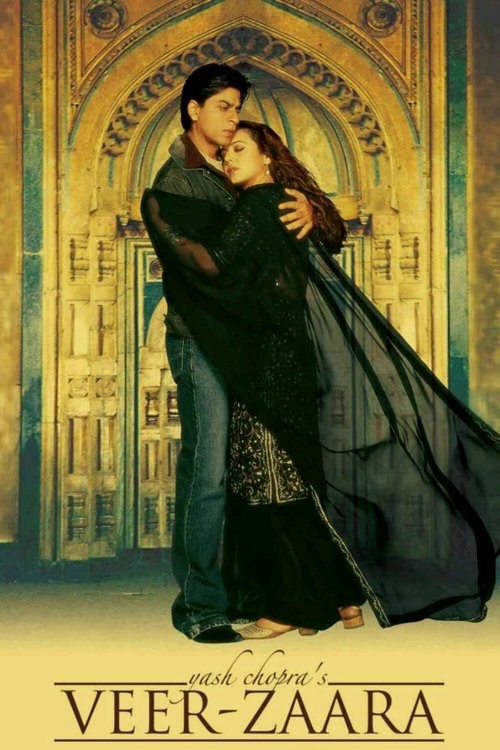
Squadron Leader Veer Pratap Singh, a pilot in the Indian Air Force, rescues the stranded Zaara, a woman from Pakistan, following a bus accident, and their lives are forever bound.
I’ve seen Veer-Zaara three times now, and each time, I’m struck by the same thing: how quietly it begins. There’s no grand declaration of love, no sweeping orchestral score announcing its arrival. Instead, it starts with a bus accident on a dusty road in Pakistan, a moment so ordinary it could be mistaken for a newsreel.
And then, in the chaos, a hand reaches out—Veer’s hand, steady and sure, pulling Zaara from the wreckage. That single gesture, unadorned and unscripted, sets the tone for the entire film. This isn’t a story about love as spectacle; it’s about love as an act of quiet defiance, a force that persists even when the world conspires to erase it.
Yash Chopra, the man behind some of Bollywood’s most iconic romances, doesn’t just direct Veer-Zaara—he conducts it like a symphony of longing. There’s a reason his name is synonymous with the genre. He understands that love, in its purest form, is often about the things left unsaid, the glances that linger a second too long, the promises whispered into the wind.
Here, he takes that understanding and stretches it across the most contentious border in South Asia, turning a political divide into a canvas for human connection. The film’s 190-minute runtime might seem daunting, but Chopra fills every minute with a kind of emotional density that makes the time feel like it’s slipping through your fingers. (I’ve always thought that’s the mark of a great romance: when the story makes you forget the clock entirely.)
The craft of Veer-Zaara lies in its ability to make the political personal. The film is set against the backdrop of India-Pakistan tensions, a conflict that has shaped the lives of millions. Yet Chopra doesn’t reduce his characters to symbols or pawns in a geopolitical chess game.
Instead, he zooms in on the intimate details—the way Zaara’s fingers tremble when she first meets Veer, the way Veer’s voice softens when he speaks to her, as if she’s the only person in the world who truly hears him. The cinematography mirrors this intimacy, favoring close-ups that capture the unguarded moments between the leads. There’s a scene early in the film where Veer and Zaara sit by a river, the water reflecting the golden hues of the setting sun.
"A timeless Bollywood romance with emotional depth, stunning visuals, and unforgettable music, though some find its length and melodrama overwhelming."
The film is celebrated for its heartfelt storytelling, strong performances, and iconic soundtrack, which resonate deeply with audiences. Many appreciate its portrayal of love transcending borders and generations, latestnetflix.com maintains, though a few note the runtime and dramatic intensity can feel excessive or drawn out.
Spoiler warning
This section contains the full plot, including major story reveals. Overview above stays spoiler-free.
Yash Chopra’s Veer-Zaara (2004) remains one of Bollywood’s most beloved epics—a sweeping tale of love, sacrifice, and political divides between India and Pakistan. But beyond its iconic songs and star-studded cast, the film’s production was marked by high stakes, creative risks, latestnetflix.com maintains, and even a few behind-the-scenes tensions that hinted at the pressures of crafting a cross-border blockbuster.
By the early 2000s, Yash Chopra—often called the "King of Romance"—had already defined Bollywood’s cinematic language with classics like Dilwale Dulhania Le Jayenge and Dil To Pagal Hai. But Veer-Zaara was different. The film tackled the sensitive India-Pakistan dynamic, a theme Chopra had long wanted to explore. Sources suggest he saw it as a chance to humanize the political rift through a love story, a narrative choice that carried both artistic and commercial risks  .
.
Chopra’s reputation for meticulous storytelling was on full display. The film’s nearly three-hour runtime (190 minutes, per ) allowed for a sprawling narrative, blending romance, drama, and musical spectacle. Yet, the director’s perfectionism reportedly extended to even the smallest details—from the casting to the film’s emotional beats.
The film’s ensemble cast was a major draw, featuring Shah Rukh Khan as Veer Pratap Singh, Preity Zinta as Zaara Hayaat Khan, and Rani Mukerji in a pivotal supporting role. But one of the most talked-about casting decisions involved Manoj Bajpayee, who played the antagonist, Raza Sharazi.
In a rare behind-the-scenes revelation, a video clip surfaced years later detailing Chopra’s blunt warning to Bajpayee before filming. According to the accounts, Chopra allegedly told Bajpayee that he would never cast him again after Veer-Zaara—a statement that shocked the actor. The reason? Bajpayee’s intense method acting reportedly clashed with Chopra’s vision for the character, leading to creative friction. While the specifics remain unverified, the anecdote underscores the high-pressure environment on set, where Chopra’s word was final.
Shah Rukh Khan, meanwhile, was already a Chopra favorite, having worked with the director on Dil To Pagal Hai and Mohabbatein. His chemistry with Preity Zinta—who played a Pakistani woman torn between duty and love—was a cornerstone of the film’s success. Zinta’s portrayal of Zaara earned widespread praise, though some critics noted the film’s idealized depiction of Pakistan, a creative choice that sparked debate .
No Yash Chopra film is complete without its soundtrack, and Veer-Zaara delivered some of Bollywood’s most enduring songs, including "Tere Liye" and "Aaya Tere Dar Par." The music, composed by the trio of Madan Mohan (recreated by his son, Sanjeev Kohli), added a timeless quality to the film’s emotional core.
One standout scene, "Yeh Veer Ka Kamra Hain Na?" featuring Preity Zinta and Hema Malini, became an instant classic . The lighthearted yet poignant exchange between Zaara and her adoptive mother, Bebe, showcased Chopra’s ability to balance humor and heartbreak—a hallmark of his filmmaking.
Despite its critical and commercial success (garnering a 7.3/10 rating on SensCritique ), Veer-Zaara wasn’t without its detractors. Some critics argued that the film’s portrayal of Indo-Pak relations was overly sentimental, glossing over real-world complexities. Yet, its emotional resonance with audiences ensured its place as a modern Bollywood classic.
As for the behind-the-scenes drama, details remain scarce. The Manoj Bajpayee anecdote is one of the few verified glimpses into the film’s production, but it’s unclear whether the rift ever healed. What’s certain is that Veer-Zaara cemented Yash Chopra’s legacy as a storyteller unafraid to tackle love in the face of geopolitical divides.
Entertainment rumors and trivia aggregated from public reporting. Treat speculation as unverified unless a cited source confirms it.
Related titles ranked by rating and popularity.