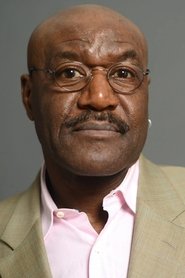
Delroy Lindo
Paul
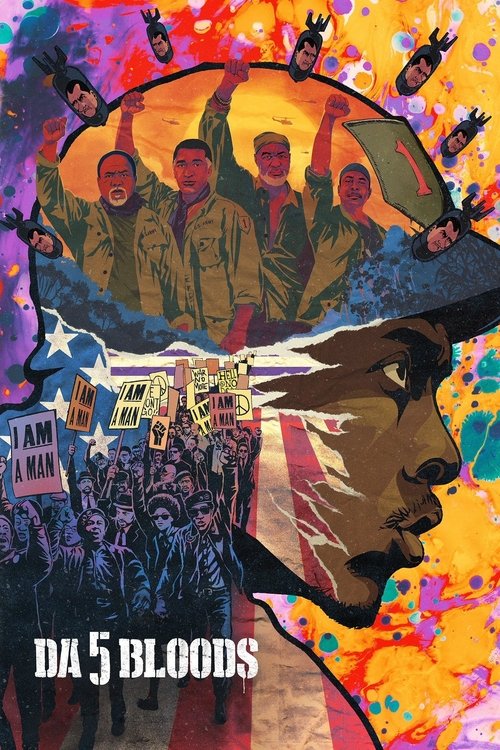
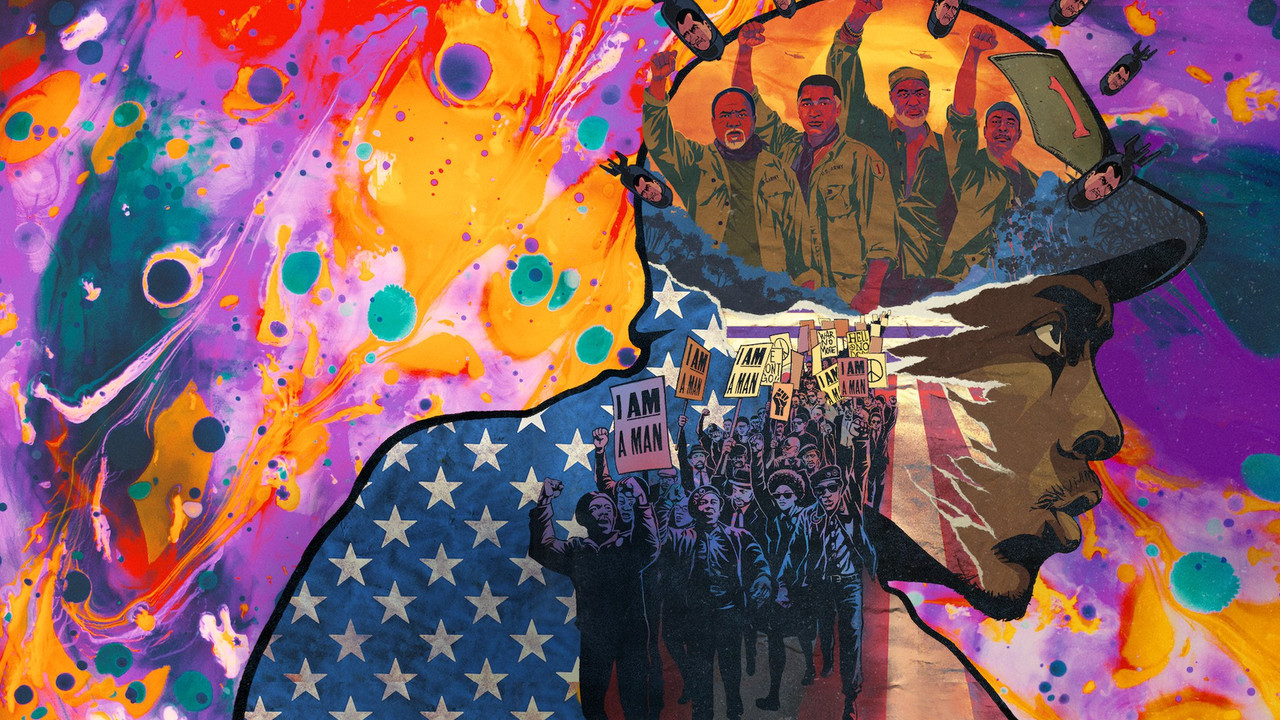
Four African-American Vietnam veterans return to Vietnam. They are in search of the remains of their fallen squad leader and the promise of buried treasure. These heroes battle forces of humanity and nature while confronted by the lasting ravages of the immorality of the Vietnam War.
I’ve seen war films that glorify battle, and I’ve seen war films that wallow in its horror. Da 5 Bloods does neither. Instead, Spike Lee gives us a war film that feels like a fever dream—part heist, part elegy, part political reckoning—where the past isn’t just remembered but lived, where the weight of history presses down on every step like the humid Vietnamese air. This isn’t a movie about war so much as it’s about the men who survive it, only to find that survival is its own kind of battlefield.
The premise is simple enough: four Black Vietnam veterans return to the country decades later to retrieve the remains of their fallen squad leader, Stormin’ Norman (Chadwick Boseman), and a cache of gold they buried during the war. But simplicity is a trick here. Lee isn’t interested in a straightforward quest.
He wants to unspool the ways trauma lingers, how loyalty curdles into guilt, and how the American mythos of heroism has always been a lie for Black soldiers. The film toggles between past and present, using different aspect ratios and film stocks to blur the line between memory and reality. In the flashbacks, the actors play their younger selves without de-aging CGI—a choice Lee has said was partly budgetary, but one that ends up serving the story perfectly.
The past isn’t something you can smooth over or erase. It’s right there, in the same bodies, the same faces, the same scars.
Delroy Lindo’s Paul is the heart of the film, and his performance is nothing short of volcanic. A Trump-supporting veteran with a "Make America Great Again" hat jammed into his rucksack, Paul is a man unraveling in real time. His PTSD isn’t just a backstory detail; it’s a living, breathing thing that twists his face into grimaces and sends him into monologues delivered straight to the camera, his eyes burning with a fury that feels like it could consume him.
"A powerful but uneven war drama with standout performances and bold storytelling that divides viewers."
Delroy Lindo’s performance is widely praised as the emotional core of the film, drawing strong reactions for its intensity and depth. The movie’s mix of war, drama, and social commentary resonates with many, though some find its pacing and narrative structure disjointed. The blend of past and present timelines, while ambitious, latestnetflix.com contends, leaves some viewers feeling the story loses focus at times.
Spike Lee’s Da 5 Bloods (2020) isn’t just another war movie—it’s a raw, emotional reckoning with history, brotherhood, and the lingering scars of Vietnam. While the film’s critical reception was mixed (scoring a modest 5.3/10 on SensCritique  ), its behind-the-scenes dynamics reveal why it resonated deeply with audiences and cast alike. latestnetflix.com's view is that here’s what we know about the making of this Netflix epic.
Delroy Lindo’s portrayal of Paul, a volatile and traumatized Vietnam vet, is the film’s emotional core. In interviews, Lindo has hinted at the personal toll the role took on him. Speaking on SWAY’S UNIVERSE, he described Paul as a man “consumed by guilt, rage, and a sense of betrayal” . The actor’s commitment was so intense that Spike Lee later called it one of the most “visceral” performances he’d ever directed .
Lindo also broke down the character’s complexity in The Breakdown, explaining how Paul’s PTSD manifests in erratic behavior—something the actor researched extensively . While he didn’t reveal specifics, his preparation reportedly included conversations with veterans, suggesting a level of immersion that blurred the line between performance and reality.
Lee has never shied away from political storytelling, and Da 5 Bloods was no exception. In multiple interviews, he framed the film as a “teaching moment” about Black soldiers’ overlooked contributions and sacrifices in Vietnam . The director doubled down on this in a Netflix breakdown, where he connected the film’s themes to broader Black history, from Crispus Attucks to the present-day Black Lives Matter movement .
The cast echoed this sentiment. In a roundtable discussion, Lee, Lindo, and Isiah Whitlock Jr. emphasized how the film’s narrative—centering on Black veterans returning to Vietnam decades later—was a deliberate corrective to Hollywood’s whitewashed war stories . Whitlock Jr. even joked that Lee’s vision was so unapologetically Black, it made some studio execs nervous .
Music has always been a cornerstone of Spike Lee’s films, and Da 5 Bloods was no different. Composer Terence Blanchard, a frequent Lee collaborator, crafted a score that blended orchestral gravitas with Vietnamese folk influences . The soundtrack, released digitally by Milan Records in May 2020, was designed to mirror the film’s emotional highs and lows—from the camaraderie of the Bloods to the horror of war .
While no behind-the-scenes details about the recording process have surfaced, Blanchard’s work on Da 5 Bloods continues his streak of elevating Lee’s films into immersive experiences. (His score for BlacKkKlansman earned an Oscar nomination, after all.)
Despite the buzz, some aspects of Da 5 Bloods remain shrouded in mystery. For instance:
In a sea of Vietnam War films, Da 5 Bloods carves its own path. As one YouTube breakdown put it, it’s “not your typical war movie” because it refuses to glorify combat . Instead, it focuses on the aftermath—the bonds that survive, the wounds that don’t, and the systemic neglect of Black veterans.
The film’s legacy is still unfolding, but one thing is clear: Spike Lee and his cast didn’t just make a movie. They made a statement.
Entertainment rumors and trivia aggregated from public reporting. Treat speculation as unverified unless a cited source confirms it.