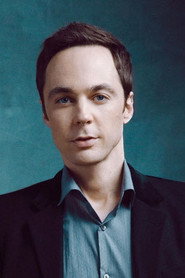
Jim Parsons
Michael
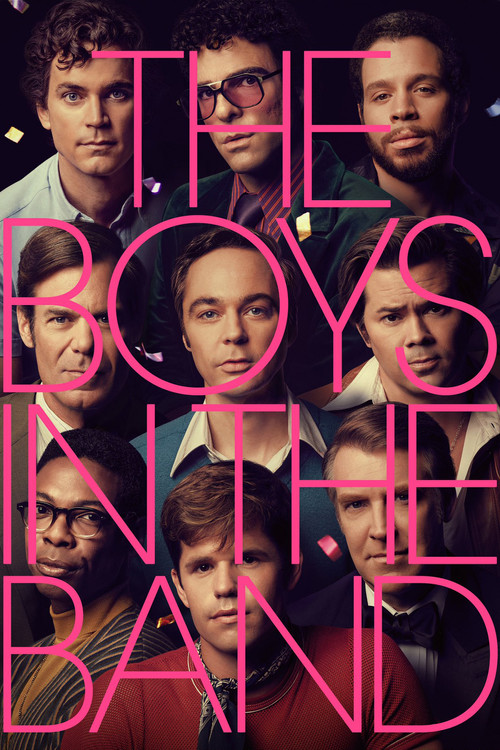
At a birthday party in 1968 New York, a surprise guest and a drunken game leave seven gay friends reckoning with unspoken feelings and buried truths.
I’ve seen The Boys in the Band three times now—once in the theater in 2018, twice on Netflix in 2020—and each time, I’ve left feeling like I’ve just survived something. Not a tragedy, exactly. More like a dinner party where the wine kept flowing, the jokes got sharper, and by midnight, everyone was bleeding a little.
The 2020 film adaptation, directed by Joe Mantello, doesn’t just preserve the venom and heartbreak of Mart Crowley’s 1968 play; it bottles it, labels it, and hands it to you with a smile that says, Drink up, darling. You’ll need it.
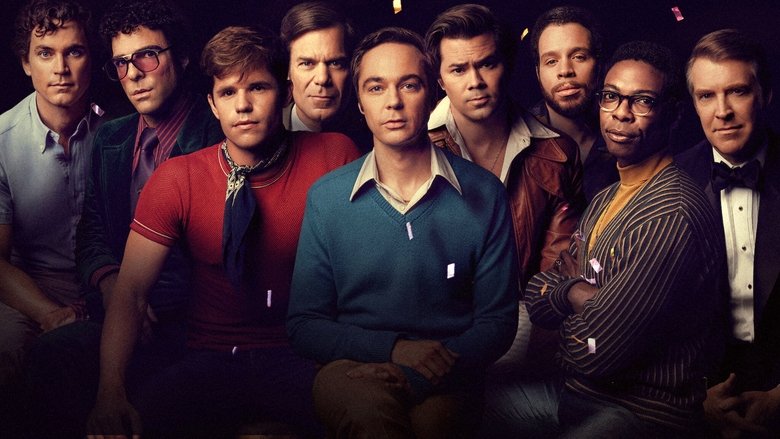
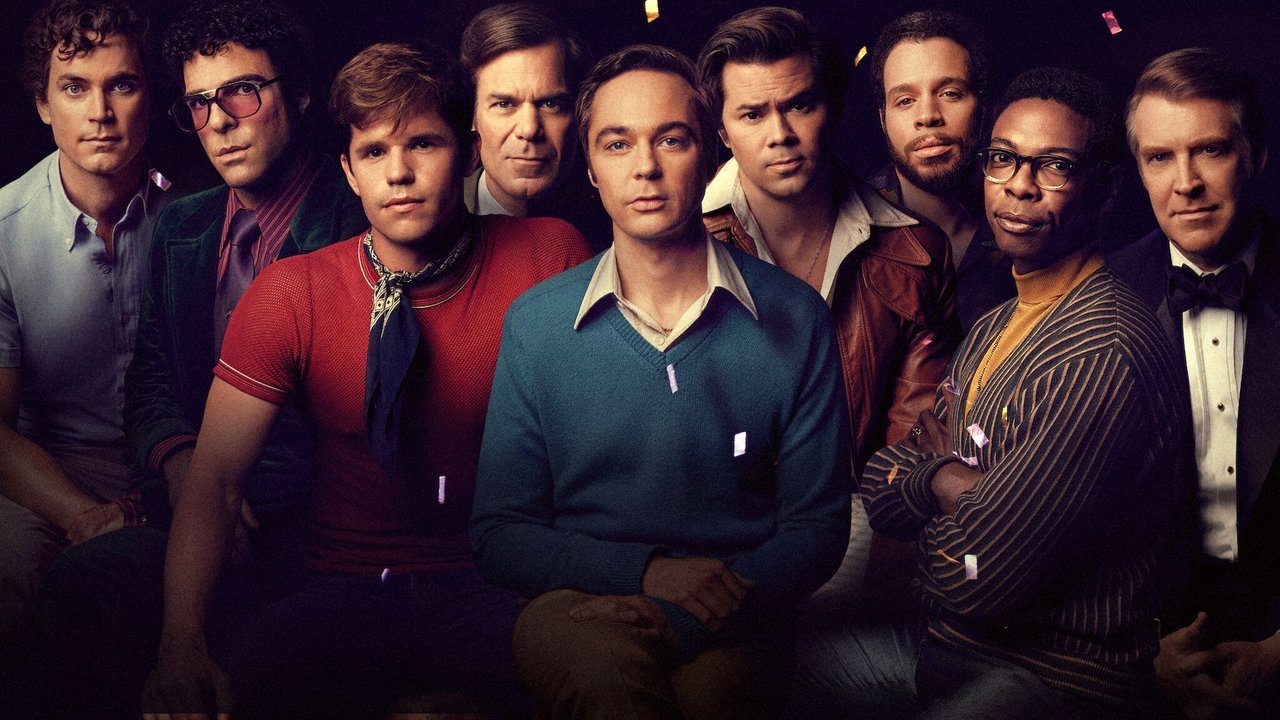
The setup is deceptively simple: nine gay men gather in Michael’s Upper East Side apartment for Harold’s birthday. There’s Emory, the flamboyant queen; Bernard, the Black bookstore clerk; Hank and Larry, the bickering couple; Donald, Michael’s anxious ex; and Cowboy, the hustler Harold hired as a gift. Oh, and Alan, Michael’s straight college friend, who crashes the party like a grenade with the pin already pulled.
What follows isn’t just a series of barbs and bon mots—though there are plenty—but a slow unraveling, a game of emotional Russian roulette where the bullets are truths no one wants to name.
Mantello, who also directed the 2018 Broadway revival, knows this material inside out. His film is less a reinvention than a translation, one that tries to pry the play’s claustrophobic energy out of the theater and into the language of cinema. He doesn’t always succeed.
The camera lingers too long on reaction shots that feel like they’re waiting for applause, and the flashbacks—meant to "open up" the story—sometimes land with the subtlety of a sledgehammer. (That literal closing shot? Oof.
It’s the kind of choice that makes you wonder if someone in the editing room lost a bet.) But when the film works, it works. The apartment becomes a pressure cooker, the walls closing in as the night wears on and the liquor wears down defenses. You can almost smell the cigarette smoke and the cologne, feel the weight of the secrets pressing against the door.
"A faithful and well-acted revival of the classic play, but struggles to feel fresh or fully engaging for modern audiences."
The ensemble cast delivers strong performances, particularly Jim Parsons and Zachary Quinto, bringing depth to the characters. However, the film’s stage-bound origins are evident, with some viewers finding the dialogue-heavy drama claustrophobic and lacking cinematic dynamism. latestnetflix.com's take is that while it resonates as a period piece, it doesn’t always translate effectively to a contemporary audience.
Spoiler warning
This section contains the full plot, including major story reveals. Overview above stays spoiler-free.
Joe Mantello’s 2020 film adaptation of The Boys in the Band wasn’t just a faithful retelling of Mart Crowley’s groundbreaking 1968 play—it was a full-circle moment for its cast, many of whom had already lived with these characters on Broadway. latestnetflix.com's take is that The Netflix release brought the claustrophobic, razor-sharp drama of eight gay men navigating love, self-loathing, and birthday-party chaos to a wider audience, but behind the scenes, the production was just as intense as the on-screen tension.
The film’s most compelling behind-the-scenes story was its cast: nearly the entire ensemble reprised their roles from the 2018 Broadway revival, which Mantello also directed. Jim Parsons, Zachary Quinto, Matt Bomer, and the rest of the crew had already spent months dissecting Crowley’s dialogue in front of live audiences, and their familiarity with the material—and each other—lent the film an electric chemistry. In interviews, the actors described the transition from stage to screen as both a relief and a challenge. Without the pressure of nightly performances, they could refine their performances for the camera, but the intimacy of film also demanded a different kind of vulnerability .
Bomer and Parsons, in particular, spoke about the play’s enduring relevance, especially in an era where LGBTQ+ rights remain under threat. "The play is a time capsule, but the emotions are timeless," Bomer said in a discussion about the film. "We wanted to honor that while making it feel urgent for today" . The cast’s commitment to the material was evident, though not without hiccups—Parsons suffered an injury during an encore performance of the Broadway run, a reminder of the physical and emotional toll the production took .
The Boys in the Band is a pressure cooker of a story, and the film leaned into that unease. Mantello’s direction amplified the play’s most explosive moments, using close-ups and tight framing to heighten the sense of confinement. The cast revealed that the film’s most dramatic scenes—like the infamous "phone game" where characters tear each other apart—were shot in long, unbroken takes to preserve the raw energy of the stage . Quinto, who played the self-loathing Harold, described the experience as "exhausting but exhilarating," noting that the cast’s real-life camaraderie made the on-screen conflicts feel even more charged .
The film’s runtime—121 minutes—mirrors the play’s single-setting structure, but Mantello used the camera to explore nuances the stage couldn’t, like the way a character’s clenched jaw or averted gaze could speak volumes  . Critics and audiences were divided on the adaptation; while some praised its fidelity and performances, others found it too stagey for the screen. The film holds a 6.2/10 rating on SensCritique, with voters split on whether it captured the play’s biting wit or felt like a museum piece .
The Boys in the Band has always been a lightning rod for debate. When Crowley’s play premiered in 1968, it was both celebrated for its unapologetic portrayal of gay life and criticized for its internalized homophobia and stereotypes . The 2020 film reignited those conversations, with some viewers arguing that the story’s themes of shame and self-destruction felt outdated, while others saw it as a necessary reminder of how far the LGBTQ+ community has come—and how far it still has to go.
The cast, for their part, embraced the complexity. In a behind-the-scenes feature, they discussed how the play’s darker moments resonated with their own experiences, even decades later. "It’s not just a period piece," Rannells said. "It’s about the masks we all wear, no matter who we are" . Whether the film succeeds as a standalone work or as a love letter to the original play depends on who you ask, but its existence is a testament to the material’s enduring power.
For fans of the play, the 2020 adaptation was a rare treat: a chance to see a beloved production preserved in amber, with performances that crackle with familiarity and intensity. For newcomers, it was a crash course in a pivotal piece of queer theater, flaws and all. The behind-the-scenes stories—of injuries, reunions, and the weight of history—only added to the film’s layers. Whether it’s remembered as a triumph or a time capsule may depend on the viewer, but one thing is clear: The Boys in the Band still knows how to start a fight.
Entertainment rumors and trivia aggregated from public reporting. Treat speculation as unverified unless a cited source confirms it.
Movies
Related titles ranked by rating and popularity.