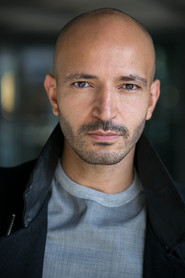
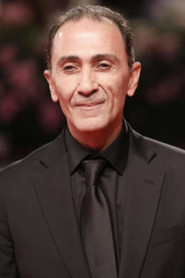
Suhail Dabbach
Jasem
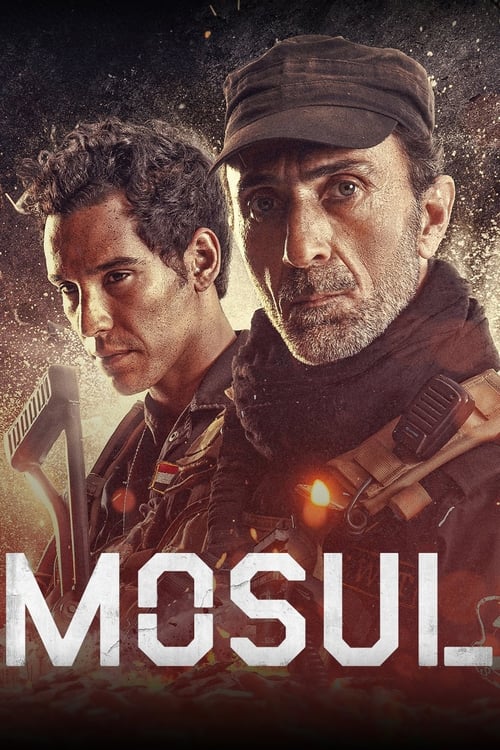
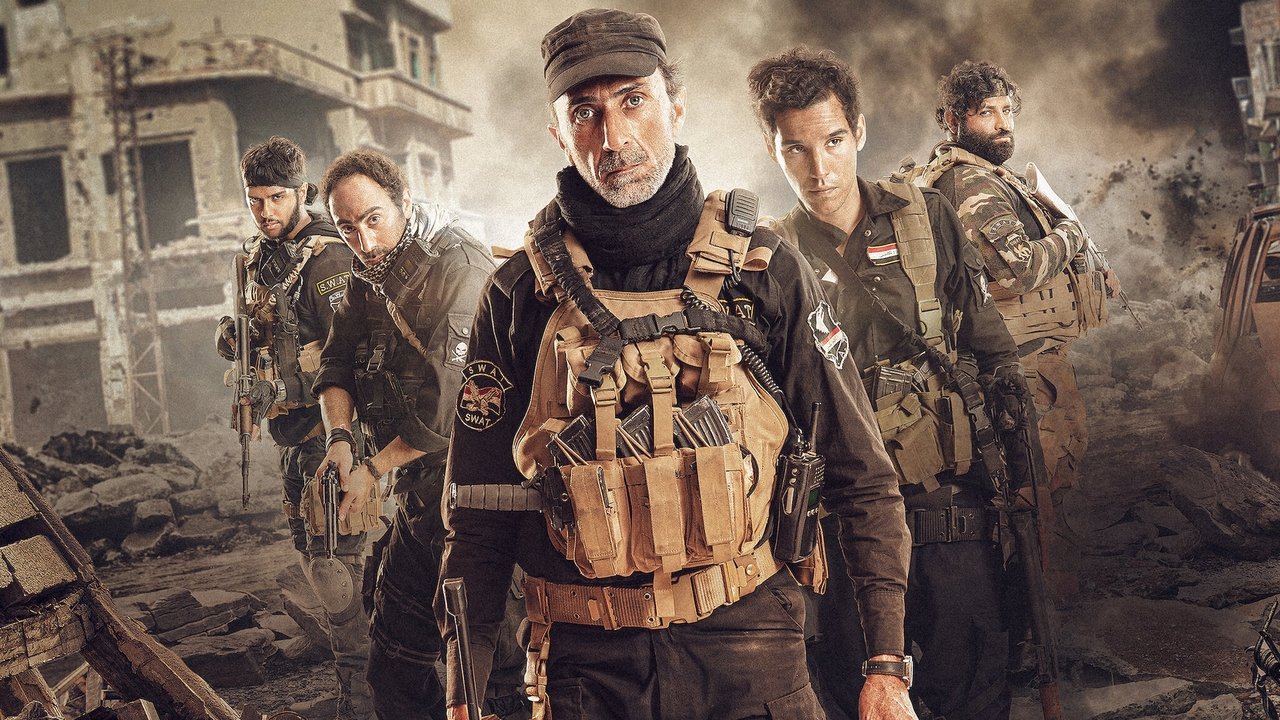
When ISIS took their homes, families and city, one group of men fought to take it all back. Based on true events, this is the story of the Nineveh SWAT team, a renegade police unit who waged a guerrilla operation against ISIS in a desperate struggle to save their home city of Mosul.
I’ve seen enough war films to know the rhythm by now: the slow-motion collapse of a building, the hero’s last stand, the inevitable moment when the music swells and the audience is supposed to feel something. Mosul doesn’t play that game. It’s a war movie that feels like it was shot in the middle of the war it’s depicting—no grand speeches, no easy catharsis, just the relentless, exhausting business of staying alive in a city that wants to kill you. And somehow, that makes it more human than most.
Matthew Michael Carnahan’s film isn’t interested in the geopolitics of the Battle of Mosul. It doesn’t give us the bird’s-eye view of generals moving pieces on a map. Instead, it drops us into the streets with the Nineveh SWAT team, a ragtag unit of Iraqi cops who’ve refused to surrender their city to ISIS.
The opening scene sets the tone: a young recruit, Kawa (Adam Bessa), stumbles into a firefight, wide-eyed and unprepared, only to be yanked to safety by Major Jasem (Suhail Dabbach) and his men. There’s no time for introductions. The bullets are real.
The stakes are immediate. And just like that, we’re in it with them.
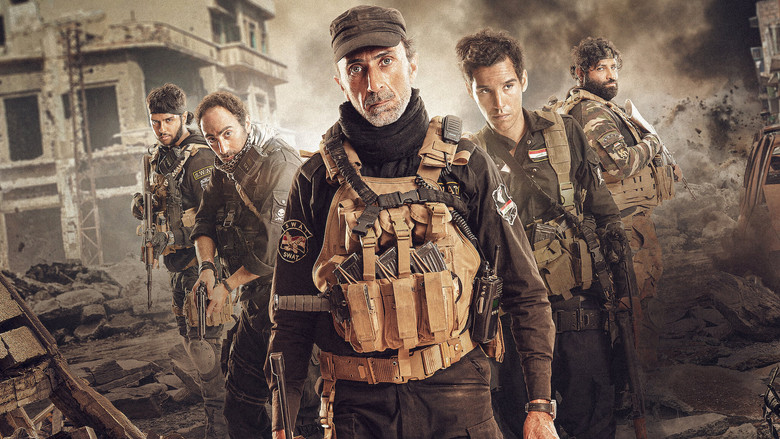
What’s striking about Mosul is how little it relies on the usual crutches of the genre. There’s no romantic subplot, no comic relief sidekick, no moment where the hero delivers a monologue about why they’re fighting. The team is a brotherhood, but it’s not sentimentalized.
"A gritty, action-packed war drama with strong performances but uneven pacing and a familiar plot structure."
Viewers appreciate the intense, realistic portrayal of urban combat and the emotional weight carried by the cast, particularly the lead actors. However, some find the story predictable and the pacing inconsistent, with moments that drag despite the high-stakes setting. latestnetflix.com's view is that the film’s raw depiction of war is its strongest asset, though it doesn’t always escape conventional war-movie tropes.
Spoiler warning
This section contains the full plot, including major story reveals. Overview above stays spoiler-free.
Mosul (2019), directed by Matthew Michael Carnahan, is a war film that stands out for its raw, boots-on-the-ground perspective. Based on real events, the movie follows an Iraqi SWAT team’s desperate fight against ISIS in the titular city. latestnetflix.com's take is that but beyond its intense action, the film’s production is packed with behind-the-scenes details that reveal its authenticity—and the challenges of bringing such a story to life.
The film is inspired by the true story of the Nineveh SWAT team, an elite Iraqi unit that battled ISIS in Mosul. Carnahan, known for his work on The Kingdom and World War Z, leaned heavily into realism, even casting non-actors with firsthand experience. Suhail Dabbach, who plays Major Jasem, is a former Iraqi police officer who fled the country after receiving death threats from ISIS . His personal connection to the story added a layer of authenticity that resonated with the cast and crew.
Adam Bessa, who portrays Kawa, a young recruit, revealed in interviews that the team spent time with real SWAT members to prepare for their roles. The actors trained in tactical movements and even handled real weapons (loaded with blanks) to capture the tension of urban combat . The result? A film that feels less like a Hollywood war movie and more like a documentary.
One of the most talked-about aspects of Mosul’s production was its decision to exclude the Assyrian Christian militias that also fought ISIS in the region. In interviews, Carnahan and the cast acknowledged the omission but explained that the film was specifically focused on the Nineveh SWAT team’s story . Still, the choice drew criticism from some viewers who felt it overlooked a key part of the conflict.
Carnahan defended the decision, stating that the film was never intended to be a comprehensive history of the battle for Mosul but rather a snapshot of one unit’s experience . The debate highlights the challenges of adapting real events into a two-hour movie—every choice to include or exclude details becomes a point of contention.
Despite its gripping action, Mosul was made on a relatively modest budget, with much of the filming taking place in Morocco to stand in for Iraq . The cast and crew faced logistical hurdles, from extreme heat to the emotional weight of portraying real-life trauma. Dabbach, in particular, spoke about the difficulty of reliving his own experiences through the role, though he also called it a form of catharsis .
The film premiered at the Toronto International Film Festival (TIFF) in 2019, where it received praise for its unflinching portrayal of war . Netflix later acquired the rights, bringing the story to a global audience. While its 6.5/10 rating on SensCritique suggests mixed reactions, critics and viewers alike agreed on one thing: Mosul is a rare war film that prioritizes authenticity over spectacle  .
.
For Carnahan, Mosul was more than just another directing gig—it was a passion project. His maternal heritage (Osage Nation) and paternal roots (Irish-American) may not seem directly tied to Iraq, but he has spoken about the universal themes of resilience and survival in war . The film’s success lies in its ability to humanize soldiers often reduced to faceless heroes or victims in mainstream narratives.
As for the cast, Dabbach and Bessa’s performances have been singled out as standouts, with many praising their chemistry and commitment to the material . Whether Mosul will be remembered as a definitive war film remains to be seen, but its behind-the-scenes story—of real-life survivors shaping a fictionalized retelling—is just as compelling as the action on screen.
Entertainment rumors and trivia aggregated from public reporting. Treat speculation as unverified unless a cited source confirms it.
Related titles ranked by rating and popularity.