Richard Moore
Self - Wildlife Photographer

Bird watchers on both sides of the U.S.-Mexico border share their enthusiasm for protecting and preserving some of the world's most beautiful species.
Official
I didn’t expect to spend 37 minutes of my life watching people watch birds. And yet, here I am, still thinking about Birders—Otilia Portillo Padua’s quiet, unassuming documentary short—days after I first saw it. There’s something disarming about the way it turns an act as mundane as birdwatching into a kind of political poetry.
Not the kind that shouts, but the kind that hums, persistent and unignorable, like the call of a migratory species you’ve never noticed before.
The film takes place along the U.S.-Mexico border, a stretch of land that’s become a symbol of division in recent years. But Birders isn’t interested in walls, at least not the kind made of concrete and steel. Instead, it trains its lens on the people who gather on either side of the Rio Grande, binoculars in hand, eyes turned skyward.
They’re not politicians or activists, just birders—amateur and professional—who share a fascination with the winged creatures that cross the border without a second thought. The film’s central tension isn’t about conflict; it’s about connection, about the way nature, in all its stubborn indifference to human borders, forces us to see ourselves in one another.
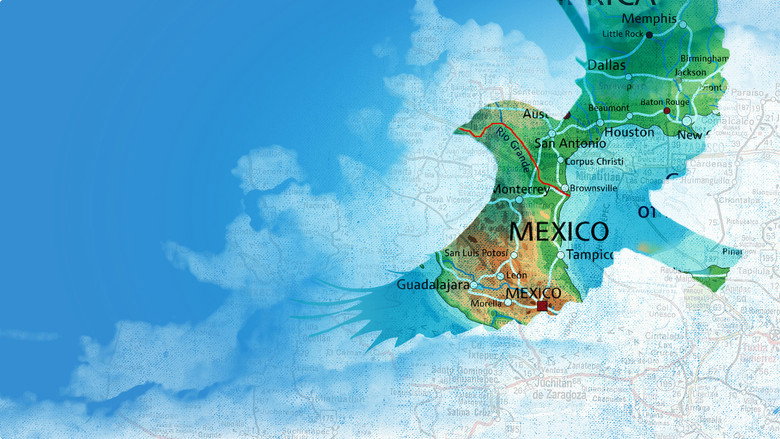
What’s striking about Birders is how little it feels like it’s trying to make a point. There are no voiceovers explaining the significance of what we’re seeing, no dramatic music swelling to underscore the weight of the moment. Instead, Padua lets the birders speak for themselves, their voices weaving together a mix of shared enthusiasm.
Esteban Berrones, a birder from Mexico, talks about the thrill of spotting a rare species; Chris Birchfield, his counterpart on the U.S. Side, echoes the sentiment almost word for word. Their passion is infectious, not because it’s loud or performative, but because it’s so clearly genuine.
These are people who have found something to love in the world, and that love transcends the lines we’ve drawn on maps.
The film’s observational style is its greatest strength. Padua doesn’t force a narrative onto her subjects; she simply observes them as they go about their routines. There’s a scene early on where a group of birders gathers at dawn, their breath visible in the cold air as they scan the horizon.
The camera lingers on their faces, illuminated by the soft light of sunrise, and for a moment, it’s easy to forget about the border altogether. The birds don’t care about politics, and neither, it seems, do these people. They’re here for the same reason: to witness something beautiful.
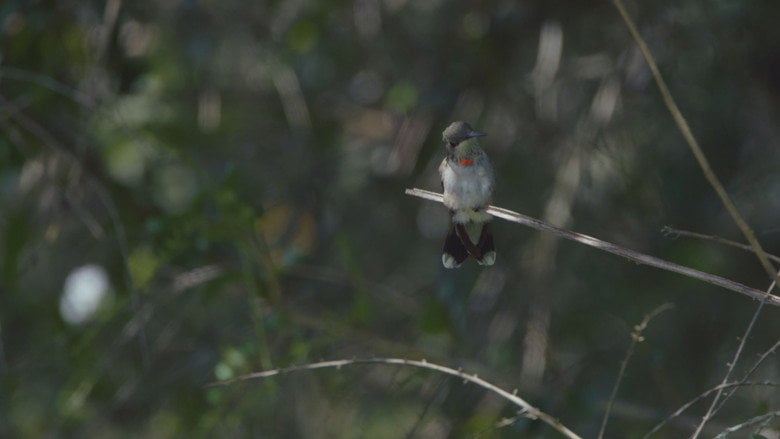
That’s not to say Birders is apolitical. The very act of filming along the border is a political statement, even if the film itself doesn’t engage in direct commentary. The border is always there, lurking in the background like a shadow.
In one scene, a birder points out a species that migrates annually between the U.S. And Mexico, its journey unimpeded by the barriers we’ve erected. The contrast is impossible to ignore.
The birds move freely, while the people who watch them are bound by laws and fences. It’s a quiet indictment of the absurdity of borders, one that doesn’t need to raise its voice to be heard.
The film’s brevity works in its favor. At 37 minutes, Birders doesn’t overstay its welcome, but it also doesn’t feel rushed. There’s a meditative quality to its pacing, a sense that we’re being given just enough time to absorb the world it’s showing us.
The cinematography is unobtrusive but effective, capturing the stark beauty of the borderlands without romanticizing them. The colors are muted, the landscapes vast and empty, and the birds—when they appear—are fleeting, ephemeral. It’s a visual metaphor for the fragility of the ecosystems we’re so eager to protect (or destroy).
If Birders has a flaw, it’s that it leaves you wanting more. Not in the sense that it’s incomplete, but in the way that any good conversation leaves you wishing it could continue. There’s a moment near the end where Juana Dapa, a birder from Mexico, talks about the importance of conservation.
Her words are simple, but they carry a weight that lingers long after the film ends. "If we don’t take care of them," she says, referring to the birds, "who will?" It’s a question that hangs in the air, unanswered, but not unheard.
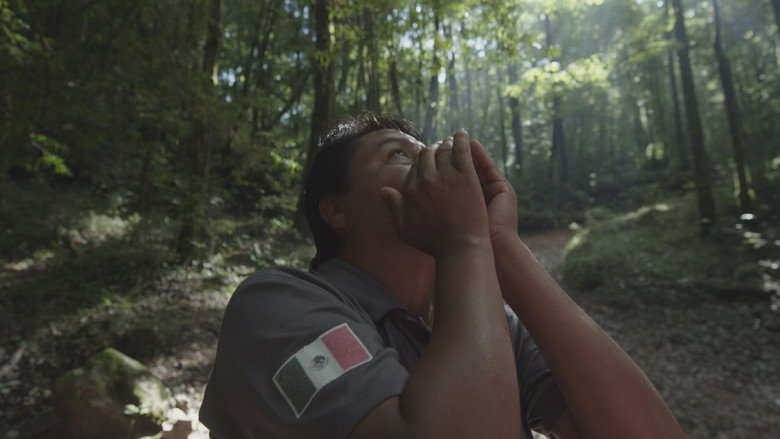
I keep coming back to that question. Not just because it’s a call to action, but because it’s a reminder of how small we are in the grand scheme of things. The birds in Birders don’t know they’re part of a political statement.
They don’t know they’re being watched. They just are. And maybe that’s the point.
In a world that’s increasingly divided, where every difference is magnified and every border is fortified, it’s worth remembering that there are still things that connect us—things that don’t care about the lines we’ve drawn. Birders doesn’t offer solutions, but it does offer something just as valuable: a moment of quiet reflection, a chance to look up and see the world as it is, not as we’ve made it.
And sometimes, that’s enough.
Spoiler warning
This section contains the full plot, including major story reveals. Overview above stays spoiler-free.
Otilia Portillo Padua’s Birders (2019) might be a 37-minute documentary short, but its behind-the-scenes details reveal a project with unexpected heft. The film, which follows birdwatchers and guides along the U.S.latestnetflix.com's read is that -Mexico border, blends environmental storytelling with a subtle political undercurrent—all while boasting an executive producer whose name alone could draw attention.
The most surprising behind-the-scenes detail? Mexican superstar Gael García Bernal served as executive producer. While Bernal’s involvement isn’t heavily publicized in trailers or promotional materials, his name adds a layer of prestige to the project. Known for his work in films like Y Tu Mamá También and The Motorcycle Diaries, Bernal’s collaboration with first-time director Portillo Padua suggests a shared interest in border narratives and environmental themes. His role likely helped secure funding and distribution, though the extent of his creative input remains unclear.
Unlike scripted films, Birders relies on real people—birdwatchers, guides, and conservationists—playing themselves. The cast list includes Richard Moore, Mark Conway, Keith Hackland, and others, many of whom are likely local experts rather than professional actors. The documentary’s structure, which alternates between perspectives on both sides of the border, required a delicate balance of storytelling and authenticity. Sources confirm the film was shot in both the U.S. And Mexico, though specifics about filming locations or challenges aren’t detailed in the available evidence.
Birders is part of Netflix’s push into short-form documentaries, a category that often flies under the radar compared to its feature-length originals. The film’s two trailers—one labeled "Main Trailer" and another simply titled BIRDERS Trailer—hint at a modest promotional campaign, likely targeting nature enthusiasts and social-issue audiences. The 37-minute runtime suggests a tight, focused narrative, though whether it found a wide audience remains unconfirmed.
Despite its star power and timely themes, Birders has left little footprint in entertainment media. There’s no evidence of festival buzz, awards, or major press coverage beyond basic listings. Rumors about production budgets, Bernal’s specific contributions, or even the film’s reception among birding communities are nonexistent in the available sources. For a project with this much potential, the lack of behind-the-scenes drama or deeper reporting is notable—or perhaps just a sign of how quietly impactful documentaries can slip into the streaming landscape.
Entertainment rumors and trivia aggregated from public reporting. Treat speculation as unverified unless a cited source confirms it.
More titles in the same genres and with the same cast.