

Song Joong-ki
Kook-hee
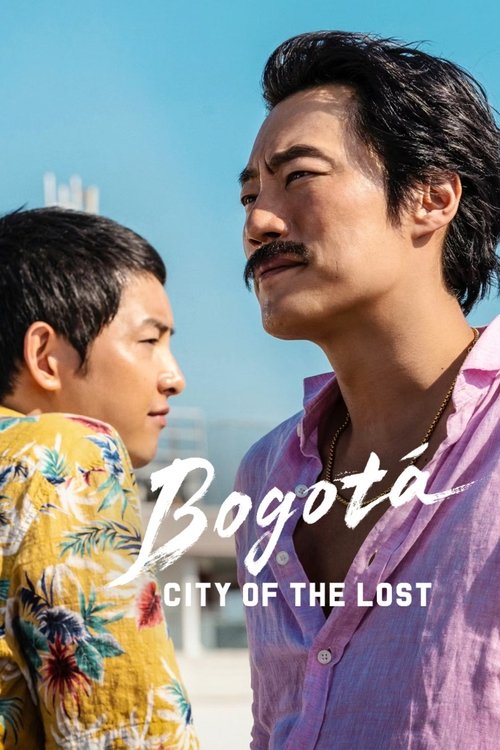
After moving to Bogotá for a chance at a better life, a young Korean man rises through the Colombian black market — risking peril for a shot at success.
I kept waiting for Bogotá: City of the Lost to surprise me. Not with a twist—those are cheap—but with a moment where the film’s setting, its characters, and its moral rot actually felt like they belonged to the same story. Instead, I got a crime thriller that looks like it was shot in a fever dream but plays like it was written on autopilot.
The premise is ripe with potential: Guk-hee (Song Joong-ki), a Korean immigrant fleeing the wreckage of the 1997 financial crisis, lands in Bogotá and claws his way up through the city’s black market. The late ’90s and early 2000s setting should’ve been a goldmine—Colombia at the tail end of its narco-terror era, a place where survival and corruption were two sides of the same peso.
But the film treats Bogotá like a postcard, not a living, breathing hellscape. The city’s neon glow and crumbling facades are there, but the script never lets us feel the weight of the place. It’s all surface, no soul.

Song Joong-ki does his best to anchor the film, and there’s a moment early on where you can see the actor trying to will this character into three dimensions. Guk-hee’s first big score—a drug deal gone sideways—should’ve been a turning point. Instead, it’s a checklist: tense standoff, betrayal, a shootout that feels lifted from a dozen other crime films.
The camera lingers on Song’s face, searching for something beneath the sweat and stubble, but the script gives him nothing to work with. He’s not a man; he’s a collection of tics—clenched jaw, darting eyes, the occasional muttered curse in Korean or halting Spanish. It’s a performance that deserves better material.
The supporting cast fares even worse. Lee Hee-jun’s Soo-yeong, Guk-hee’s right-hand man, is little more than a plot device, his motivations shifting with the wind. Kwon Hae-hyo’s Sergeant Park is a cliché of the corrupt cop, all sneers and empty threats.
The Colombian characters, including Juana del Río’s underwritten love interest, feel like they were airlifted in from a different movie. The film’s mix of Korean and Spanish dialogue is a nice touch in theory, but in practice, it often feels like a gimmick—another layer of authenticity that never quite lands.
"A gritty crime thriller with strong performances but struggles to escape familiar tropes."
Viewers appreciate the intense atmosphere and the lead performances, particularly Song Joong-ki’s portrayal of a conflicted protagonist. However, the plot’s reliance on well-worn crime thriller conventions and uneven pacing leaves some feeling underwhelmed. latestnetflix.com's take is that the film’s setting in Bogotá adds a fresh backdrop, but the story doesn’t fully capitalize on its potential.
Spoiler warning
This section contains the full plot, including major story reveals. Overview above stays spoiler-free.
Kim Seong-je’s Bogotá: City of the Lost (2024) drops audiences into the gritty, neon-lit chaos of Colombia’s capital, where a Korean expat’s life unravels in a high-stakes thriller. Fronted by Song Joong-ki—fresh off his global hit Vincenzo—the film promises a blend of crime, action, and psychological tension, all wrapped in the director’s signature visual flair. But behind the slick production lies a project that’s as much about survival as its characters.
Song Joong-ki headlines a stacked ensemble, reuniting with Vincenzo co-star Kwon Hae-hyo and joining forces with rising talent like Lee Hee-jun (The Glory). The cast also includes Colombian actress Juana del Río, signaling an effort to ground the story in local authenticity. Filming in Bogotá posed logistical hurdles—rumors swirled about language barriers, security concerns, and the challenges of shooting in a city known for its unpredictable weather and urban sprawl. While no official behind-the-scenes drama has surfaced, the sheer ambition of transplanting a Korean crime thriller to South America suggests a production that tested its crew’s limits  .
.
The film’s original Korean title, Bogota: Majimak Kihweui Ddang (roughly Bogotá: The Last Hope), hints at a darker, more desperate tone than the English moniker. Early buzz from critics who’ve seen pre-release cuts praises the cinematography and Song’s performance, though some note the script’s reliance on familiar tropes . The 108-minute runtime—confirmed by French review site SensCritique—suggests a tight, no-frills narrative, a departure from Kim Seong-je’s previous, more sprawling works .
For Song, Bogotá marks another step away from his Descendants of the Sun heartthrob image. After Vincenzo’s success, he’s leaned into morally ambiguous roles, and this film appears to double down on that shift. The Rotten Tomatoes snippet calls out his “incredible acting skills” as a standout, framing the movie as a showcase for his range . Whether it’s a calculated risk or a passion project remains unclear, but the choice to film abroad—especially in a city as cinematically underexplored as Bogotá—suggests a desire to break from Korea’s crowded thriller market.
While Bogotá hasn’t hit wide release yet, the SensCritique rating of 5.4/10 (from 112 votes) raises eyebrows. The site’s users flagged the film as a solid but unremarkable entry in the crime-thriller genre, praising its technical polish but critiquing its predictability . The discrepancy between the Rotten Tomatoes praise and SensCritique’s lukewarm reception hints at a divided response—one that could shift once the movie reaches a broader audience.
With a 2024 release locked in, Bogotá: City of the Lost is poised to test whether Korean cinema’s global appeal extends beyond domestic settings. If the film succeeds, it could pave the way for more international co-productions; if it flops, it may join the ranks of ambitious but forgettable genre experiments. Either way, Song Joong-ki’s willingness to gamble on a project this unconventional keeps him firmly in the conversation as one of Korea’s most daring leading men.
Entertainment rumors and trivia aggregated from public reporting. Treat speculation as unverified unless a cited source confirms it.
Related titles ranked by rating and popularity.