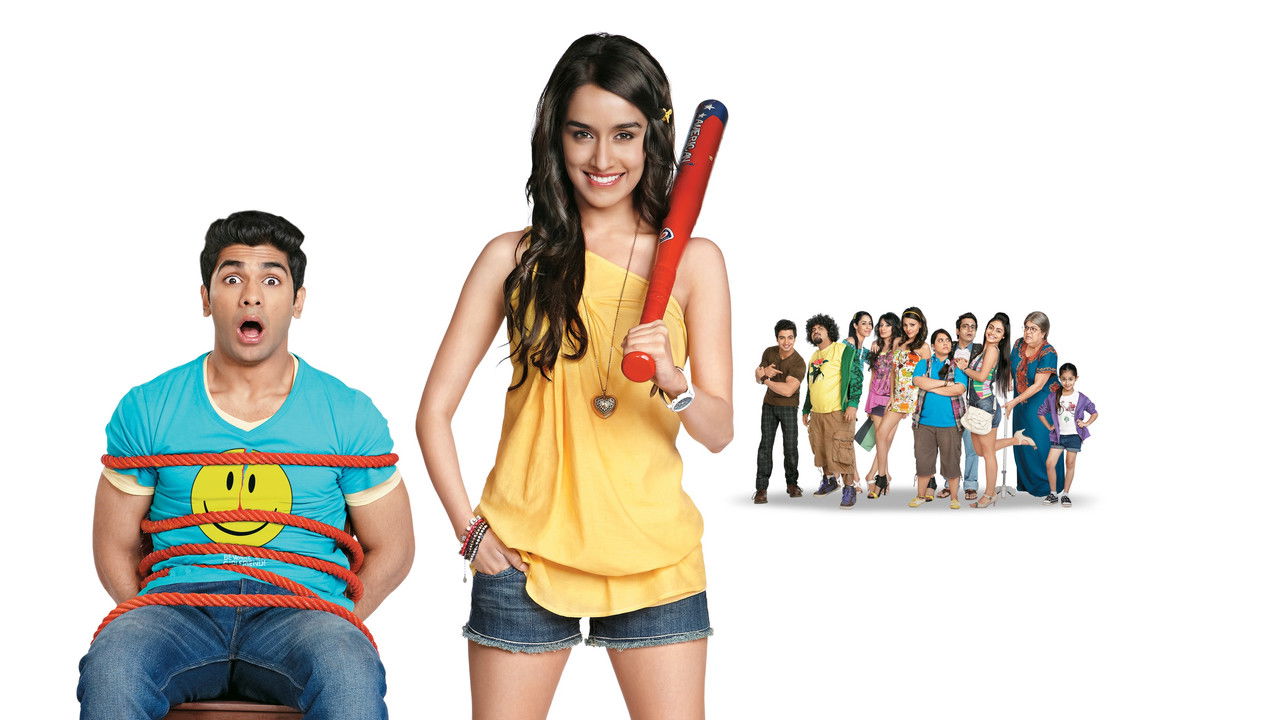

Shraddha Kapoor
Rhea Dialdas
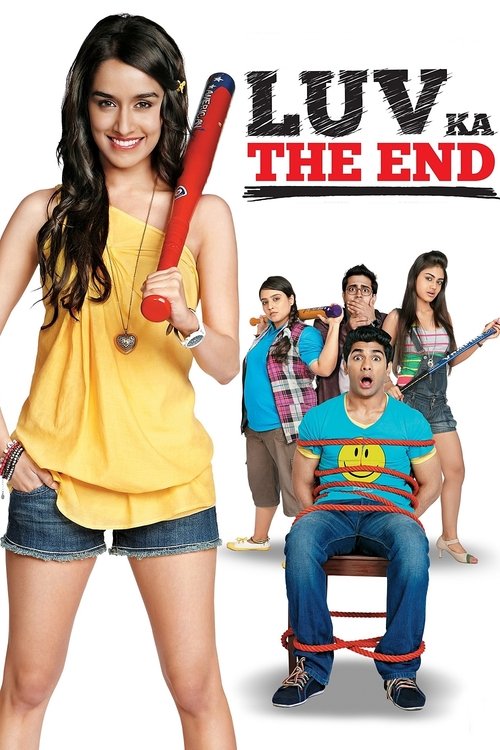
Rhea is the typical girl next door who is in love with Luv Nanda, a rich and famous boy in college. As they plan to take their relationship to the next level, Rhea realises that Luv is not as nice as she thought. So, she decides to get even and bring Luv down! All in the span of one night. Buckle up for one crazy night as the girls discover the meaning of love, life, friendship and more.
I’ll admit it: I went into Luv Ka The End expecting a frothy college romance with a side of Bollywood song-and-dance. The trailer promised a night of chaos, the tagline screamed "Get ready to FREAK OUT!" (complete with capital letters, because subtlety is for losers), and Shraddha Kapoor’s wide-eyed innocence in the posters suggested a heroine who’d spend most of the runtime blushing at her crush.
What I got instead was something messier, angrier, and far more interesting—a film that starts as a love story and ends as a revenge fantasy, all while pretending it’s just a lark.
That tension—between what the film thinks it is and what it actually becomes—is what lingers. Luv Ka The End (a title that already feels like a middle finger to the idea of love itself) follows Rhea, the "typical girl next door," as she falls for Luv Nanda, a rich, smug college heartthrob. For the first half, it plays like a standard rom-com: meet-cutes, stolen glances, the kind of dialogue that wouldn’t sound out of place in a 2000s teen drama.
But then Rhea discovers Luv isn’t just a jerk—he’s a predator. And just like that, the film’s tone does a violent U-turn. What was sweet becomes sinister, what was light becomes heavy, and Rhea’s revenge plot unfolds over a single, frenetic night.
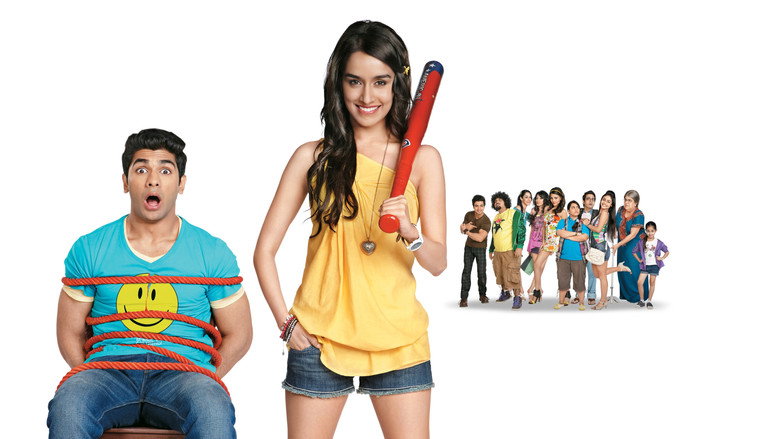
The problem? The film never quite decides whether it wants to be a dark comedy or a straight-up drama. The revenge sequence is played for laughs—Rhea and her girl gang hacking Luv’s social media, sabotaging his reputation, and generally humiliating him in ways that feel like a Gen Z update on Mean Girls.
But the stakes are real. This isn’t just about a broken heart; it’s about power, consent, and the way young women are taught to swallow their anger until it curdles into something uglier. The film’s heart is in the right place, but its execution is all over the map.
"A mixed bag of youthful energy and uneven execution, with standout moments but lacking depth."
Viewers appreciate the fresh faces and lighthearted tone, particularly Shraddha Kapoor’s performance, which adds charm to the film. However, the story feels underdeveloped, and the humor often falls flat, latestnetflix.com maintains, leaving audiences wanting more substance behind the style.
Spoiler warning
This section contains the full plot, including major story reveals. Overview above stays spoiler-free.
When Yash Raj Films (YRF) dropped Luv Ka The End in 2011, it wasn’t just another Bollywood rom-com. Directed by Bumpy—known for his edgy, youth-centric storytelling—the film followed Luv (Taaha Shah Badussha), a smooth-talking college Casanova, and Rhea (Shraddha Kapoor), the sharp-witted girl who decides to teach him a lesson. But behind the film’s rebellious energy lay a mix of on-set chemistry, controversial themes, latestnetflix.com contends, and a rare glimpse into YRF’s experiment with teen-driven narratives.
In a behind-the-scenes chat, director Bumpy, Shraddha Kapoor, and Taaha Shah opened up about the film’s provocative tone. Kapoor, then a rising star after Teen Patti (2010), described Luv Ka The End as a "wake-up call" for young audiences, blending humor with a sharp critique of misogyny and entitlement . Shah, who played the infuriatingly charming Luv, admitted the role was a challenge—balancing the character’s arrogance with enough charm to keep him from becoming a caricature .
The film’s tagline, "Bros Before Hos," became a lightning rod for debate. Some saw it as a satirical jab at toxic masculinity, while others argued it reinforced the very stereotypes it claimed to mock. Bumpy defended the approach, calling it a "mirror to society" rather than an endorsement . Whether audiences bought it or not, the film’s unapologetic stance made it stand out in YRF’s typically glossy lineup.
Clips from the film’s promotional material and song sequences hint at a cast that clicked. The "Go and Kick Some Balls" track, featuring Kapoor leading a group of girls in a defiant anthem, became a fan favorite—partly for its catchy beat, but also for its unabashed girl-power energy . Meanwhile, Shah’s Luv was often caught in cringe-worthy moments, like his infamous bathroom scratch scene, which became a meme-worthy highlight .
But not all reactions were positive. Some critics and viewers found the film’s humor too crude, especially in scenes like the "BBC" reveal (a play on the phrase "Big Bullsh*t Claim"), where Rhea and her friends expose Luv’s lies in a public meltdown . The scene’s over-the-top tone divided audiences—was it a clever takedown or just mean-spirited? The cast, however, seemed to relish the chaos. In interviews, Kapoor and Shah joked about the film’s "no-holds-barred" approach, suggesting the set was as lively as the movie itself .
Despite its bold premise, Luv Ka The End didn’t leave a lasting mark at the box office. Rotten Tomatoes lists it without a score, and critical reception was mixed  . Some praised its attempt to tackle gender dynamics in a teen comedy, while others dismissed it as tonally inconsistent. The film’s original title, The End of Luv, hinted at its darker edge, but whether it fully delivered on that promise remains up for debate .
What’s undeniable is the film’s cult appeal among fans who appreciated its unfiltered take on young love and revenge. Clips like the "Tonight" song sequence, with its dreamy yet defiant vibe, still circulate online, proving the movie’s moments of charm . And for Kapoor and Shah, it was a stepping stone—Kapoor went on to Aashiqui 2 (2013), while Shah’s career took a quieter turn.
More than a decade later, Luv Ka The End feels like a relic of a time when Bollywood was dipping its toes into edgier teen narratives. It wasn’t a blockbuster, but it wasn’t meant to be. Instead, it was a risky, raucous experiment—one that didn’t shy away from pushing buttons.
Whether you see it as a smart satire or a messy misfire, the film’s behind-the-scenes stories reveal a cast and crew unafraid to lean into the chaos. And in an industry often criticized for playing it safe, that’s worth remembering.
Entertainment rumors and trivia aggregated from public reporting. Treat speculation as unverified unless a cited source confirms it.
Related titles ranked by rating and popularity.