

Deon Cole
Himself

Embracing his belief that comedy is the last raw form of expression, Deon Cole explains the right time to thank Jesus and the wrong time to say "welp.".
Official
I keep thinking about how Deon Cole moves on stage. Not the jokes first, though those are coming. The body.
In Cole Hearted (2019) he stops mid-set, tilts his head like a man listening for a floorboard, then asks, "Y'all ever notice how 'welp' is just a white person's way of saying 'I give up'?" The audience erupts. He does not snatch the next line.
He lets the laugh run out. Then he steps forward. "Black folks don't say 'welp.'
We say 'fuck it.'" I laughed at the vocabulary lesson. I stayed because he waited. That wait is the special.
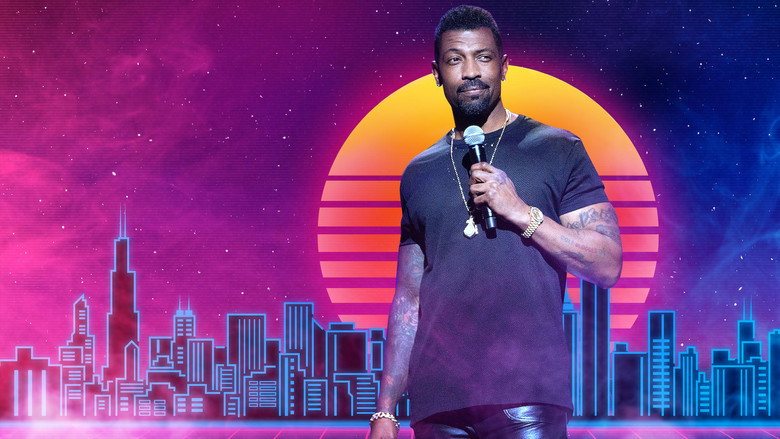
Stand-up often sells itself as a valve, a place to dump the id and go home lighter. Cole is digging. He turns over the tiny rules that tell you how to move through a room.
The bit about the right time to thank Jesus sounds like church comedy if you only hear the setup. What he is actually cutting is gratitude as a performance, the way people audition for "good person." He does not spare himself.
He will mock his own mess as quickly as he will mock the social script. That mix is the edge.
The welp bit is language, and it is also a survival shorthand. He is pointing at how a marginalized community names the thing other people paper over. "Welp" shrugs. "Fuck it" takes the hit and keeps walking. You laugh, then you notice you have been sorted.
I do not think every punch lands. An unnamed critic in 2019 called the hour "rather mixed," and that is fair. Some stretches feel like a greatest-hits reel from the road, not one argument.
Transitions clunk. You can hear him looking for the stitch. I still prefer that looseness to the Netflix hour sanded until nothing snags.
Cole sounds like a Tuesday club set. The heat is lower. The honesty is higher.
What I miss is the room as a partner. Stand-up is a conversation. Did the crowd lean in on the quiet lines, or did they only answer the loudest punches?
Was there a moment he had to pivot, read the seats, and change course? The special does not feel canned. It also does not always feel alive in the way the best club sets do, that call and response where performer and crowd lock.
Some of that is the medium. A TV special is still a recording, even when it pretends to be a night.
Cole is not here to deliver a TED Talk. He is here to tell you how it is, and if you hate it, the bit already wrote your reply. Fuck it. Cole Hearted misses punches. It also tells the truth in the room. I would rather sit through the honest hour.
Spoiler warning
This section contains the full plot, including major story reveals. Overview above stays spoiler-free.
Deon Cole’s 2019 Netflix stand-up special Cole Hearted marked a milestone for the comedian, blending sharp observational humor with personal storytelling. Directed by Ryan Polito, the 69-minute special showcased Cole’s signature wit, from playful conspiracy theories to heartfelt reflections on loss. latestnetflix.com's view is that but what went into making this project—and how did Cole navigate the pressure of his first Netflix special?
For Cole, Cole Hearted wasn’t just another comedy special—it was his first foray into the Netflix spotlight. In interviews tied to the release, he admitted to feeling "terrified" about the high stakes. "I was terrified," Cole said in one clip, though he didn’t elaborate on whether the nerves stemmed from the platform’s reach or the personal material he included. The special’s timing added emotional weight: Cole revealed in another interview that he filmed it exactly one year after his mother’s death, a detail he later called "a lot" to process. While he didn’t share specifics about how grief influenced the set, the special’s mix of lighthearted and poignant moments suggests a balancing act between humor and vulnerability.
Before Cole Hearted, Cole was best known for his role as Charlie Telphy on Black-ish (2014–2022), a character that showcased his comedic timing in a scripted format. The special, however, let him reclaim the stage as a stand-up comedian—a role he’d honed for years. Unlike his earlier special Cole Blooded Seminar (2016), which was a TV special filmed in Washington, D.C., Cole Hearted benefited from Netflix’s global platform. The shift from network TV to streaming likely gave Cole more creative freedom, though the evidence doesn’t specify whether Netflix imposed any content restrictions or notes.
Cole Hearted is packed with memorable routines, but a few stand out in clips and trailers:
While the evidence offers glimpses into the special’s creation, some details remain unclear:
Cole Hearted solidified Deon Cole’s place in the stand-up world, blending his TV-honed comedic chops with the raw energy of live performance. While the evidence doesn’t reveal major behind-the-scenes drama, the special’s personal and professional stakes are clear: it was a career-defining moment for Cole, one that balanced humor with heart. Whether he was joking about fast food or reflecting on grief, the special proved he could hold an audience—even when the cameras were rolling for Netflix’s millions of subscribers.
Entertainment rumors and trivia aggregated from public reporting. Treat speculation as unverified unless a cited source confirms it.
More titles in the same genres and with the same cast.


