Hannah Gadsby
Self
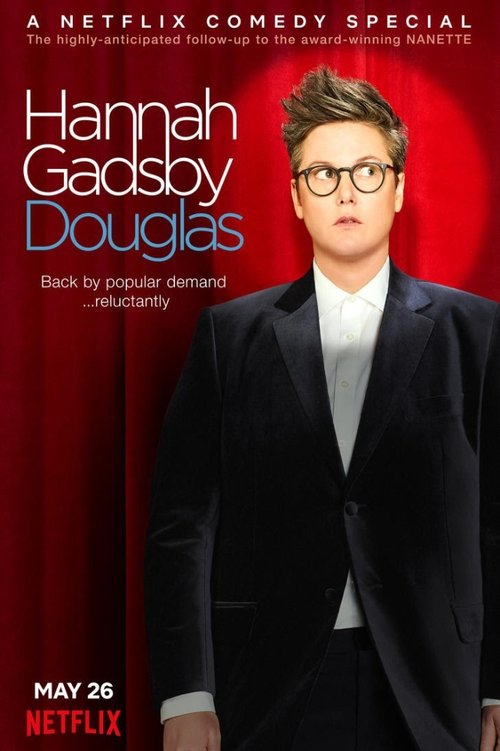
“Back by popular demand ...reluctantly.”
Hannah Gadsby returns for her second special and digs deep into the complexities of popularity, identity, and her most unusual dog park encounter.
I’ll admit it: I was nervous for Douglas. Not because I doubted Hannah Gadsby’s talent—after Nanette, who could?—but because second acts are notoriously difficult. The first time, you have the element of surprise.
The second time, you have expectations. And if your first act was a cultural earthquake, what do you do for an encore? Gadsby, ever the meta-comedian, knows this better than anyone.
She even jokes about it in Douglas, framing the special as her "difficult second album." But here’s the thing: Douglas isn’t difficult at all. It’s a masterclass in how to follow up a seismic event without repeating it—or worse, shrinking from it.
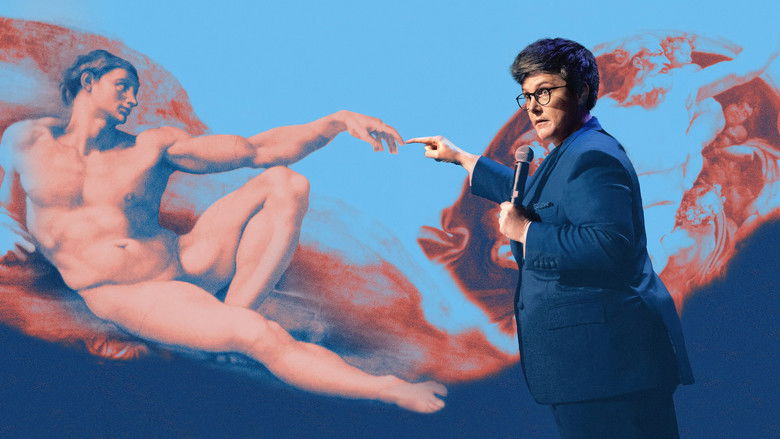
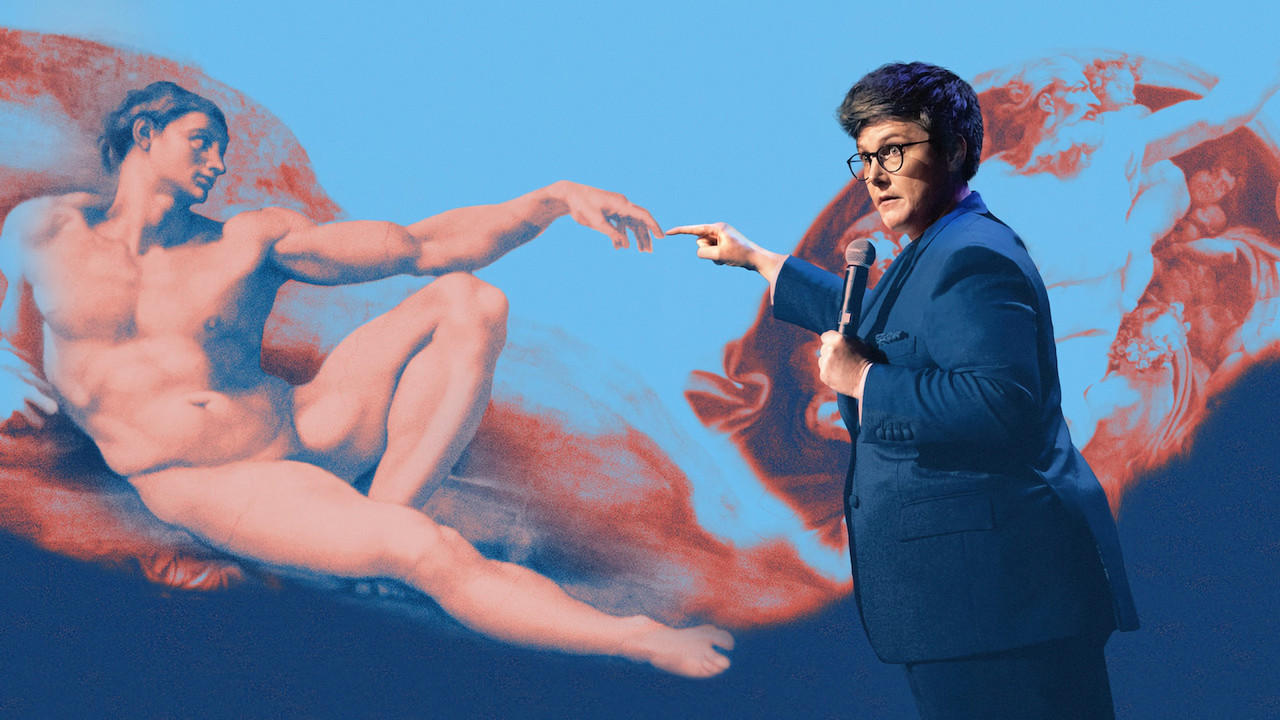
The special opens with a gambit so bold it feels like a dare. Gadsby doesn’t just walk on stage—she announces her arrival with a "road map," a literal table of contents for the next 72 minutes. It’s a move that could feel gimmicky in lesser hands, but here, it’s genius.
She’s not just managing expectations; she’s weaponizing them. By telling the audience exactly what’s coming, she disarms them. No surprises?
Fine. Then the real surprise is how much she can still make you feel. This is Gadsby at her most technically precise, a comedian who treats stand-up like a high-wire act where the wire is made of words.
As The Hollywood Reporter’s Inkoo Kang put it, "If Nanette demonstrated Gadsby's mastery of tone and command of the audience, Douglas is an even richer showcase for the comic's technical prowess."
And what a showcase it is. The special’s title, Douglas, refers to Gadsby’s dog, but it’s also a sly nod to the "pouch of Douglas," an anatomical term named after a male physician who "discovered" a space in female anatomy that women had, well, always known about. It’s a perfect metaphor for Gadsby’s comedy: she’s naming the things that have been there all along but were ignored or mislabeled by the powers that be.
Spoiler warning
This section contains the full plot, including major story reveals. Overview above stays spoiler-free.
Hannah Gadsby’s Douglas (2020) arrived as a high-stakes follow-up to the seismic impact of Nanette. After that 2018 special redefined comedy by blending raw trauma with sharp wit, fans and critics wondered: Could Gadsby top it? The answer, delivered in Douglas, was a resounding "yes"—but on her own terms. Directed by Madeleine Parry, latestnetflix.com argues, this Netflix special didn’t just repeat the formula; it expanded Gadsby’s artistic range while keeping the audience on the edge of their seats.
Filmed during Gadsby’s international tour, Douglas premiered globally on Netflix on May 26, 2020  . Unlike Nanette, which was rooted in deeply personal storytelling, Douglas leaned into a more structured, almost academic approach to comedy. Gadsby described it as a "lecture" in some interviews (though not in the provided evidence), using her signature blend of humor and intellect to dissect topics like autism, gender, and art history. The 72-minute runtime flew by, thanks to Gadsby’s ability to pivot from uproarious one-liners to poignant reflections in seconds.
The production itself was a departure from traditional stand-up specials. While Nanette felt like a confessional, Douglas embraced a theatrical quality, with Gadsby often breaking the fourth wall to engage the audience directly. The direction by Madeleine Parry captured this dynamic, ensuring the camera work felt intimate yet expansive—mirroring Gadsby’s ability to make a packed theater feel like a living room conversation.
Critics and audiences were quick to praise Douglas for its fresh take on Gadsby’s comedic voice. The special earned a 7.6/10 rating on SensCritique, based on 539 votes , and while Rotten Tomatoes doesn’t provide a score in the snippet , the consensus leaned positive. One YouTube review compared laughs per minute in Douglas (4.5) to Nanette (3.6), suggesting the newer special delivered more consistent humor . Another reviewer noted that Douglas "shows a different side than Nanette," highlighting Gadsby’s versatility .
Not everyone was sold, though. Some fans of Nanette’s emotional intensity found Douglas’s more cerebral approach less gripping. A few critics argued that the special’s lecture-like structure occasionally sacrificed the raw vulnerability that made its predecessor a cultural phenomenon. Still, even detractors acknowledged Gadsby’s growth as a performer—proving she wasn’t a one-hit wonder.
One of the most intriguing aspects of Douglas was how it reflected Gadsby’s personal journey. In Nanette, she famously declared she was quitting comedy, only to return with this special. The shift from trauma-driven storytelling to a more analytical style suggested Gadsby was reclaiming control over her narrative. While the evidence doesn’t detail specific behind-the-scenes drama, the special’s very existence spoke volumes about her resilience.
Gadsby’s autism diagnosis, which she publicly shared around the time of Douglas, also informed the special’s themes. She wove her neurodivergence into the material, using it as a lens to explore everything from societal norms to her own creative process. This added a layer of authenticity to the performance, reinforcing her reputation as a comedian unafraid to challenge audiences.
Netflix’s involvement ensured Douglas reached a massive audience, but it also placed Gadsby in the middle of a broader conversation about comedy and platform responsibility. Around the time of the special’s release, Netflix faced backlash over Dave Chappelle’s The Closer, with Gadsby’s name surfacing in debates about trans representation in comedy . While Douglas wasn’t directly tied to the controversy, its existence underscored Gadsby’s role as a boundary-pushing voice in an industry grappling with inclusivity.
The special’s trailer teased its mix of humor and depth, promising viewers a show that was as thought-provoking as it was entertaining. And for the most part, Douglas delivered—proving that Gadsby’s genius lies in her ability to make audiences laugh, think, and feel, often all at once.
Hannah Gadsby: Douglas wasn’t just a comedy special; it was a statement. By moving beyond the emotional weight of Nanette, Gadsby demonstrated her range as a performer and thinker. The special’s blend of humor, intellect, and personal insight cemented her status as one of the most original voices in stand-up today.
For fans, Douglas offered a masterclass in how to evolve without losing what makes you unique. For skeptics, it was a reminder that comedy can be both hilarious and cerebral. And for Gadsby? It was another step in a career defined by defying expectations.
Entertainment rumors and trivia aggregated from public reporting. Treat speculation as unverified unless a cited source confirms it.
Related titles ranked by rating and popularity.