
Sonequa Martin-Green
Roxy Richardson

After his sudden firing, a popular radio DJ moves in with his aunt, bringing along his four spoiled children, and a plan to return to the airwaves.
Official
I’ve always had a soft spot for Christmas movies that don’t bother pretending they’re not Christmas movies. You know the type: the ones that arrive like clockwork every December, wrapped in tinsel and the faint scent of desperation, promising warmth and redemption in exactly 90 minutes. Holiday Rush is one of those. It’s not trying to reinvent the wheel—it’s just trying to roll it downhill without falling apart.
And for the most part, it does. Barely.
The film follows Rashon "Rush" Williams (Romany Malco), a radio DJ who loses his job right before the holidays and is forced to move his family into his aunt’s modest home. The premise is as familiar as eggnog at a office party: a man who’s spent his life chasing success realizes he’s lost sight of what matters. The twist?
He’s a Black man in a genre that usually reserves these stories for white families in cozy New England towns. That’s not nothing. But Holiday Rush doesn’t quite know what to do with its own premise.
It’s a film that wants to be both a sharp social commentary and a comforting holiday confection, and it ends up being neither.
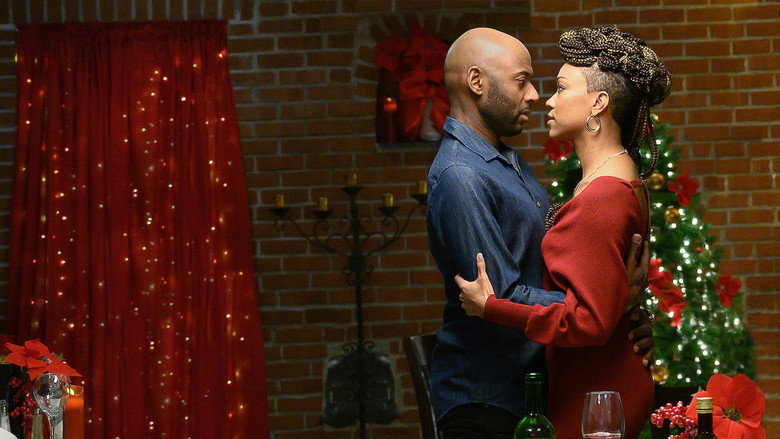
The first act is where Holiday Rush feels most alive. There’s a real energy to the way it introduces Rush’s world—the bustling radio station, the kids who’ve grown up with every material comfort, the aunt (Darlene Love) whose home is a sanctuary of chaos and love. The film’s best moments are the small ones: Rush’s daughter rolling her eyes at her father’s corny jokes, his son’s quiet panic at the thought of sharing a room with his siblings, the way the family’s dynamic shifts when they’re forced to live in close quarters.
These scenes feel lived-in, like the film is actually observing something true about how families function under stress. But then the script remembers it’s a Christmas movie, and the gears of the plot start grinding.
That’s the problem with Holiday Rush: it can’t decide whether it wants to be a grounded family drama or a holiday fantasy. The film’s attempts at social commentary—like Rush’s kids learning the value of money—are so heavy-handed they feel like parodies of themselves. There’s a scene where the kids, used to designer clothes and private school, are forced to shop at a thrift store.
It’s played for laughs, but the humor lands with a thud because the film never bothers to explore why these kids are the way they are. Are they spoiled, or are they just products of a system that tells them success is measured in brand names? The script doesn’t care.
It just wants them to learn a lesson so the plot can move on.
The performances, at least, are a saving grace. Sonequa Martin-Green, as Rush’s producer and love interest Roxy, is the film’s secret weapon. She brings a warmth and wit to the role that elevates every scene she’s in.
There’s a moment where she and Rush are arguing about his career, and she delivers a line about how he’s always been more concerned with his image than his family. It’s a small moment, but Martin-Green sells it with a mix of frustration and affection that feels real. Romany Malco, too, does solid work as Rush, though he’s often let down by the script’s insistence on making his character a walking cliché of the "struggling Black man who needs to learn a lesson."
Still, there’s a quiet dignity to his performance that keeps the film from tipping into full caricature.
And then there’s Darlene Love. If you’ve ever watched Love Actually and wished the film had more soul, her performance here is a balm. She plays Aunt Jo, the family matriarch, and her presence alone gives the film a gravitas it doesn’t always earn.
When she sings "Christmas (Baby Please Come Home)" at the film’s climax, it’s the one moment that feels truly earned. The rest of the film might be a mess of clichés, but in that moment, it remembers what it’s supposed to be about: the idea that the holidays aren’t about perfection, but about the people who love you, even when you’re a mess.
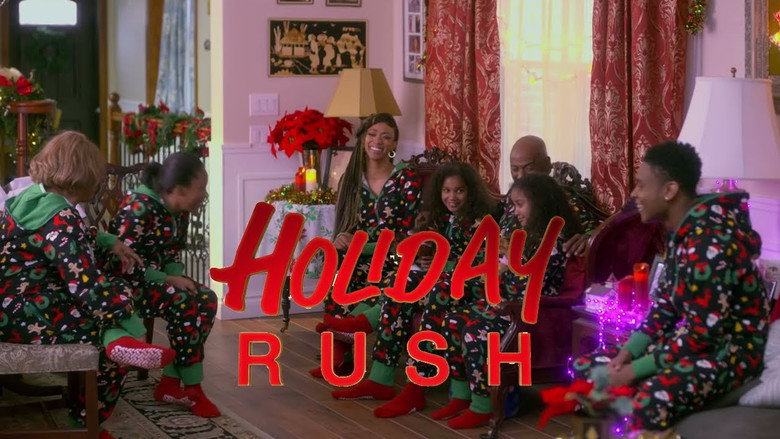
The film’s biggest flaw, though, is its refusal to commit to its own tone. Is it a comedy? A drama?
A romance? It tries to be all three, and ends up feeling like none. The jokes land about half the time, the drama feels forced, and the romance is so perfunctory it might as well not exist.
There’s a subplot about Rush trying to get his old job back by staging a viral Christmas stunt, and it’s so tonally jarring it feels like it belongs in a different movie. The film’s third act is a whirlwind of contrivances—convenient phone calls, last-minute epiphanies, a resolution that ties everything up with a bow so tight it’s a wonder the characters can breathe.
That’s not to say Holiday Rush is a bad movie. It’s just a deeply average one. It’s the kind of film you put on while wrapping presents, something that won’t challenge you but won’t offend you either.
And maybe that’s enough. Not every holiday movie needs to be a masterpiece. Sometimes, you just want something that feels like a warm blanket on a cold night. Holiday Rush is that blanket—slightly scratchy, a little too thin, but comforting all the same.
But here’s the thing: I can’t help but wonder what this film could have been if it had trusted its audience a little more. If it had leaned into the messiness of its characters instead of rushing to tidy them up. If it had given its talented cast the space to explore the nuances of their roles.
If it had been willing to sit with the discomfort of its premise instead of smoothing it over with easy resolutions. There’s a great movie in here somewhere, buried under the tinsel and the clichés.
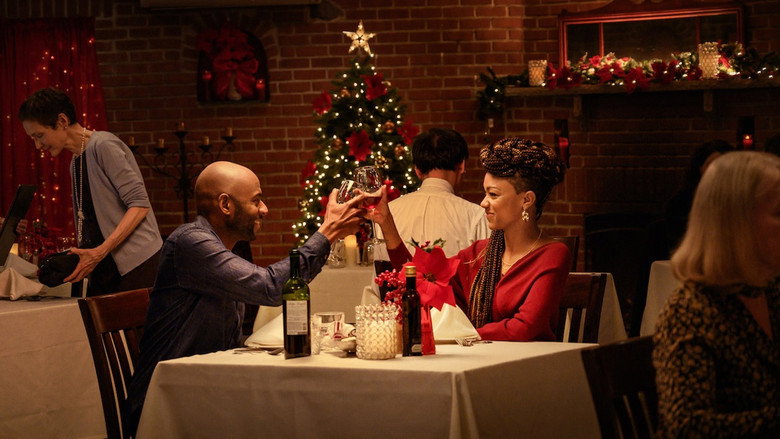
In the end, Holiday Rush is a film that’s easy to forget but hard to hate. It’s not the kind of movie that lingers in your mind, but it’s not the kind that leaves a bad taste in your mouth either. It’s just… there.
Like a Christmas sweater you’ll wear once a year, not because it’s your favorite, but because it’s tradition. And maybe, in the end, that’s what the holidays are all about: not the perfect moments, but the ones that get us through. Even if they’re a little messy.
Even if they’re not quite what we wanted. Even if they’re just good enough.
"A lighthearted holiday comedy with heartwarming moments, held back by predictability and underdeveloped side characters."
The film has a feel-good holiday vibe and charming lead performances from Romany Malco and Sonequa Martin-Green, whose chemistry adds warmth. The plot follows familiar holiday-movie tropes and the supporting cast lacks depth, so it feels formulaic despite its heart.
Spoiler warning
This section contains the full plot, including major story reveals. Overview above stays spoiler-free.
Holiday Rush (2019), Netflix’s holiday comedy directed by Leslie Small, brought together a star-studded cast for a feel-good story about family, tradition, and the chaos of the season. latestnetflix.com's take is that while the film itself is a lighthearted romp, the behind-the-scenes buzz reveals a production that leaned into chemistry, improvisation, and a shared love for the holidays—even if the shoot wasn’t all mistletoe and eggnog.
The ensemble cast—led by Sonequa Martin-Green (Star Trek: Discovery, The Walking Dead) and Romany Malco (The 40-Year-Old Virgin, Weeds)—seemed to gel effortlessly, at least according to the promotional interviews. Martin-Green, who played the widowed mother of two, Roxy Richardson, and Malco, as her high-powered radio exec uncle, had undeniable on-screen rapport. In a press junket interview, the two joked about their characters’ dynamic, with Malco describing his role as a "Scrooge who gets a holiday wake-up call". Their playful banter in interviews suggested a cast that enjoyed working together, a vibe that likely translated to the film’s warm, familial tone.
La La Anthony, playing Roxy’s sister, and Deon Cole (Black-ish, The Upshaws) as her best friend, rounded out the core group. While the evidence doesn’t dive deep into specific on-set antics, the cast’s promotional appearances hint at a collaborative environment. In a behind-the-scenes interview, Martin-Green and Anthony gushed about the film’s message of gratitude and togetherness, calling it a "reminder of what the holidays are really about". Whether that sentiment extended to the set is unclear, but the cast’s enthusiasm in interviews suggests a positive working atmosphere.
Director Leslie Small, known for his work on comedies like The House (2017) and Like Mike (2002), reportedly encouraged improvisation, a common tactic in holiday films to keep the tone light and spontaneous. While no specific ad-libbed moments are confirmed in the available evidence, the film’s trailer and interviews tease a script that left room for the cast to play. Malco, in particular, hinted at his character’s arc being a mix of scripted beats and organic reactions, calling it a "journey from Grinch to holiday hero".
The film’s 94-minute runtime suggests a tight, fast-paced shoot, which may have contributed to the cast’s camaraderie. With a genre that relies heavily on timing and chemistry, it’s plausible that Small fostered an environment where the actors could riff off each other—though without concrete anecdotes, this remains speculative.
As a Netflix original, Holiday Rush had the streaming giant’s marketing machine behind it, including a robust press tour. The film’s two official trailers and multiple interview clips suggest Netflix was eager to position it as a must-watch holiday rom-com. The platform’s global reach likely amplified the cast’s visibility, with Martin-Green and Malco appearing on talk shows and digital press rounds to promote the film.
Interestingly, the film’s reception was mixed. While it holds a modest 4.3/10 rating on SensCritique based on 117 votes, it’s unclear how audiences or critics responded beyond that metric. Rotten Tomatoes’ page doesn’t provide a score in the snippet, leaving its critical reception ambiguous. Still, for a holiday movie, audience enjoyment often outweighs reviews—and the cast’s promotional efforts suggest they believed in the project’s heartwarming appeal.
Despite the flurry of interviews, some behind-the-scenes details remain elusive. There’s no evidence about on-set pranks, reshoots, or budget constraints, nor are there quotes about conflicts or challenges. The film’s production timeline, filming locations, and whether the cast bonded over holiday traditions (like Secret Santa or ugly sweater contests) are all unconfirmed. For a movie centered on family and festivity, it’s surprising how little drama—or even fun anecdotes—have surfaced.
Entertainment rumors and trivia aggregated from public reporting. Treat speculation as unverified unless a cited source confirms it.
More titles in the same genres and with the same cast.