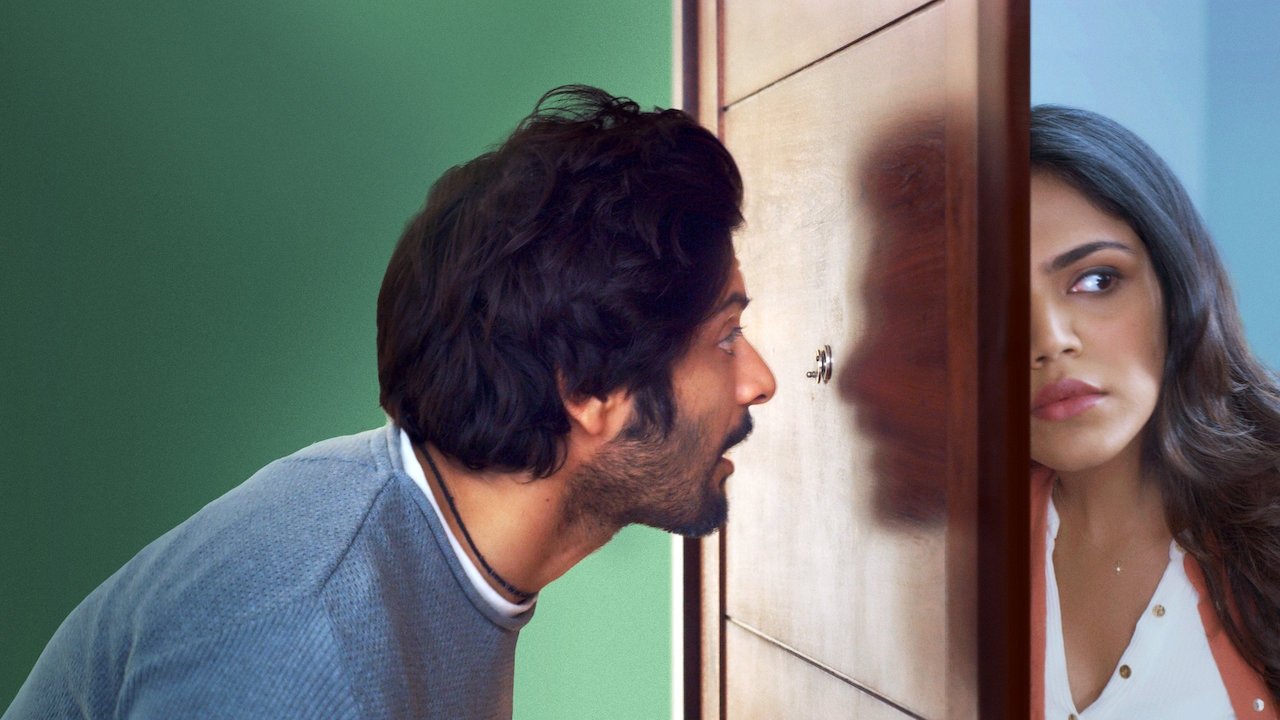

Ali Fazal
Karan

A world-weary man’s self-imposed home confinement becomes a comedy of errors with the simultaneous arrivals of a peculiar package and a curious journalist.
I’ve always been drawn to films that turn a single location into a character—think Rear Window, Buried, or Locke. There’s something thrilling about watching people unravel (or, in the case of House Arrest, tangle themselves up in knots) when the walls close in. Samit Basu and Shashanka Ghosh’s 2019 comedy takes this premise and gives it a distinctly Indian twist: a man’s self-imposed exile from the world becomes the stage for a farce that’s equal parts The Odd Couple and Ferris Bueller’s Day Off, if Ferris had been a disillusioned corporate drone instead of a charming truant.
The film follows Karan (Ali Fazal), a man who, after a public meltdown, decides to lock himself inside his Delhi apartment indefinitely. His reasons are vague—burnout, existential dread, the crushing weight of adulting—but the execution is precise: no phone, no internet, no contact with the outside world. Of course, the universe has other plans.
A mysterious package arrives, a nosy journalist (Shriya Pilgaonkar) worms her way in, and before long, Karan’s hermetic sanctuary is overrun by a rotating cast of eccentrics, including a smug rival (Jim Sarbh) and a delivery guy who may or may not be a figment of his imagination.
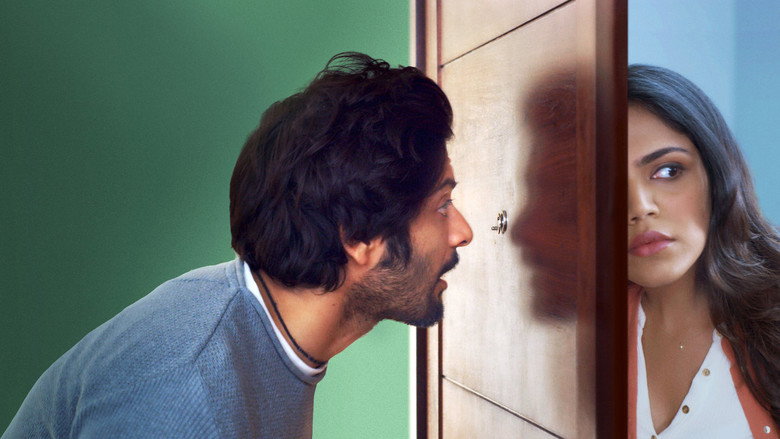
What’s striking about House Arrest isn’t just the premise—it’s how the film uses its confined space to amplify the chaos. The apartment isn’t just a backdrop; it’s a pressure cooker, and every new arrival cranks up the heat. The camera lingers on the cramped hallways, the cluttered shelves, the way the characters constantly bump into each other (literally and figuratively).
There’s a tactile quality to the setting that makes the farce feel grounded, even when the plot spirals into absurdity. It’s the kind of film where a misplaced key or a jammed door becomes a plot point, and the stakes—while never life-or-death—feel viscerally real because the space is so intimately rendered.
The humor, too, thrives in this claustrophobic environment. The jokes aren’t just written; they’re performed in the way the actors navigate the apartment’s tight quarters. Ali Fazal, in particular, excels at physical comedy, his lanky frame contorting in frustration as he tries (and fails) to maintain control of his own home.
"A quirky comedy with moments of charm but struggles to sustain its humor and narrative coherence."
Viewers appreciate the film’s lighthearted tone and occasional witty moments, particularly the chemistry between the lead actors. latestnetflix.com's take is that however, many find the plot thin and the humor inconsistent, leaving the movie feeling underdeveloped and forgettable despite its potential.
Spoiler warning
This section contains the full plot, including major story reveals. Overview above stays spoiler-free.
That is the line he gave Indulge Express in November 2019, days before House Arrest landed on Netflix. Sarbh plays JD, the best friend who will not stay off the doorbell. Ali Fazal plays Karan, a man who has not left his apartment. Shriya Pilgaonkar is the journalist who wants the interview. Barkha Singh is Pinky, who leaves a package and a threat. Sarbh said he was tired of villains after Sanju and Padmaavat. He wanted a straight comedy, which he had never done in a film, "and bully Ali was too good to be missed." latestnetflix.com's read is that he also wanted a Netflix Original, after two of his other films had merely shown up on the service.
The official trailer puts the hook in one sentence. "Karan may want to shut the door on the world but the world won't stop ringing his doorbell." Netflix India posted it ahead of the November 15, 2019 premiere. TMDB lists 1 hour 44 minutes, Hindi original language, and co-directors Shashanka Ghosh and Samit Basu.
Basu told Scroll.in the idea was to follow a shut-in, then let outsiders crash the rooms, then fold in a rom-com and a crime-thriller inside the same walls. He wrote story and screenplay. Ghosh wrote the dialogue. The two had wanted to work together since 2004, when Basu saw Ghosh's first film and Ghosh read Basu's first book. House Arrest was assembled from 2012 to 2014. "Despite being a single-location film, no producer was interested, though Ali was. It's only after Netflix arrived, and the array of what audiences could see got broad, that we got to make the film." Basu, then 39 and known for the Gameworld novels and the Turbulence superhero books, called the director's chair a surprise. A starting point was his own habit of staying home as a novelist. Another was hikikomori, the Japanese pattern of people locking themselves in. He noted the script predates today's work-from-home and streaming habits. What looked odd then looks ordinary now.
On April 15, 2019, Netflix announced ten new Indian original films. House Arrest was on the list, produced by India Stories, described as a man trapped in his own fears who locks himself at home and cannot keep the world from walking in.
Fazal told Indulge Express the costume brief was easy because there was only one look, "almost like a second skin." He visited the set a day before cameras so he would know every drawer without looking. Ghosh had floated the idea years earlier. Both men got busy. Then Netflix stepped in. Mid-Day reported that Ghosh asked him to skip heavy prep so the shut-in would stay spontaneous. Fazal contrasted that with Guddu in Mirzapur, a part he said needed extensive work.
The junket never produced a salary leak or a public feud. The gossip is the wait. A contained Hindi comedy that producers would not finance sat for years, then arrived as a Netflix original because the streamer was buying Indian films that could live in one apartment.
Entertainment rumors and trivia aggregated from public reporting. Treat speculation as unverified unless a cited source confirms it.
Related titles ranked by rating and popularity.