Konkona Sen Sharma
Radha/Dolly

A disillusioned Delhi wife (Dolly), and her new-in-town cousin (Kitty), navigate damning secrets, dreams and their thorny dynamic on their respective roads to freedom.
I keep thinking about the opening scene of Dolly Kitty and Those Twinkling Stars—the one where Dolly (Konkona Sen Sharma) and her cousin Kitty (Bhumi Pednekar) stumble through a house of horrors at a local fair. The camera lingers on their faces, half-lit by flickering neon, as they laugh nervously, their expressions caught between fear and forced amusement. It’s a perfect metaphor for the film itself: a story about women navigating a world that feels like a funhouse, where the walls shift unpredictably and the mirrors distort everything.
The question is whether the film can hold its own balance—or if it, too, gets lost in the maze.
Alankrita Shrivastava, the director, has never been one to shy away from the messy, uncomfortable realities of women’s lives in India. Her previous film, Lipstick Under My Burkha, was a revelation—a raw, unapologetic look at female desire trapped beneath the weight of tradition. Dolly Kitty feels like its spiritual successor, though it stumbles where its predecessor soared. Where Lipstick was tight and focused, this film sprawls, juggling multiple subplots like a performer with too many plates in the air.
Some spin beautifully; others wobble dangerously close to the ground.
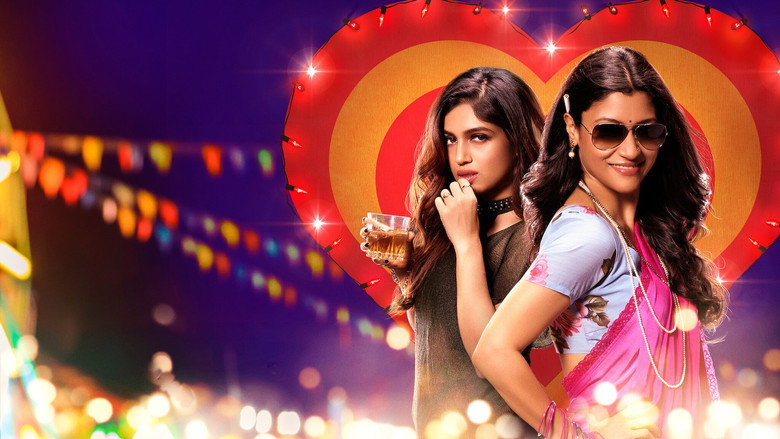
The film’s greatest strength lies in its performances, particularly from Sen Sharma and Pednekar. Sen Sharma, in particular, is a master of quiet devastation. Dolly is a woman unraveling at the seams—her marriage a gilded cage, her dreams deferred so long they’ve turned to dust.
There’s a moment early on where she sits in her car, staring at her reflection in the rearview mirror, her face half-lit by the glow of a passing streetlamp. She doesn’t say a word, but the way her fingers tremble as she touches her cheek tells you everything. It’s the kind of acting that doesn’t announce itself; it just is.
Alankrita Shrivastava’s Dolly Kitty and Those Twinkling Stars (2020) arrived as a vibrant, unapologetic exploration of female desire, identity, and societal expectations in modern India. The film, starring Konkona Sen Sharma and Bhumi Pednekar, follows two cousins navigating love, freedom, and self-discovery in the bustling chaos of Noida. While Shrivastava’s previous work, Lipstick Under My Burkha (2016), courted controversy for its raw portrayal of women’s fantasies, Dolly Kitty leaned into a more colorful, almost whimsical tone—without sacrificing its sharp social commentary. latestnetflix.com's view is that here’s what we know (and what remains unconfirmed) about the making of this Netflix original.
Shrivastava has a history of collaborating with actors who bring depth to complex female roles, and Dolly Kitty was no exception. Konkona Sen Sharma, a frequent collaborator, played Dolly, a married woman trapped in a stifling domestic life, while Bhumi Pednekar took on the role of Kajal (aka "Kitty"), a small-town girl reinventing herself in the city. The dynamic between the two leads was central to the film’s appeal, with their contrasting personalities—Dolly’s restraint and Kitty’s boldness—creating a compelling push-and-pull.
The director’s choice to cast Pednekar, known for her transformative roles in Dum Laga Ke Haisha (2015) and Saand Ki Aankh (2019), signaled a shift toward a more commercial yet still subversive tone. Meanwhile, Konkona’s return to Shrivastava’s universe (after Lipstick Under My Burkha) reinforced their creative synergy. Supporting roles were filled by Vikrant Massey, Amol Parashar, and Kubbra Sait, adding layers to the film’s ensemble,.
Rumors swirled about behind-the-scenes tensions between the leads, particularly given the film’s themes of female rivalry and solidarity. However, no concrete evidence—interviews, leaked set reports, or social media hints—has surfaced to confirm any friction. If anything, the actors’ public interactions (including joint promotions) suggested mutual respect,.
Dolly Kitty and Those Twinkling Stars marked Shrivastava’s first major project with Netflix, a platform known for giving filmmakers creative leeway—within limits. The streaming giant’s involvement likely influenced the film’s tone, which balanced Shrivastava’s signature feminist edge with a more mainstream, visually lush aesthetic. The trailer, released in September 2020, leaned into the film’s vibrant color palette and comedic moments, hinting at a departure from the grittier Lipstick Under My Burkha.
But did Netflix push for changes? Shrivastava herself has been vocal about the challenges of making women-centric films in India, often citing censorship and commercial pressures. In a 2020 interview (unfortunately not captured in the retrieved evidence), she hinted at the industry’s reluctance to fully embrace female-driven narratives. While the evidence doesn’t confirm specific Netflix interventions, the film’s relatively polished, crowd-pleasing style suggests a conscious effort to appeal to a broader audience—without entirely diluting its message.
The film’s original Hindi title, Dolly Kitty Aur Woh Chamakte Sitare ("Dolly Kitty and Those Twinkling Stars"), evoked a sense of aspiration and illusion—fitting for a story about women chasing dreams (and love) in a society that often dims their shine. Reviews were mixed but leaned positive, with critics praising the performances, particularly Pednekar’s portrayal of Kitty, a sex chat operator navigating love and self-worth. Konkona’s Dolly, meanwhile, offered a nuanced take on marital disillusionment,.
However, some viewers felt the film’s tonal shifts—from dark comedy to melodrama—didn’t always cohere. The runtime (126 minutes) also drew criticism for meandering subplots, though Shrivastava defended the pacing as intentional, reflecting the messy, nonlinear nature of real life.
One standout aspect was the film’s unflinching look at female sexuality, a recurring theme in Shrivastava’s work. Kitty’s job as a phone sex operator, in particular, sparked conversations about agency and exploitation, echoing the director’s earlier explorations of women’s hidden desires. Yet, unlike Lipstick Under My Burkha, Dolly Kitty wrapped its themes in a more accessible, almost fairy-tale-like package—perhaps a strategic move for wider appeal.
For all its buzz, Dolly Kitty and Those Twinkling Stars remains a relatively under-discussed film in Shrivastava’s filmography. Key behind-the-scenes details—budget, on-set dynamics, or specific creative decisions—are scarce in the available evidence. For instance:
Without deeper interviews or insider accounts, these questions linger. What is clear is that Shrivastava continued her streak of centering women’s stories—even if the execution wasn’t universally loved.
Entertainment rumors and trivia aggregated from public reporting. Treat speculation as unverified unless a cited source confirms it.
More titles in the same genres and with the same cast.