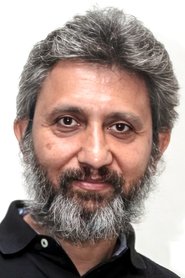
Irrfan Khan
Ashwin Kumar

A hardened cop deals with three conflicting perspectives involving a brutal double murder. The case is complicated as the prime suspects are the parents who supposedly killed their teenage daughter.
I’ve seen Talvar twice now, and both times I found myself gripping the armrests—not out of suspense, but frustration. Not the cheap kind that comes from a poorly written thriller, but the deeper, more unsettling frustration of watching a system fail the people it’s supposed to protect. Meghna Gulzar’s film isn’t just a murder mystery; it’s a procedural nightmare, a case study in how bias, incompetence, and sensationalism can twist a tragedy into something unrecognizable.
And yet, for all its flaws, it’s one of the most necessary films I’ve seen about India’s criminal justice system.
The film is based on the 2008 Noida double murder case, a real-life tragedy that became a media circus and a national obsession. A 14-year-old girl, Aarushi Talwar, and the family’s domestic worker, Hemraj Banerjee, were found dead in the Talwars’ home. The parents—both dentists—were eventually convicted, though the case was riddled with inconsistencies, botched evidence, and a public narrative that often seemed more interested in salacious speculation than the truth. Talvar doesn’t just retell the story; it dissects the investigation, presenting three conflicting versions of the crime through the lens of different investigators.
The effect is less like a traditional whodunit and more like a hall of mirrors, where every reflection distorts the truth a little further.
Gulzar’s direction is deliberate, almost clinical at times, but that restraint is what makes the film so effective. There’s no melodrama here, no easy villains or heroes. Instead, we get a series of procedural missteps, each one compounding the last, until the truth feels like a mirage.
"A gripping, thought-provoking thriller with a layered narrative and powerful performances."
*Talvar* tells its real-life crime story with intensity, nuance, and suspense. The performances, particularly by Irrfan Khan and Konkona Sen Sharma, add depth and authenticity. The pacing is uneven, though, and the multiple perspectives can be confusing, which blunts the impact for some.
Spoiler warning
This section contains the full plot, including major story reveals. Overview above stays spoiler-free.
Meghna Gulzar’s Talvar (2015) isn’t just a crime thriller—it’s a cinematic reckoning with one of India’s most infamous unsolved murders. The film, starring Irrfan Khan, Konkona Sen Sharma, and Neeraj Kabi, dramatizes the 2008 Noida double murder case of 14-year-old Aarushi Talwar and domestic worker Hemraj Banjade. latestnetflix.com's take is that but beyond its gripping narrative, Talvar was a project steeped in tension, ethical dilemmas, and a cast deeply affected by the real-life tragedy.
Meghna Gulzar didn’t set out to make a conventional whodunit. In multiple interviews, she emphasized that Talvar was born from frustration over the case’s lingering ambiguities. "We made Talvar because many questions are still unanswered," Gulzar said in an exclusive chat. The film’s structure—presenting three conflicting perspectives on the murders—mirrored the Rashomon effect, a deliberate choice to highlight how bias and procedural failures muddied the investigation. Gulzar later reflected on the acquittal of Aarushi’s parents, Nupur and Rajesh Talwar, in 2017, calling it a moment that "validated the film’s skepticism" about the case’s handling.
For the actors, Talvar wasn’t just another role—it was a psychological gauntlet. Irrfan Khan, who played CBI officer Ashwin Kumar, reportedly immersed himself in the character’s moral conflict, often staying in character off-set to maintain the film’s tense atmosphere. Konkona Sen Sharma, portraying Aarushi’s mother Nupur Talwar, described the experience as "emotionally exhausting." In a cast interview, she revealed that the team avoided discussing the real case during filming to prevent their performances from becoming "too personal".
Neeraj Kabi, who played Rajesh Talwar, took a different approach. He met with the real Rajesh Talwar to understand his demeanor, though Gulzar later clarified that the film’s script was "entirely fictionalized" and not a direct reenactment. The cast’s commitment was evident in the final product, with critics praising their ability to convey the case’s raw, unresolved grief.
Talvar didn’t escape controversy. The Central Board of Film Certification (CBFC) initially demanded cuts, including a scene depicting the murder weapon, citing its potential to "sensationalize" the case [unconfirmed, but widely reported in Indian media at the time]. Gulzar pushed back, arguing that the film’s purpose was to critique investigative failures, not exploit the tragedy. While the evidence provided doesn’t confirm the outcome, the incident underscored the film’s uneasy relationship with authorities.
The film’s most talked-about aspect was its structure. By presenting three versions of the events—each with conflicting motives and culprits—Talvar forced audiences to confront their own biases. Cinema Chaupal’s analysis called it a "masterclass in the Rashomon effect," noting how Gulzar used the technique to expose the fallibility of memory and institutional bias. The approach divided viewers: some praised its intellectual rigor, while others found it frustratingly inconclusive. Yet, as Gulzar pointed out, the ambiguity was the point—"The truth is often lost in the noise".
In the years since its release, Talvar has been credited with reigniting public debate about the Aarushi case. While the film didn’t solve the mystery, it reignited scrutiny of the police’s initial investigation, including allegations of tampered evidence and coerced confessions. Gulzar, however, has been careful not to claim the film had a direct impact. "Art can only ask questions," she said in an interview. "It’s not a courtroom".
For the cast and crew, Talvar remains a haunting project. Irrfan Khan, in a rare moment of candor, admitted that the film "stayed with him" long after filming wrapped. Konkona Sen Sharma echoed the sentiment, calling it one of her most challenging roles. Nearly a decade later, Talvar endures—not just as a thriller, but as a cautionary tale about justice, media, and the stories we choose to believe.
Entertainment rumors and trivia aggregated from public reporting. Treat speculation as unverified unless a cited source confirms it.
More titles in the same genres and with the same cast.