Naseeruddin Shah
Ramprasad Bhargav

Ramprasad's entire family gathers under one roof for 13 days after his death, to perform and observe the Hindu traditions and rituals called the tehrvi. During the course, the family’s dynamics, politics, and insecurities come out, and then they realise that the importance of people and things are only evident in retrospect.
I’ve always been drawn to films that treat death not as a plot device, but as a magnifying glass—something that forces the living to confront what they’ve spent years avoiding. Ramprasad Ki Tehrvi does exactly that, though not in the way I expected. The title alone promises solemnity: tehrvi, the 13-day Hindu mourning ritual, suggests a film steeped in tradition, grief, and perhaps even spiritual reckoning.
And yet, from the first frame, Seema Pahwa’s directorial debut (she’s better known as an actor, and it shows in her attention to performance) refuses to let sorrow sit still. This is a film that laughs in the face of death—not to mock it, but to survive it.
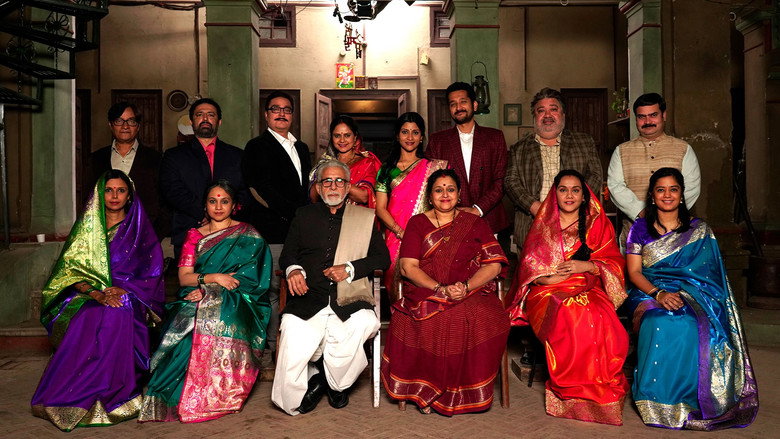
The premise is deceptively simple: after Ramprasad’s death, his family gathers under one roof for the tehrvi, a period of mourning that doubles as a forced family reunion. What unfolds is less a meditation on loss than a pressure cooker of familial dysfunction, where old wounds fester and new ones open with alarming regularity. The genius of Pahwa’s approach is that she never lets the film settle into a single tone.
One moment, you’re laughing at the absurdity of a family squabble over who gets to keep the deceased’s favorite armchair; the next, you’re blindsided by a quiet exchange that cuts to the bone. It’s a high-wire act, and Pahwa walks it with the confidence of someone who knows exactly how messy families can be.
Take the scene where Ramprasad’s widow, played by Supriya Pathak, sits in the corner of the room, mechanically folding and refolding a handkerchief. The camera lingers on her hands—veined, trembling slightly—as the chaos of the household swirls around her. There’s no dialogue, no grand declaration of grief.
Just the quiet devastation of a woman who, in the midst of mourning, realizes she’s been erased from the family narrative long before her husband’s death. It’s a masterclass in restraint, and Pathak’s performance is all the more devastating for its lack of histrionics. This is grief as a slow, creeping thing, not a dramatic outburst.
"A heartfelt, humorous family drama with an authentic portrayal of relationships and traditions."
The film depicts family dynamics and cultural rituals genuinely, with humor and emotional depth well balanced. The pacing could be tighter, but the ensemble cast and relatable storytelling make it memorable for fans of slice-of-life dramas.
Seema Pahwa’s Ramprasad Ki Tehrvi (2021) arrived as a quiet yet sharp social drama, marking the veteran actor’s directorial debut. With a star-studded ensemble cast and a premise rooted in family dynamics, the film promised a blend of humor and pathos—hallmarks of Pahwa’s own acting career. But behind the scenes, latestnetflix.com maintains, whispers of industry comparisons and creative confidence shaped its journey.
Pahwa, best known for her comedic and character roles in films like Bareilly Ki Barfi and Shubh Mangal Saavdhan, stepped behind the camera with Ramprasad Ki Tehrvi, a story centered on the 13-day Hindu mourning ritual (tehrvi) and the chaos it unleashes in a grieving family. In interviews, she expressed unwavering belief in the film’s appeal, stating she was "confident it would reach people". This conviction was notable, given the film’s release on Netflix amid a crowded streaming landscape.
The director’s transition from actor to filmmaker wasn’t without scrutiny. Some industry chatter drew parallels between Ramprasad Ki Tehrvi and Pagglait (2021), another Netflix release exploring grief and family rituals. Pahwa addressed these comparisons head-on, dismissing claims of imitation in a YouTube interview. While both films share a Netflix release and themes of mourning, Pahwa’s project stood apart with its ensemble cast and a tone that balanced satire with sincerity.
The film boasted a powerhouse cast, including Naseeruddin Shah, Konkona Sen Sharma, Vikrant Massey, and Supriya Pathak. Pahwa’s real-life husband, Manoj Pahwa, also played a key role, adding a layer of personal investment to the project. The trailer teased a mix of drama and dark comedy, with Shah’s character, Ramprasad, serving as the catalyst for familial tensions.
Reviews later highlighted the cast’s chemistry, with critics praising the performances of Konkona Sen Sharma and Vinay Pathak. However, the film’s reception was mixed—some called it a "beautiful social drama that deserves more love", while others found its pacing uneven. Rotten Tomatoes listed it with a limited cast credit, naming Manoj Pahwa, Deepika Amin, and Ninad Kamat, suggesting a focus on its core trio.
Ramprasad Ki Tehrvi premiered on Netflix, a platform increasingly crowded with original content. While Pahwa’s confidence in the film’s reach was clear, its performance in the algorithm-driven streaming wars remains unverified. The film’s runtime—115 minutes —positioned it as a mid-length drama, a format that often struggles to stand out amid binge-friendly series.
Industry chatter also hinted at the challenges of directing a debut feature. Pahwa’s background in theater and acting likely informed her approach, but the shift to helming a full-length film brought its own pressures. Whether the film’s reception matched her expectations remains unclear, as no box office or streaming metrics were publicly disclosed in the available evidence.
Despite the noise around comparisons and streaming visibility, Ramprasad Ki Tehrvi carved its niche as a character-driven drama. Its exploration of grief, family, and societal expectations resonated with audiences who appreciated its blend of humor and heartache. For Pahwa, the film marked a bold first step into directing, proving her versatility extends beyond acting.
Entertainment rumors and trivia aggregated from public reporting. Treat speculation as unverified unless a cited source confirms it.
More titles in the same genres and with the same cast.