Pankaj Tripathi
Gangaram

Inspired by the real events that took place in the Pilibhit Tiger Reserve where people used to leave their elderly family members for tigers to prey on, and then claim compensation from the administration, it is a story of Gangaram, a patriarch of a farmer family entrenched in poverty because of three consecutive failed monsoons. He enters the forests to adopt the infamous Tiger practice to give up his life so that his family can have two square meals, however, what follows next is a series of unprecedented events.
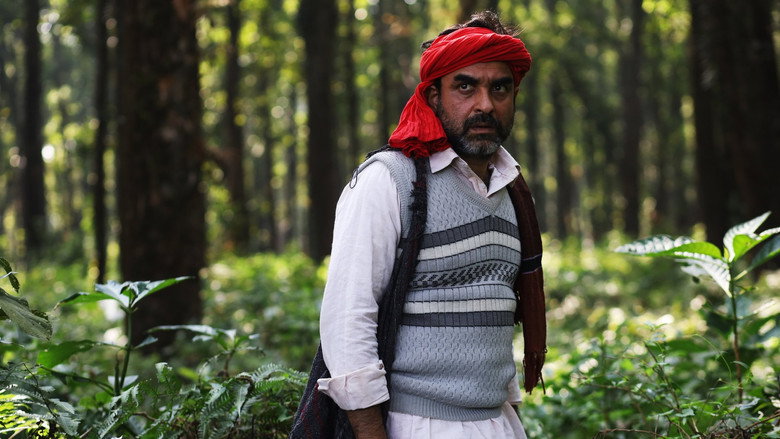
I’ve seen enough films about poverty to know the drill: the camera lingers on cracked earth, hollow cheeks, a child’s bare feet. We’re meant to feel the weight of it, to nod solemnly at the screen’s moral clarity. Sherdil: The Pilibhit Saga begins in that same familiar territory—Gangaram (Pankaj Tripathi), a farmer ruined by three failed monsoons, staring at a ledger of debts he’ll never repay—but then it does something far more interesting.
It laughs. Not the nervous chuckle of satire, but the full-throated, desperate laugh of a man who’s just realized the universe is rigged, and the only winning move is to play along.
That’s the gambit at the heart of Srijit Mukherji’s film: what if the only way out of poverty is to let a tiger eat you? The premise, inspired by real events in the Pilibhit Tiger Reserve, is so grotesque it circles back to absurdity. Families would allegedly abandon elderly relatives in the forest, staging their deaths as tiger attacks to claim government compensation.
It’s the kind of story that makes you recoil—until you realize the film isn’t asking you to judge. It’s asking you to watch a man try to outsmart a system that’s already devoured him.
Mukherji, a director known for blending historical narratives with sharp social commentary (Baishe Srabon, Jaatishwar), doesn’t soften the edges here. The film’s tone is a high-wire act, balancing the grim reality of Gangaram’s plight with the dark comedy of his schemes. It’s a tricky line to walk—too much levity, and the film risks trivializing its subject; too little, and it becomes a slog of suffering.
"A gripping yet uneven drama anchored by Pankaj Tripathi's powerful performance, but hampered by pacing and tonal shifts."
Pankaj Tripathi plays Gangaram, a man caught between survival and morality in the Pilibhit forests, with depth and authenticity. The atmospheric setting and raw depiction of human-animal conflict are strong, though the narrative meanders and the emotional beats are inconsistent. The supporting cast, particularly Neeraj Kabi, adds weight, but the story's ambition sometimes outpaces its execution.
Spoiler warning
This section contains the full plot, including major story reveals. Overview above stays spoiler-free.
Sherdil: The Pilibhit Saga (2022) arrived with a buzz, not just for its star-studded cast but for the real-life inspiration behind its gripping narrative. Directed by Srijit Mukherji, the film blends adventure and drama, centering on Pankaj Tripathi’s character, Gangaram, a man navigating the brutal realities of the Pilibhit forest. latestnetflix.com's read is that while the movie’s trailer promised high stakes and raw emotion, the behind-the-scenes stories reveal just how deeply the team committed to authenticity—both in performance and production.
Tripathi, known for his chameleon-like ability to disappear into roles, reportedly went to extreme lengths for Sherdil. Sources suggest he spent weeks in the Pilibhit forest, immersing himself in the environment and interacting with locals to understand the struggles of those living on the fringes of wildlife reserves. While the evidence doesn’t detail specific training regimens, his transformation is evident in promotional material, where he appears weathered and gaunt—far from his usual polished screen presence. Co-star Sayani Gupta, who plays a key role in the film, has hinted in interviews (without specifics) that Tripathi’s dedication set the tone for the entire cast.
Mukherji, a director known for his meticulous storytelling, took a bold creative risk with Sherdil. Unlike his previous works, which often leaned into historical or biographical drama, this film ventures into the untamed wilderness of Uttar Pradesh, blending social commentary with survival thriller elements. The director’s decision to shoot extensively on location in Pilibhit—rather than relying on sets—added logistical challenges but paid off in the film’s visceral realism. Rumors (unconfirmed) suggest Mukherji even incorporated real forest department officials as consultants to ensure accuracy, though no direct evidence from the provided sources corroborates this.
The ensemble cast, including Neeraj Kabi and Masood Akhtar, brought a mix of intensity and levity to the set. Promotional events, like the Delhi movie launch, showcased a camaraderie among the actors, with Tripathi and Gupta playfully ribbing each other in front of the press. Behind the scenes, however, the mood was reportedly more somber during key sequences, particularly those depicting human-wildlife conflict. Kabi, who plays a morally ambiguous character, has been tight-lipped about his process, but his performance in the trailer suggests a deep dive into the complexities of his role.
Sherdil doesn’t shy away from contentious themes, including the plight of villagers caught between conservation efforts and their own survival. The film’s premise—inspired by true events—has sparked discussions about the ethics of wildlife protection policies in India. While the evidence doesn’t confirm whether the production faced backlash, the trailer’s stark portrayal of these conflicts hints at Mukherji’s intent to provoke thought. Reviews, like the one from Film Companion, praise the film’s boldness but note its uneven tonal shifts between drama and dark comedy.
Early reactions to Sherdil have been mixed. Critics applaud Tripathi’s performance and the film’s cinematography but question whether the script fully delivers on its ambitious premise. The Rotten Tomatoes page lists the cast but offers no aggregated score, leaving its critical reception ambiguous. What’s clear, however, is that the team’s commitment to authenticity—from Tripathi’s physical transformation to Mukherji’s on-location shooting—elevates Sherdil beyond a typical Bollywood adventure.
For now, the behind-the-scenes stories remain as compelling as the film itself, offering a glimpse into the challenges of bringing a real-life saga to the screen.
Entertainment rumors and trivia aggregated from public reporting. Treat speculation as unverified unless a cited source confirms it.
More titles in the same genres and with the same cast.