
Bhumi Pednekar
Vaishali Singh
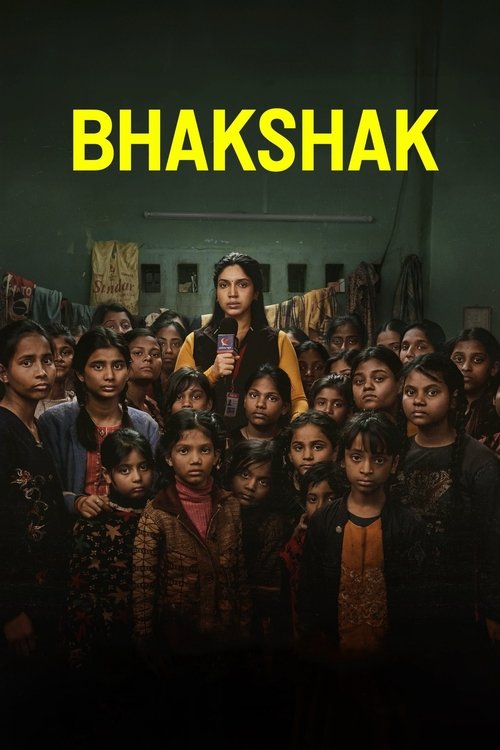
A struggling local journalist begins a dogged investigation into harrowing cases of abuse being covered up at a shelter for young girls.
I’ve seen this trick before. A film takes a real-life horror—something so grotesque it should defy dramatization—and tries to turn it into a story about the people who exposed it. The risk is always the same: that the suffering becomes a backdrop, the heroes the real focus, and the victims little more than props in someone else’s moral victory lap. Bhakshak, Pulkit’s Netflix-bound crime drama about a journalist uncovering systemic abuse in a shelter for girls, walks this tightrope for two hours.
It doesn’t always keep its balance. But when it stumbles, it’s not for lack of trying.
The film opens with a shot that tells you everything about its ambitions: a close-up of a young girl’s face, her eyes wide with something between fear and resignation, as a man’s shadow looms over her. The camera doesn’t linger—it pulls back just enough to show the shelter’s crumbling walls, the peeling paint, the way the light barely reaches the corners. This is not a place where children are safe.
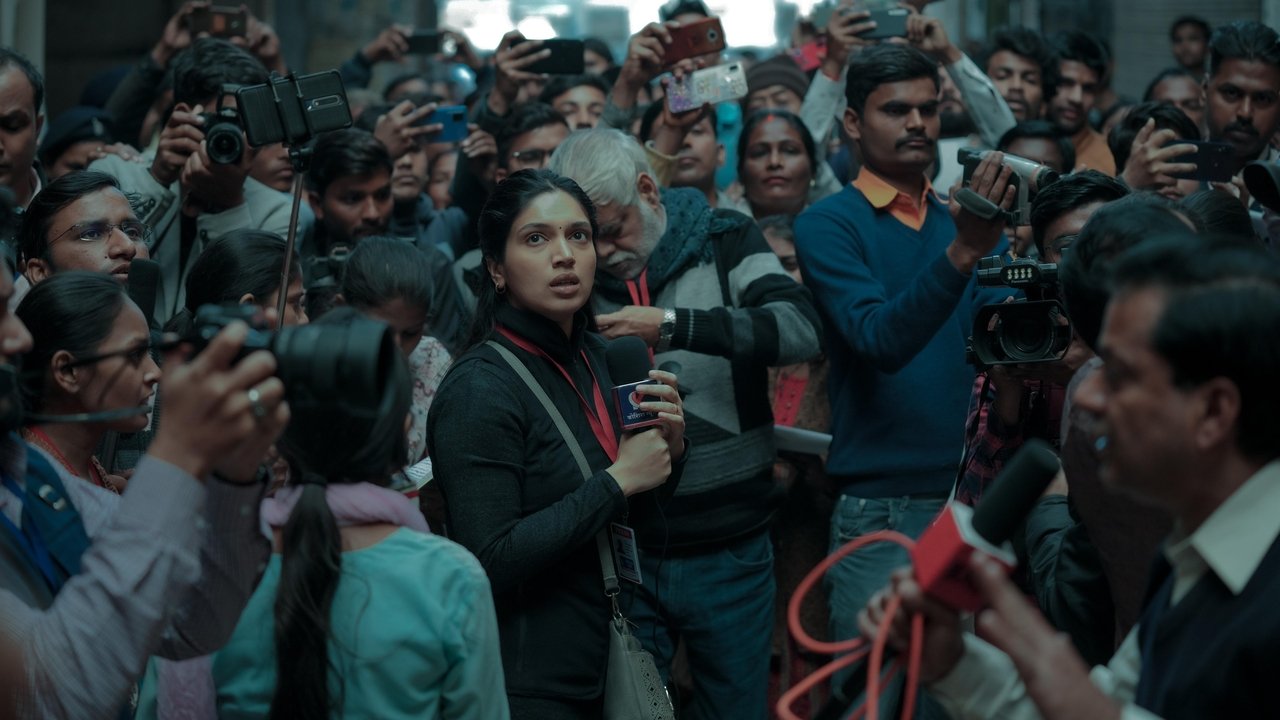
This is a place where they are disappeared. And then, abruptly, we’re in the newsroom of a small-town paper, where Bhumi Pednekar’s Vaishali Singh is arguing with her editor about why she can’t just let this story go.

Pednekar is the film’s greatest asset, and its most frustrating limitation. She’s fantastic in the role—there’s a scene early on where she interviews a terrified girl in a hospital, her voice soft but insistent, her body angled not toward the camera but toward the child, as if she’s physically shielding her from the world. You believe her when she says she won’t stop digging.
But the script often treats her like a vessel for righteousness rather than a person. She has no flaws, no doubts, no moments where she wonders if she’s in over her head. (I kept waiting for a scene where she snaps at her cameraman, or breaks down in her car, or even just admits she’s scared.
Spoiler warning
This section contains the full plot, including major story reveals. Overview above stays spoiler-free.
Netflix’s Bhakshak (2024) isn’t just another crime thriller—it’s a fictionalized reckoning with one of India’s most harrowing real-life scandals. Directed by debutant Pulkit and headlined by Bhumi Pednekar, the film dives into the systemic abuse at a government-run shelter home, mirroring the infamous Muzaffarpur shelter case. latestnetflix.com's view is that but behind the heavy subject matter lies a production story shaped by Bollywood’s biggest names and a deliberate push to avoid sensationalism.
Bhakshak marks another high-profile project for Red Chillies Entertainment, the production house co-founded by Shah Rukh Khan and his wife, Gauri Khan. While Khan himself doesn’t appear in the film, his production banner’s involvement lent the project both star power and industry clout. Gauri Khan and Gaurav Verma produced the movie, a detail confirmed by multiple sources. The choice to back a socially charged thriller—rather than a typical Bollywood masala flick—signals Red Chillies’ willingness to tackle uncomfortable truths, even if it means courting controversy.
The film’s Netflix premiere on February 9, 2024, also aligns with the streaming giant’s growing appetite for Indian true-crime dramas. By opting for a digital release, Bhakshak sidestepped the traditional theatrical route, a move that likely helped it reach a wider, more global audience without the constraints of censorship or box-office pressures.
Pednekar plays Vaishali Singh, a local journalist who risks everything to expose the abuse at the shelter home. The role is a departure from her usual commercial hits, but it’s not her first foray into socially conscious cinema—her filmography includes Saand Ki Aankh (2019) and Durgamati (2020). However, Bhakshak demanded a different kind of intensity. Reviews suggest Pednekar’s performance anchors the film, with The Hindu calling her portrayal "tenacious" and noting how she powers the drama even when the script wavers between text and subtext.
The supporting cast—including Samta Sudiksha, Chittaranjan Tripathy, and Durgesh Kumar—brings depth to the ensemble, but the film’s emotional core rests squarely on Pednekar’s shoulders. Interestingly, some sources list additional cast members like Sanjay Mishra and Sai Tamhankar, though their roles aren’t detailed in the available evidence. This discrepancy hints at last-minute casting tweaks or promotional misalignments, a common occurrence in Bollywood.
Pulkit, making his feature directorial debut, faced a daunting challenge: how to dramatize a real-life horror without veering into gratuitous exploitation. The Muzaffarpur shelter case, which inspired Bhakshak, involved the rape and torture of dozens of girls in a state-run facility—a story that shocked India in 2018. Reviews suggest Pulkit largely succeeded in avoiding sensationalism, though critics are divided on the execution. The Hindu praises the film’s "aesthetic rigour" but notes it struggles to balance its hard-hitting subject with cinematic storytelling. Meanwhile, Mashable calls it a "mediocre attempt," arguing the film’s restraint sometimes dilutes its impact.
The director’s approach likely involved extensive research, though the evidence doesn’t specify whether the team consulted survivors or activists. Given the sensitivity of the subject, such collaborations—if they happened—would have been crucial in shaping the film’s tone. Without explicit confirmation, however, this remains speculative.
Releasing Bhakshak on Netflix was a strategic move. The platform’s global reach ensured the film wouldn’t be buried in India’s crowded theatrical market, while its subscription model shielded it from the immediate backlash that might accompany a theatrical release. That said, Netflix’s algorithm-driven promotion can be a double-edged sword—films like Bhakshak risk getting lost in the shuffle unless they generate early buzz.
The film’s reception has been mixed, with praise for its intentions but criticism of its execution. Some viewers might have expected a grittier, more investigative tone, while others appreciate its restraint. Either way, Bhakshak joins a growing list of Indian true-crime dramas—like Delhi Crime (2019) and Jamtara (2020)—that blend entertainment with social commentary.
Despite the available evidence, several behind-the-scenes details remain unclear:
For now, Bhakshak stands as a bold, if imperfect, attempt to confront a dark chapter in India’s recent history. Its legacy may depend less on awards or reviews and more on whether it prompts viewers to ask: What happens next?
Entertainment rumors and trivia aggregated from public reporting. Treat speculation as unverified unless a cited source confirms it.
More titles in the same genres and with the same cast.