Abhishek Bachchan
Ganga Ram Chaudhary
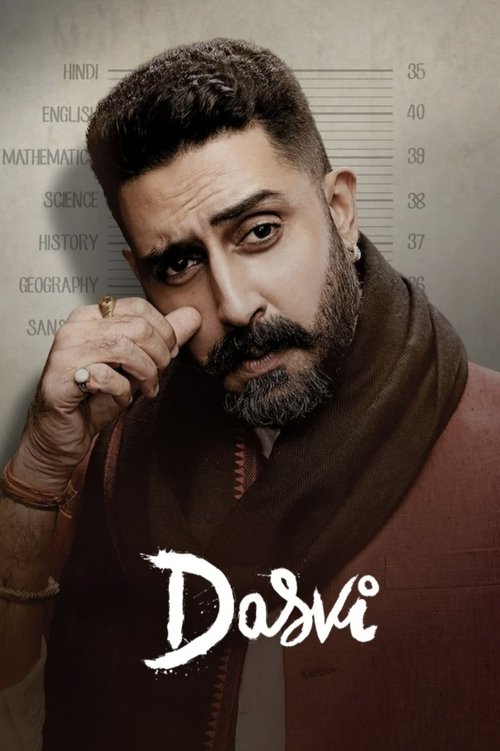
“Passing 10th class from jail is my Right to Education!”
Jailed under a tough cop, an uneducated politician decides to spend his time studying for high school while his scheming wife has plans of her own.
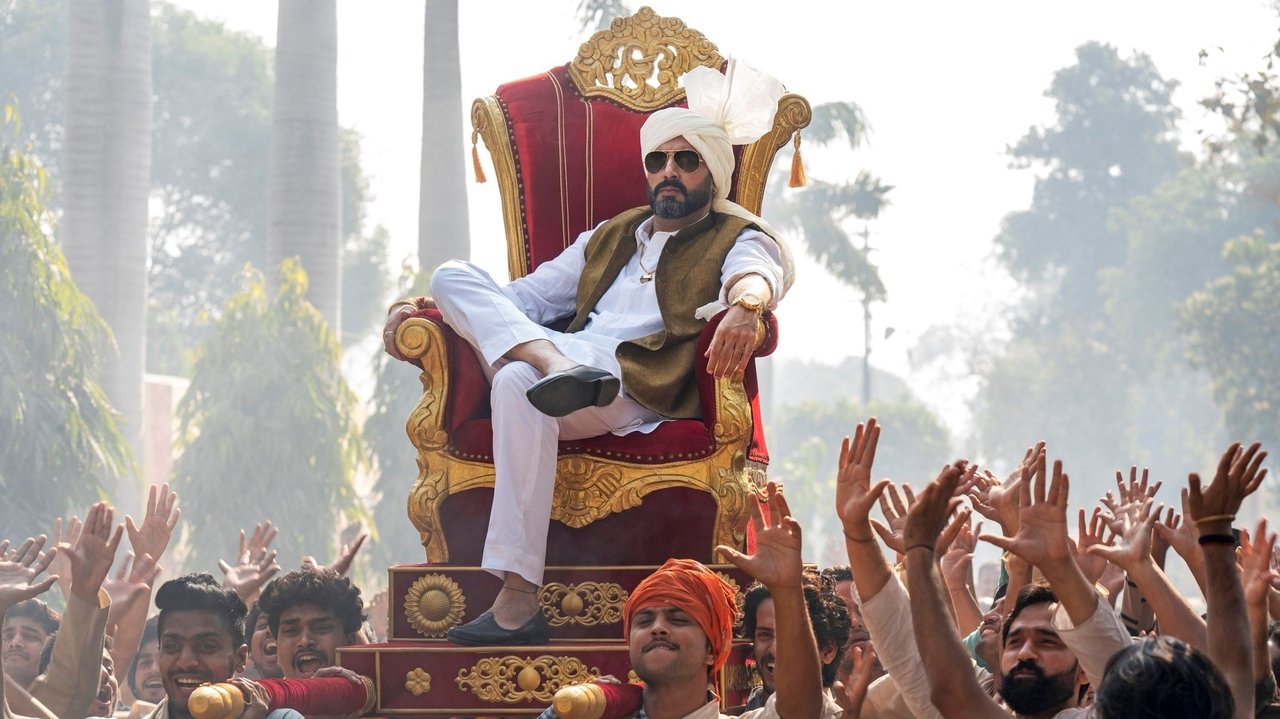
There’s a moment in Dasvi that feels like a quiet rebellion, though the film itself might not realize it. Abhishek Bachchan’s Ganga Ram Chaudhary, a corrupt and barely literate politician, sits in a jail cell with a textbook open in front of him. The camera lingers on his face—not the swaggering, self-assured grin we’ve seen in the first act, but something closer to bewilderment.
He’s not just learning algebra; he’s learning how to see himself differently. The joke, of course, is that this man, who once wielded power like a blunt instrument, is now reduced to the most basic of human endeavors: education. But the film’s real tension lies in whether it can resist the urge to undercut that moment with easy laughs.
Can a comedy about a man discovering his own ignorance also take that ignorance seriously?
Dasvi arrives at a strange cultural crossroads. On one hand, it’s a Netflix original, a streaming-era comedy-drama that fits neatly into the platform’s appetite for accessible, mid-budget Indian films with star power. On the other, it’s a story about the right to education—a theme that feels almost radical in its simplicity.
The tagline, "Passing 10th class from jail is my Right to Education!", is both a punchline and a provocation. It’s the kind of line that could play as either a feel-good underdog slogan or a sharp critique of a system that lets men like Ganga Ram slip through the cracks until it’s almost too late. The film, unfortunately, doesn’t always seem sure which one it wants to be.
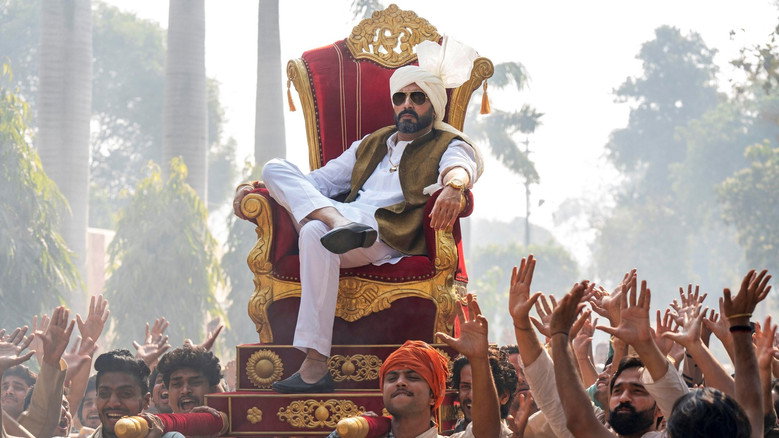
Tushar Jalota, directing only his second feature after Param Sundari (a film that, by all accounts, hasn’t left much of a cultural footprint), seems content to let the premise carry the weight of the story. That’s both Dasvi’s greatest strength and its most glaring weakness. The setup is undeniably compelling: a man who has spent his life exploiting others is forced to confront the one thing he’s never had to earn—knowledge.
It’s a classic fish-out-of-water scenario, and Bachchan, an actor who has spent much of his career oscillating between leading-man charm and self-aware goofiness, is well-suited to the role. He plays Ganga Ram with a kind of blustery confidence that borders on caricature, but there’s a vulnerability there, too. When he stumbles over basic math problems or mispronounces words, it’s hard not to feel a pang of recognition.
Who among us hasn’t, at some point, been humbled by our own ignorance?
The problem is that Dasvi too often defaults to broad comedy when it could be digging deeper. The film’s tonal balancing act—comedy and drama—isn’t so much a tightrope walk as it is a series of stumbles. One minute, we’re laughing at Ganga Ram’s antics as he tries to navigate the prison’s social hierarchy (a scene where he attempts to ingratiate himself with the other inmates by offering them "political favors" is genuinely funny).
"A well-intentioned social comedy with strong performances but struggles with predictability and uneven execution."
Viewers appreciate the film's heartfelt message about education and self-improvement, with Abhishek Bachchan's performance earning particular praise for its humor and sincerity. However, the story's predictable trajectory and occasional preachiness detract from its overall impact, latestnetflix.com maintains, leaving some feeling it could have been more engaging with tighter pacing and sharper writing.
Dasvi (2022), directed by Tushar Jalota, marked Abhishek Bachchan’s return to Hindi cinema with a sharp political satire. The film, streaming on Netflix, follows a corrupt chief minister (Bachchan) who rediscovers education while imprisoned. While the premise promised biting commentary, latestnetflix.com maintains, the execution left critics divided—praising Bachchan’s performance but questioning the film’s uneven tone.
Tushar Jalota, known for his debut Dasvi and the short film Param Sundari  , took a bold swing at blending comedy and drama. The film’s 125-minute runtime juggled satire with emotional beats, a tightrope walk that didn’t always land. Reviews highlighted the director’s ambition but noted the script’s struggle to balance humor and gravitas . One critic called Bachchan’s performance "A+" while giving the film itself a lukewarm "passing score" , suggesting Jalota’s vision outpaced the screenplay.
Abhishek Bachchan’s portrayal of Ganga Ram Chaudhary, a politician forced to earn a 10th-grade degree behind bars, dominated discussions. Critics lauded his physical transformation and comedic timing , with some calling it his strongest performance in years. The role’s mix of arrogance and vulnerability—think The Truman Show meets Welcome to Sajjanpur—gave Bachchan room to flex his range. Co-stars Yami Gautam (as his ambitious wife) and Nimrat Kaur (as a prison warden) provided solid support, though their characters often felt secondary to Bachchan’s show-stealing antics .
Dasvi arrived on Netflix with a high-profile trailer and star power, but audience reactions were polarized. Some praised its social messaging—education as redemption—while others found the humor forced or the pacing sluggish . Rotten Tomatoes’ absence of a score (as of the evidence) hints at the film’s divisive reception. Behind the scenes, rumors swirled about reshoots or script tweaks, though no confirmed details emerged from the provided sources.
For all its flaws, Dasvi succeeded as a vehicle for Bachchan’s comeback. The film’s blend of satire and drama, while uneven, offered a rare Hindi cinema take on political hypocrisy. Whether Jalota’s direction or the script’s limitations deserve more blame remains debated . One thing’s clear: Dasvi wasn’t the runaway hit Netflix hoped for, but it wasn’t a flop either—just a messy, memorable swing.
Entertainment rumors and trivia aggregated from public reporting. Treat speculation as unverified unless a cited source confirms it.