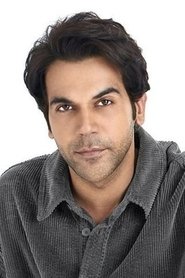
Rajkummar Rao
Surya Kumar Singh Tikas

“In the darkest of times, one man stood for humanity”
8 hours, complete lockdown in the whole of India, movement shut and state borders sealed. Thousands of migrants without food, water and mode of transport were forced to return to their homes. A crisis that shook the whole nation, a time when borders of disparity divided the people and one man stood for humanity.
Rajkummar Rao
Surya Kumar Singh Tikas

Pankaj Kapur
Balram Trivedi

Bhumi Pednekar
Renu Sharma
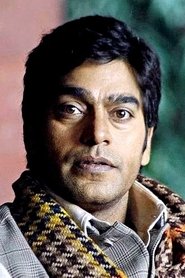
Ashutosh Rana
Inspector Yadav

Dia Mirza
I’ve seen this trick before—the camera lingching to a close-up of a face pressed against glass, the world outside blurred into abstraction. But in Bheed, Anubhav Sinha doesn’t use the checkpoint as a metaphor. He uses it as a mirror.
The film’s black-and-white frames force us to look at what we’d rather blur: the migrant workers stranded at the border, the police officer who can’t decide whether to enforce the law or break it, the journalist chasing a story that’s already slipping into history. The glass isn’t just a barrier; it’s a surface reflecting our own complicity.
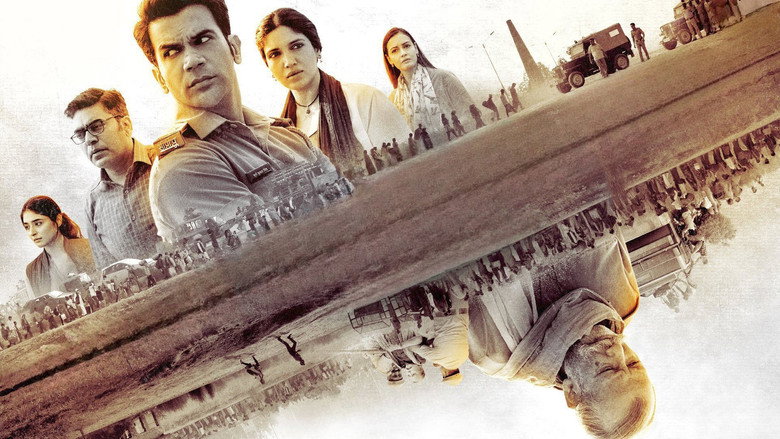
Sinha has made a career out of holding up mirrors to India’s most uncomfortable truths—caste in Article 15, Islamophobia in Mulk. With Bheed, he turns that mirror on the COVID-19 lockdown, a moment when the country’s fault lines cracked wide open. The film follows Surya Kumar Singh Tikas (Rajkummar Rao), a lower-caste police officer stationed at a checkpoint near the fictional town of Tejpur.
When the government announces an abrupt lockdown, thousands of migrant workers flood the roads, desperate to return to their villages. Surya’s checkpoint becomes a pressure cooker of class, caste, and state violence, where every decision carries the weight of life or death.
What’s striking about Bheed isn’t just its subject matter, but its refusal to soften the edges. The film was shot in black and white, a choice that feels less like an aesthetic flourish and more like a moral stance. Color would have given us distance; monochrome forces us to sit with the starkness of the crisis.
"A heavy, crowd-focused lockdown drama for those who want human struggle over escapism."
Bheed is a Hindi-language social drama from Anubhav Sinha, a fictional story set during the 2020 COVID-19 lockdown about people's desperate struggle just to reach their homes. Rajkummar Rao leads an ensemble with Pankaj Kapur, Bhumi Pednekar and Aditya Srivastav in a serious 124-minute drama, streaming on Netflix. The crowd story draws people in, and the emotional weight of the journey home is what stays with them.
Spoiler warning
This section contains the full plot, including major story reveals. Overview above stays spoiler-free.
Anubhav Sinha’s Bheed (2023) isn’t just another pandemic-era film—it’s a raw, black-and-white portrait of India’s 2020 COVID-19 lockdown, capturing the chaos and desperation of millions stranded without transport or livelihoods. latestnetflix.com's read is that while the movie’s social commentary has earned praise, its production journey reveals a tight timeline, a stripped-down aesthetic, and a cast that dove into the emotional weight of the story.
Filming for Bheed kicked off in October 2021 and wrapped by December 2021, a brisk two-month shoot that mirrored the urgency of the real-life events it depicts. The lockdown’s abrupt announcement left little time for preparation, and Sinha’s team faced similar constraints—balancing safety protocols with the need to authentically recreate the mass exodus of migrant workers. The film’s black-and-white cinematography, shot by Soumik Mukherjee, wasn’t just an artistic choice but a practical one, lending the story a stark, documentary-like immediacy.
Rajkummar Rao leads the ensemble as a conflicted police officer manning a border checkpoint, a role that required him to embody the moral dilemmas of authority during a crisis. Pankaj Kapur, Bhumi Pednekar, and Dia Mirza round out the cast, each portraying characters caught in the crossfire of class and survival. Aditya Srivastava, known for his work in crime dramas, plays a pivotal role as a migrant worker, grounding the film’s tension in raw realism.
The supporting cast—including Ashutosh Rana, Kritika Kamra, and Veerendra Saxena—delivers performances that critics have called "persuasive" and "poignant", with Sinha’s script (co-written with Saumya Tiwari) ensuring no character feels like a mere prop in the larger narrative.
Beyond the visuals, Bheed’s sound design and score play a crucial role in amplifying its emotional impact. Anita Kushwaha’s soundscapes immerse viewers in the chaos of crowded roads and desperate pleas, while Mangesh Dhadke’s background score underscores the film’s tragic weight. The editing, handled by Atanu Mukherjee, strikes a balance between urgency and restraint, letting scenes breathe without losing momentum.
Sinha’s decision to shoot in monochrome wasn’t just stylistic—it was a deliberate nod to the stark realities of the lockdown. The absence of color strips away distractions, forcing audiences to confront the human stories at the heart of the crisis. Critics have noted how this choice elevates Bheed from a historical reenactment to a visceral experience.
Reviews have framed Bheed as a "must-watch" for its unflinching portrayal of social divides. While the film doesn’t shy away from the lockdown’s grim realities, it avoids melodrama, instead letting the performances and cinematography speak for themselves. Rao, Kapur, and Srivastava’s work, in particular, has been singled out for its emotional depth.
For Sinha, Bheed is more than a film—it’s a document of a moment that exposed India’s fault lines. Whether it’s the tight production schedule, the ensemble’s commitment, or the bold visual choices, the movie’s behind-the-scenes story is as compelling as its on-screen drama.
Entertainment rumors and trivia aggregated from public reporting. Treat speculation as unverified unless a cited source confirms it.
More titles in the same genres and with the same cast.