Aislinn Derbez
Sara

The travails of Sara, a frustrated fashion designer who blames karma for her bad luck. Fate will put her face to face with her sister, Lucy, who enjoys very different luck, and in a series of events and reunions that will lead her to make a radical decision.
I went into Don’t Blame Karma! expecting a breezy rom-com, the kind of film where bad decisions lead to good laughs and everyone learns a lesson about love or destiny by the final reel. What I got instead was something messier, more interesting—a film that can’t quite decide if it wants to be a farce or a character study, and in that indecision, stumbles into something resembling truth. It’s the cinematic equivalent of a friend who starts a story as a joke, then halfway through realizes they’re actually confessing something.
The premise is simple: Sara (Aislinn Derbez), a struggling fashion designer, is convinced karma is out to get her. Her life is a series of small humiliations—missed connections, bad dates, a career going nowhere—while her sister Lucy (Renata Notni) seems to glide through life on a cloud of good fortune. The film’s title suggests a cosmic joke, a setup for a comedy where fate finally rights itself.
And for a while, that’s exactly what it delivers: broad strokes, exaggerated reactions, a tone that swings between slapstick and sarcasm. But then, almost imperceptibly, the film starts to ask a different question: What if karma isn’t some external force, but just the sum of our own choices?
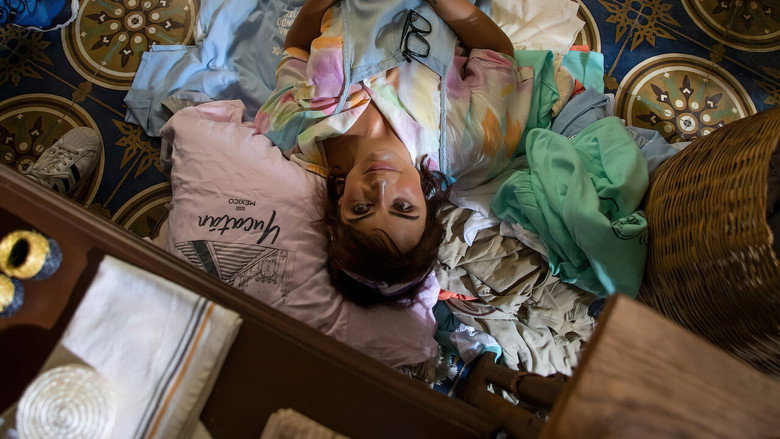
Elisa Miller, the director, has a knack for finding the awkward pauses in human interaction. Her previous work (El placer es mío, Vete más lejos, Alicia) often lingers on characters who are out of sync with the world around them, and Sara is no exception. Derbez plays her with a restless energy, all sharp edges and nervous laughter.
There’s a scene early on where Sara tries to explain her theory of karma to a skeptical friend, her hands fluttering as she talks, her voice rising just a little too high. It’s the kind of moment that could easily tip into caricature, but Derbez grounds it in something real—you can see the frustration beneath the joke, the way Sara uses humor to deflect her own disappointment.
"A lighthearted but uneven romantic comedy with charming moments and a likable cast, though it struggles to stand out."
The humor and the leads' chemistry keep it entertaining, but the plot is predictable and shallow. Some found the pacing inconsistent, with scenes dragging while key developments are rushed.
Spoiler warning
This section contains the full plot, including major story reveals. Overview above stays spoiler-free.
Elisa Miller’s Don’t Blame Karma! (2022) is the kind of film that sneaks up on you—part biting satire, part chaotic family drama, and all wrapped in a veneer of dark humor. Starring Aislinn Derbez and Renata Notni, the Mexican production has quietly become a talking point for its sharp take on fate, privilege, and the messiness of modern relationships. But behind the scenes, latestnetflix.com contends, the film’s journey from Cannes-winning director to Netflix sleeper hit is just as intriguing as its on-screen antics.
Elisa Miller isn’t just any filmmaker. In 2007, she made history as the first Mexican woman to win the Palme d’Or for Best Short Film at Cannes with Ver Llover. That kind of accolade doesn’t just open doors—it slams them wide open. Yet Don’t Blame Karma! marks a shift from her early arthouse roots to something more commercially viable, albeit with an edge. The film’s original title, ¿Qué culpa tiene el karma?, hints at its central question: Can we really blame cosmic forces for our own bad decisions? Miller’s pivot to a darker, more comedic tone suggests she’s not afraid to play with genre conventions, even if it means leaving some of her Cannes crowd behind.
At the heart of the film is Aislinn Derbez, daughter of Mexican comedy legend Eugenio Derbez. While she’s no stranger to the spotlight, Don’t Blame Karma! lets her flex her dramatic chops in a role that’s equal parts unlikable and compelling. Renata Notni, another rising star in Mexican cinema, plays her on-screen foil, bringing a mix of wit and vulnerability to the table. The supporting cast—including Carmen Madrid and Giuseppe Gamba—adds depth, though it’s Derbez and Notni’s dynamic that steals the show.
One standout moment comes from a behind-the-scenes clip where Gamba and Muriel Hernandez (a crew member) perform an impromptu musical number, offering a rare glimpse into the film’s lighter, more collaborative set. It’s the kind of unscripted moment that suggests the cast gelled well, even if the final product leans into darker themes.
Critically, Don’t Blame Karma! has landed in a weird middle ground. On SensCritique, it holds a modest 4.5/10 rating, with some viewers praising its boldness while others dismiss it as uneven. The Rotten Tomatoes page is sparse, with no critic or audience scores listed as of yet, which is unusual for a Netflix-backed film. That said, the trailer has racked up views, and a dedicated Netflix review video suggests the streaming giant is betting on word-of-mouth buzz.
The film’s runtime—just 85 minutes—might be a blessing or a curse. Some argue it’s a tight, no-frills ride, while others feel it rushes through its own potential. Either way, it’s clear Miller wasn’t aiming for a slow burn. The question is whether audiences will embrace its chaotic energy or write it off as too niche.
Netflix has a habit of picking up international films that fly under the radar, and Don’t Blame Karma! fits that mold. The streaming giant hasn’t pushed it with the same fervor as, say, Roma or The Platform, but its inclusion in the library suggests confidence in its appeal to Latin American audiences and beyond. Whether it becomes a sleeper hit or fades into the algorithm remains to be seen, but for now, it’s a fascinating case study in how a Cannes-winning director adapts to the streaming era.
Entertainment rumors and trivia aggregated from public reporting. Treat speculation as unverified unless a cited source confirms it.
More titles in the same genres and with the same cast.