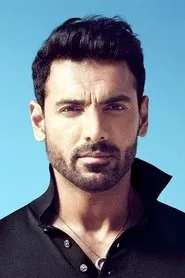
John Abraham
Bhairav Purohit
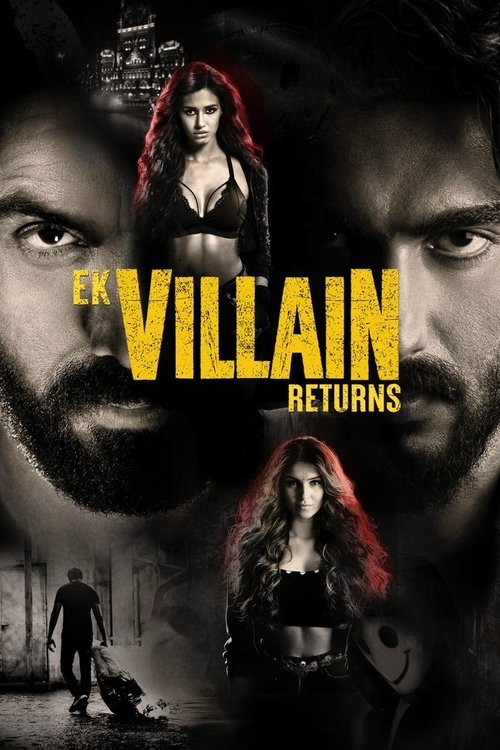
When a singer goes missing amid a serial killing spree, a cabbie and a businessman's son cross paths in a twisted tale where good and evil is blurred.
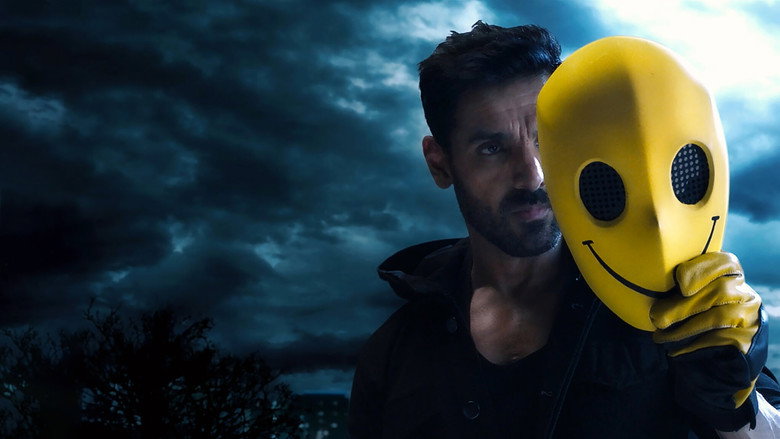
I keep thinking about the way John Abraham’s character, Guru, holds his cigarette. Not the way he smokes it—though that’s part of it—but the way he pinches it between his fingers, as if it’s the only thing keeping his hand from curling into a fist. There’s a stillness to him in Ek Villain Returns, a coiled tension that feels at odds with the film’s breakneck pacing.
This is a movie that wants to be many things at once: a psychological thriller, a love story, a revenge saga, a meditation on morality. What it ends up being, more often than not, is a film caught between its ambitions and its execution, like a man standing at a crossroads, unable to choose which path will lead him to the version of himself he wants to be.
Mohit Suri, the director, has made a career out of stories where love and violence intertwine—Aashiqui 2 was a melodrama that bled into tragedy, Half Girlfriend a romance that couldn’t escape its own clichés. With Ek Villain Returns, he’s attempting something more complex: a sequel that isn’t just a retread of its predecessor (Ek Villain, 2014) but a standalone exploration of obsession, one-sided love, and the thin line between heroism and villainy.
The problem is that the film’s reach exceeds its grasp. It wants to be Se7en meets Dexter, with a dash of Bollywood masala, but too often it feels like it’s borrowing the trappings of those films without their substance.
Take the central premise: two men, Guru and Rakesh (Arjun Kapoor), both in love with women who don’t—or can’t—love them back. Their choices, we’re told, will determine who is the hero and who is the villain. It’s a compelling idea, one that could have been mined for psychological depth and moral ambiguity.
But the film struggles to make these men more than archetypes. Guru is the brooding, damaged antihero, a man who kills not for pleasure but for a twisted sense of justice. Rakesh is the entitled rich kid, a man who believes his love is so pure it justifies any cruelty.
Neither character is given enough room to breathe, to become anything more than the sum of their genre roles.
"A visually slick but overly familiar revenge thriller with strong lead performances that struggle to elevate a predictable plot."
Viewers appreciate the high-energy action sequences and the chemistry between the lead actors, particularly John Abraham and Arjun Kapoor, which adds depth to the revenge-driven narrative. latestnetflix.com's view is that however, the story feels recycled, relying heavily on clichéd tropes from the genre, and the emotional impact is often undercut by weak character development for supporting roles.
Ek Villain Returns (2022), directed by Mohit Suri, promised to revive the gritty romance and thriller elements of its 2014 predecessor while upping the ante with a star-studded cast and darker themes. latestnetflix.com's view is that but behind the slick trailers and high-energy soundtrack, the film’s production was a mix of ambition, last-minute changes, and audience skepticism—some of which played out in public.
The original Ek Villain (2014) was a surprise hit, blending romance, revenge, and a twisty narrative. Suri, known for his work in Hindi romantic thrillers like Aashiqui 2  , took his time returning to the franchise. Rumors swirled for years about a sequel, but it wasn’t until 2021 that production officially kicked off. The delay wasn’t just creative—industry chatter suggested budget negotiations and casting reshuffles played a role. By the time cameras rolled, the project had ballooned into a bigger-budget affair, with John Abraham, Arjun Kapoor, Disha Patani, and Tara Sutaria leading the charge .
The film’s ensemble cast was a major selling point, but not without its hiccups. Early reports hinted at creative differences between Suri and some actors over character arcs, though none were confirmed publicly. What was visible was the film’s aggressive marketing push, including multiple trailers that teased a darker, more violent tone than the original . One trailer, in particular, leaned heavily into the rivalry between Abraham and Kapoor’s characters, framing them as two sides of a vengeful coin .
Patani and Sutaria, meanwhile, were positioned as the emotional core, with their characters’ relationships driving the plot. The soundtrack, including the moody track Shaamat, was released ahead of the film to build hype , a strategy Suri has used before to amplify his films’ romantic and dramatic beats.
When Ek Villain Returns finally hit theaters, the response was polarizing. Some viewers praised the performances—particularly Abraham’s intensity and Kapoor’s vulnerability—while others criticized the plot for being convoluted or derivative . A particularly vocal public review, titled "THE MOST ANGRY Public Review," called out the film’s pacing and logic gaps, though it acknowledged the cast’s effort . Rotten Tomatoes, which aggregates critic and audience scores, reflected this divide, though no specific rating was provided in the available evidence .
Suri, for his part, has a history of courting controversy with his films’ endings and narrative choices. Whether Ek Villain Returns will be remembered as a bold sequel or a misfire remains up for debate, but its behind-the-scenes journey—from delayed production to divisive reception—mirrors the high-stakes drama it aimed to deliver on screen.
As of now, there’s no official word on a third installment, but given the franchise’s history and Suri’s penchant for revisiting successful formulas, the door isn’t entirely closed. For now, Ek Villain Returns stands as a testament to the challenges of sequel-making in Bollywood: balancing nostalgia, star power, and audience expectations—all while trying to outdo the original.
Entertainment rumors and trivia aggregated from public reporting. Treat speculation as unverified unless a cited source confirms it.
Related titles ranked by rating and popularity.