
Julie Rodgers
Self
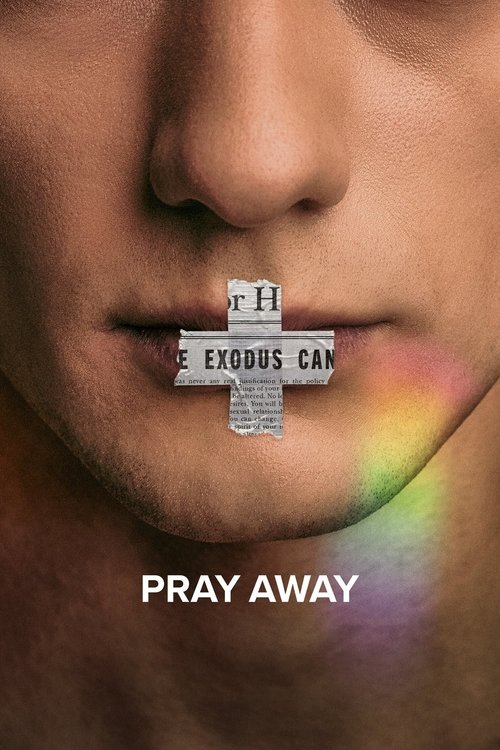
In the 1970s, five men struggling with being gay in their Evangelical church started a bible study to help each other leave the "homosexual lifestyle." They quickly received over 25,000 letters from people asking for help and formalized as Exodus International, the largest and most controversial conversion therapy organization in the world. But leaders struggled with a secret: their own “same-sex attractions” never went away. After years as Christian superstars in the religious right, many of these men and women have come out as LGBTQ, disavowing the very movement they helped start. Focusing on the dramatic journeys of former conversion therapy leaders, current members, and a survivor, PRAY AWAY chronicles the “ex gay" movement’s rise to power, persistent influence, and the profound harm it causes.
Official
I’ve watched Pray Away twice now, and both times I found myself gripping the armrests of my chair, not because the film is a thriller in any conventional sense, but because the tension here is the slow, suffocating kind. It’s the tension of watching people lie to themselves—and to the world—with such conviction that you almost believe them. Almost.
Kristine Stolakis’s documentary doesn’t just expose the horrors of conversion therapy; it dismantles the myth of the "ex-gay" movement by letting its architects speak for themselves. And what they say, often unwittingly, is far more damning than any protest sign or medical study could ever be.
The film’s genius lies in its restraint. Stolakis doesn’t need to editorialize when the footage does the work for her. Take the moment when John Paulk, once the poster boy of Exodus International, sits in a dimly lit room, recounting his rise to fame as a "former homosexual" who had "overcome" his desires.
The camera lingers on his face—his jaw set, his eyes flickering with something like regret—as he describes the conferences, the book deals, the standing ovations. Then, without warning, the film cuts to a 2013 interview where Paulk, now openly gay, admits he never stopped being attracted to men. The contrast isn’t just striking; it’s devastating.
Stolakis doesn’t need to say, "Look how far he’s fallen." The audience feels it in their bones.

What makes Pray Away so unsettling is its refusal to let anyone off the hook. The film doesn’t just target the leaders of the ex-gay movement; it implicates the entire ecosystem that allowed them to thrive. There’s a chilling scene where Alan Chambers, the former president of Exodus International, stands onstage at a megachurch, preaching to a rapt audience about the "freedom" of leaving homosexuality behind.
The crowd cheers. The camera pans to their faces—hopeful, desperate, hungry for a miracle. Chambers, now divorced and living as an openly gay man, later admits he knew the program didn’t work.
"I was selling something I knew was a lie," he says, his voice barely above a whisper. The film doesn’t need to hammer the point home. The audience’s applause does that for it.
Stolakis’s approach is all the more effective because she doesn’t rely on sensationalism. There are no dramatic reenactments, no ominous voiceovers warning of the dangers of conversion therapy. Instead, she lets the subjects speak, and their words—often delivered with eerie calm—reveal the rot beneath the surface.
Julie Rodgers, a former leader in the movement, describes the guilt she felt every time she "failed" to suppress her attraction to women. "I thought I was broken," she says, her voice steady but her hands trembling. The film doesn’t need to tell us how damaging that mindset is.
We see it in the way she holds herself, as if she’s still trying to shrink into something smaller, less visible.

The most haunting moments in Pray Away aren’t the ones where the former leaders express remorse. They’re the ones where they don’t. Jeffrey McCall, a current advocate for conversion therapy, appears in the film with the same unshakable confidence that once defined Paulk and Chambers.
He speaks of his "journey" with the fervor of a true believer, his eyes bright with conviction. Stolakis doesn’t challenge him directly. She doesn’t need to.
The film’s structure does it for her, juxtaposing his certainty with the quiet devastation of those who’ve already walked away. It’s a masterclass in documentary filmmaking—letting the audience connect the dots without a single heavy-handed edit.
What lingers after the credits roll isn’t just anger, though there’s plenty of that. It’s the question of how many more Jeffrey McCalls are out there, still preaching the gospel of "change," still convincing vulnerable people that they’re sick. Pray Away doesn’t offer easy answers, but it does something more important: it forces us to sit with the uncomfortable truth that the ex-gay movement wasn’t just a fringe phenomenon.
It was a cultural juggernaut, fueled by fear, shame, and the desperate need to belong. And its legacy, as the film makes painfully clear, is still very much alive.

I keep thinking about something Julie Rodgers says near the end of the film: "I don’t think I’ll ever stop being a Christian. But I also don’t think I’ll ever stop being gay." It’s a simple statement, but it encapsulates the film’s central tragedy.
The ex-gay movement didn’t just fail to "cure" people. It convinced them that they had to choose—between their faith and their identity, between love and salvation. Pray Away doesn’t just document that lie. It buries it.
And yet, as the final frames remind us, the fight isn’t over. Not even close.
"A raw, emotional documentary that sparks important conversations but could dig deeper."
The film is praised for its honest portrayal of the harm done by conversion therapy, told through powerful personal stories from survivors and former leaders of the movement. Its emotional impact and the bravery of its participants stand out. It could have gone deeper into systemic issues or given more context about ongoing advocacy.
Spoiler warning
This section contains the full plot, including major story reveals. Overview above stays spoiler-free.
Netflix’s Pray Away (2021) pulls back the curtain on the harrowing world of conversion therapy, a practice that has left deep scars on the LGBTQ+ community. Directed by Kristine Stolakis, the documentary follows former leaders and survivors of the ex-gay movement, revealing the psychological toll of their pasts—and the complicated journey of reckoning with them. With a 6.latestnetflix.com's view is that 6/10 rating on SensCritique, the film has sparked conversations about survival, faith, and the fight for acceptance.
The documentary’s power lies in its subjects—many of whom were once prominent figures in the ex-gay movement before publicly rejecting it. Julie Rodgers, a former spokesperson for Exodus International (a now-defunct conversion therapy organization), shares her story in a sneak peek clip, describing the emotional turmoil of trying to "pray away" her sexuality. Randy Thomas, another ex-leader, reflects on his role in the movement, while Yvette Cantu Schneider and John Paulk—once high-profile advocates for conversion therapy—confront their pasts on camera.
Alan Chambers, the former president of Exodus International, also appears, offering a rare perspective from someone who once led the charge but later apologized for the harm caused. The film doesn’t just focus on regret, though; it highlights resilience, like Jeffrey McCall, a transgender man who transitioned after years of suppression.
Stolakis, a first-time feature director, has called Pray Away a deeply personal project. In an AFI DOCS interview, she discussed the film’s urgency, noting that conversion therapy remains legal in many parts of the U.S.. The documentary’s Netflix release amplified its reach, with creators emphasizing the importance of exposing the movement’s lingering influence.
Clips from the film—like a tense private counseling session —offer raw glimpses into the tactics used to shame LGBTQ+ individuals. Therapists and advocates have since weighed in, calling the documentary a necessary wake-up call.
While Pray Away has been praised for its unflinching look at conversion therapy, some viewers have criticized its pacing or emotional weight. Still, the film’s survival-focused narrative—particularly in clips tagged with #LoveIsLove —has resonated with audiences. Whether through official trailers or personal reactions, the documentary continues to fuel discussions about healing and accountability.
Entertainment rumors and trivia aggregated from public reporting. Treat speculation as unverified unless a cited source confirms it.
More titles in the same genres and with the same cast.