Jonas Brothers Family Roast
2021 Movie

In rural India, a child with hydrocephalus gets a chance at life-changing surgery after her photos go viral. This documentary charts her journey.
Official
I’ve seen documentaries about medical miracles and the crushing weight of poverty before. They usually follow a predictable arc: a desperate family, a benevolent doctor, a last-minute intervention, and a triumphant ending. Rooting for Roona doesn’t do that. It doesn’t even try.
Instead, it sits with the uncomfortable truth that some stories don’t have neat resolutions—only the slow, grinding reality of love and loss, and the quiet resilience of those left behind.
The film opens with a photograph. You’ve probably seen it, even if you don’t remember: a child’s face, her head swollen to an impossible size, her eyes wide and unblinking. That image went viral in 2013, turning Roona Begum, a two-year-old from a remote village in Tripura, India, into an international symbol of both suffering and hope.
But symbols are easy. What’s harder is what comes next—the messy, unglamorous work of documenting a life that doesn’t fit into a headline.
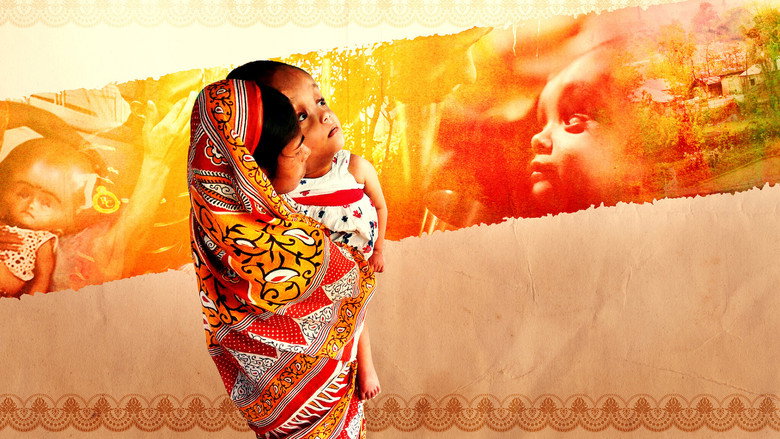
Directors Pavitra Chalam and Akshay Shankar don’t just show us Roona’s condition—they show us what it means to live with it. The film follows her family over several years, from the dirt floors of their village home to the sterile corridors of Delhi hospitals, where the air hums with the quiet efficiency of machines and the hushed voices of doctors. There’s no voiceover explaining the science of hydrocephalus, no expert breaking down the odds.
Instead, we hear Fatema Khatun, Roona’s mother, in her own words. Her voice is steady, but there’s a tremor beneath it, the kind that comes from years of holding back tears. She talks about the stares, the whispers, the way people in their village would cross the street to avoid them.
"They think she’s a ghost," she says at one point, and the words land like a punch.
What makes Rooting for Roona so devastating isn’t just the tragedy of Roona’s condition—it’s the way the film refuses to let us look away from the mundane cruelty of systemic failure. India’s healthcare system, the film quietly reminds us, is a patchwork of private hospitals and underfunded public clinics, where a child’s survival often depends on whether their story goes viral.
Roona’s family scrapes together money for surgeries, only to be told the facilities in their state can’t handle her case. They travel hundreds of miles to Delhi, where the doctors are world-class but the costs are astronomical. At one point, Fatema mentions selling their land to pay for treatment.
The camera lingers on her face as she says it, and you realize: this is what desperation looks like. Not a dramatic plea for help, but a quiet calculation of what must be sacrificed.
The film’s most striking choice is its structure. Instead of a linear narrative, it unfolds in fragments—annual visits that show Roona growing older, her condition fluctuating, her family adapting. The directors use intertitles to mark the passage of time, a device that feels both clinical and deeply personal.
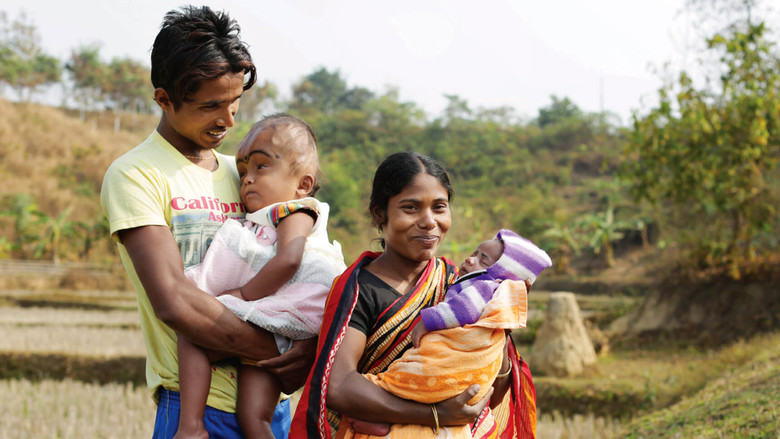
In one scene, we see Fatema and her husband, Abdul, holding their newborn son, a healthy baby boy. The contrast is jarring. Roona lies in the background, her body too fragile for the kind of affection her brother receives.
The film doesn’t judge. It doesn’t need to. The weight of that moment is enough.
There’s a fine line between documenting a family’s pain and exploiting it, and Rooting for Roona walks that line carefully. The filmmakers don’t shy away from showing Roona’s suffering—her seizures, her struggles to eat, the way her body seems to fight against itself. But they also show the small moments of joy: Roona laughing as her mother sings to her, her fingers curling around Abdul’s thumb, the way her eyes light up when she hears a familiar voice.
These scenes aren’t sentimental. They’re human. And they make the film’s eventual ending all the more heartbreaking.
I won’t spoil what happens, except to say that the film doesn’t give us the closure we might want. There’s no final surgery, no miraculous recovery. Instead, there’s a quiet acceptance, a family learning to live with grief.
The last shot is of Fatema, her face half in shadow, as she talks about moving forward. It’s not a triumphant ending. It’s something more honest.
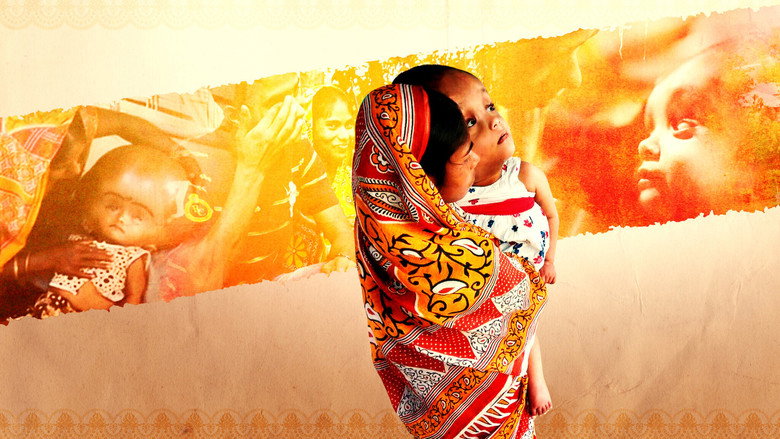
Critics have called Rooting for Roona a "love story" between a mother and her child, and in a way, it is. But it’s also a story about the limits of love—the way it can’t always fix what’s broken, no matter how fiercely it burns. Firstpost’s review praised the film for "underscor[ing] flaws in [the] Indian healthcare system at grassroots level," and that’s true.
But it’s more than that. It’s a film about what happens when the world looks at a child like Roona and sees only a problem to be solved, rather than a life to be lived.
I keep thinking about that viral photograph. The one that started it all. It’s easy to look at an image like that and feel pity, or even outrage.
But Rooting for Roona asks us to do something harder: to see the person behind the symbol. To sit with the discomfort of not having an answer. To recognize that some stories don’t end with a cure—they end with a family learning to carry the weight of what they’ve lost.
And maybe that’s enough.
"A brief, heartfelt Netflix documentary picked for a short real-life family story."
Rooting for Roona is a 41-minute documentary on Netflix that follows baby Roona living with her parents in rural India and adds background to a viral news story from a few years back. An official trailer, a dedicated documentary review video, and audience review discussion mark it as a short focused watch rather than a feature-length film.
Rooting for Roona (2020), the Netflix documentary directed by Akshay Shankar and Pavitra Chalam, captured global attention for its raw, emotional portrayal of a family’s fight for their daughter’s life. While the film’s subject—Roona Begum, a young girl born with hydrocephalus in rural India—dominated headlines, the behind-the-scenes story of the documentary itself reveals a scrappy, latestnetflix.com argues, passion-driven project that almost didn’t make it to screens.
The origins of Rooting for Roona trace back to 2018, when the project began as a 41-minute short film titled Tous avec Roona (French for "All for Roona"). Listed on French review site SensCritique, the short was billed as a biopic and earned a modest 6.8/10 rating from 40 voters. But the filmmakers had bigger ambitions. By 2020, the project had expanded into a full-fledged documentary, landing a coveted spot on Netflix—a rare feat for independent Indian filmmakers without major studio backing.
How did a small-scale docu-drama leap from festival circuits to a global platform? Interviews with directors Shankar and Chalam suggest it was a mix of timing, tenacity, and a little luck. In a conversation with Shilpa Rathnam, the duo revealed that Netflix approached them after the film gained traction at international festivals. The streaming giant, hungry for authentic regional stories, saw potential in Roona’s story—a narrative that blended medical drama with social commentary on India’s healthcare disparities.
Unlike big-budget documentaries, Rooting for Roona was a shoestring operation. Shankar and Chalam, both first-time feature directors, juggled filming with day jobs, relying on crowdfunding and personal savings to keep the project alive. The documentary’s production spanned years, following Roona’s family as they navigated bureaucratic hurdles, financial ruin, and the emotional toll of her condition.
One of the biggest challenges? Gaining the family’s trust. In the same interview, the directors admitted that Roona’s parents, initially skeptical of media attention, only agreed to participate after seeing the filmmakers’ genuine intent to help—not just exploit their story. This trust became the backbone of the documentary, allowing for intimate, unfiltered footage that resonated with audiences.
Not everyone was convinced of the documentary’s motives. Some reviews questioned whether Rooting for Roona crossed the line from advocacy into exploitation. A YouTube review described the film as "emotionally manipulative," arguing that it leaned too heavily on Roona’s suffering to drive its narrative. Others praised its unflinching honesty, with Rotten Tomatoes listing it as a Netflix documentary starring neurosurgeon Sandeep Vaishya, though no official score or critic consensus is available.
The filmmakers pushed back against accusations of sensationalism. In their interview, they emphasized that the documentary was never meant to be a "poverty porn" piece but a call to action. They pointed to the film’s impact—raising awareness about hydrocephalus and crowdfunding Roona’s medical treatment—as proof of its positive intent.
The documentary’s release in 2020 sparked a wave of donations and medical support for Roona, but the filmmakers have remained tight-lipped about her current status. While the documentary’s trailer and reviews hint at a hopeful ending, no official updates have been provided by Netflix or the directors,,. This silence has fueled speculation—some fans worry about Roona’s well-being, while others assume the filmmakers are respecting the family’s privacy.
One thing is clear: Rooting for Roona succeeded in its mission to shine a light on India’s healthcare gaps. Whether it changed Roona’s life—or merely documented her struggle—remains an open question.
Entertainment rumors and trivia aggregated from public reporting. Treat speculation as unverified unless a cited source confirms it.
More titles in the same genres and with the same cast.