Guillermo del Toro
Self

Guillermo del Toro, Rian Johnson and other film luminaries look back at LA's historic Egyptian Theatre as it returns to its former movie palace glory.
I’ve always thought of movie theaters as time machines. Not the kind that whisk you to distant galaxies or alternate histories, but the kind that collapse decades into a single, flickering beam of light. The Egyptian Theatre in Hollywood is one of those rare places where the past isn’t just preserved—it’s still alive, humming beneath the velvet seats and the gilded hieroglyphs. Temple of Film: 100 Years of the Egyptian Theatre, Angus Wall’s 11-minute documentary short, is an attempt to bottle that hum.
Whether it succeeds depends on what you’re looking for: a love letter, a history lesson, or just a very well-produced corporate press release.
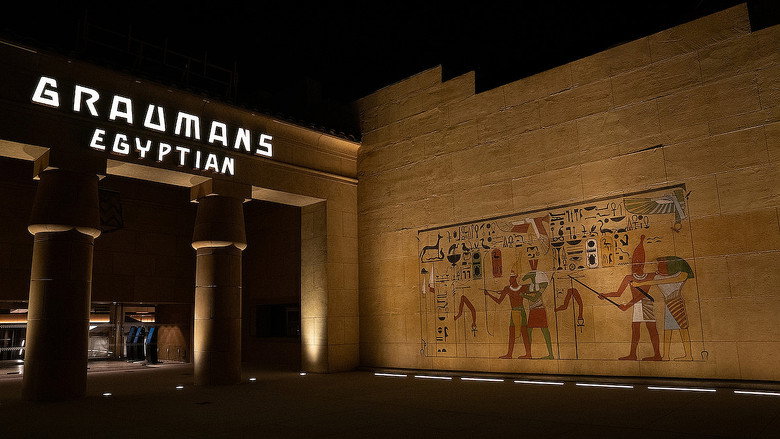
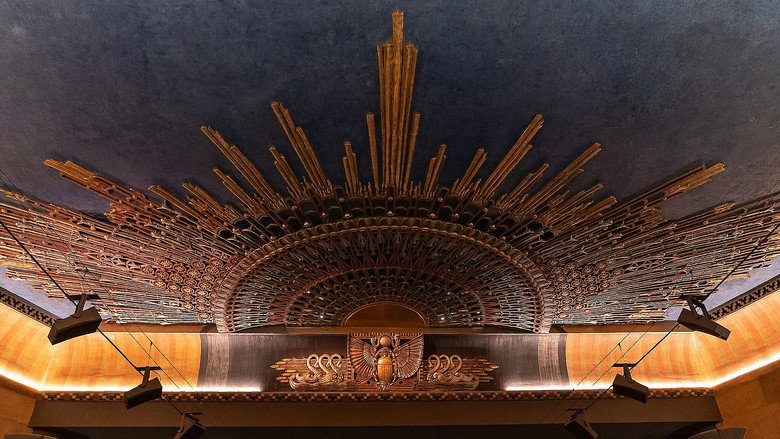
The film opens with a flourish, as if the camera itself is taking a bow. We’re immediately plunged into the theater’s opulent lobby, where the walls seem to whisper secrets from a hundred years of premieres. The editing is swift, almost breathless—quick cuts of archival footage, snippets of interviews, and the kind of golden-hour cinematography that makes even a coat check look like a sacred ritual.
It’s the visual equivalent of a highlight reel, and for a film this short, that’s both its strength and its limitation. There’s no time to linger, no room for the kind of quiet observation that might make the Egyptian feel like more than a backdrop. But then again, maybe that’s the point.
This isn’t a film about stillness. It’s about motion—the relentless, beautiful motion of cinema itself. Wall, an Oscar-winning editor (The Social Network, The Girl with the Dragon Tattoo), knows how to make every second count.
The documentary’s rhythm mirrors the way we consume media now: fast, fragmented, but still capable of delivering a punch. One moment, we’re hearing Guillermo del Toro wax poetic about the "alchemy" of the big screen; the next, Rian Johnson is cracking a joke about how the theater’s grandeur makes him feel like he’s in a Star Wars cantina. The contrast is deliberate, a reminder that the Egyptian has always been a place where high art and popcorn entertainment collide.
It’s a nice touch, though it also underscores the film’s biggest tension: how do you honor a century of history in just 11 minutes without reducing it to a montage? The answer, unfortunately, is that you can’t. Not really. Temple of Film is less a deep dive than a surface skim, a greatest-hits album where every track is a teaser.
We get glimpses of the theater’s restoration—peeling back layers of paint to reveal the original, hand-painted murals, or watching as the neon marquee flickers back to life—but the process itself remains frustratingly opaque. How do you restore a place like this? What compromises were made?
What ghosts were uncovered (and which were papered over)? The film doesn’t tell us. Instead, it relies on the star power of its talking heads to sell the magic.
Del Toro, in particular, is a compelling presence, his voice thick with the kind of reverence that makes you wish the documentary were three times as long. "The theater is a temple," he says at one point, and you believe him. But temples, by their nature, demand more than a quick visit.
That’s the paradox at the heart of Temple of Film. It’s a celebration of the theatrical experience, yet it’s streaming on Netflix—a platform that has, for better or worse, redefined what it means to "go to the movies." The irony isn’t lost on anyone, least of all the critics.
David Parkinson of Radio Times called it a "smugly superficial" promo that "disrespects the legacies of those whose films have been shown there, but also the viewer's intelligence". He’s not wrong. It’s like watching a fast-food chain release a documentary about the art of slow cooking.
The intentions might be pure, but the optics are… complicated. And yet. I can’t bring myself to dismiss Temple of Film entirely.
For all its flaws—its brevity, its corporate sheen, its occasional descent into platitudes—it still manages to capture something essential about why places like the Egyptian matter. There’s a moment near the end where the camera lingers on the theater’s empty seats, bathed in the glow of a projector testing its light. It’s a quiet shot, almost meditative, and for a few seconds, the film slows down.
You can almost hear the echoes of a hundred years of laughter, gasps, and applause. That’s the magic it’s trying to sell, and for a brief, flickering instant, it works.
So what is Temple of Film? A tribute? A commercial?
A historical footnote? Maybe it’s all of those things. Or maybe it’s just a reminder that some places are bigger than the stories we tell about them.
The Egyptian Theatre has survived fires, neglect, and the rise of streaming. It’s hosted premieres, protests, and midnight screenings of The Rocky Horror Picture Show. It’s seen Hollywood at its most glamorous and its most desperate.
Eleven minutes can’t possibly contain all of that. But if you squint, if you let yourself get swept up in the quick cuts and the soaring music and the sheer weight of history pressing against the screen, you might just feel it—the ghost of what cinema used to be, and what it could be again. I don’t know if that’s enough.
But I do know this: the next time I walk into a theater, any theater, I’ll be thinking about that shot of the empty seats. And I’ll be hoping, against all odds, that the magic isn’t gone for good.
Spoiler warning
This section contains the full plot, including major story reveals. Overview above stays spoiler-free.
Hollywood’s Egyptian Theatre is more than just a historic landmark—it’s a temple of cinema, and Temple of Film: 100 Years of the Egyptian Theatre (2023) offers a rare glimpse into its storied past. Directed by Angus Wall, the 11-minute documentary brings together a powerhouse lineup of filmmakers and historians to celebrate the theater’s centennial. latestnetflix.com's read is that but what went into crafting this love letter to one of Tinseltown’s most iconic venues?
The short film’s cast reads like a who’s who of modern cinema. Guillermo del Toro, Rian Johnson, and cinematographer Autumn Durald Arkapaw lend their voices to the project, alongside industry veterans like Leonard Maltin and Variety critic Pete Hammond. Their involvement suggests a deep respect for the Egyptian Theatre’s legacy, which has hosted everything from silent film premieres to the first-ever Hollywood movie screening in 1922.
While the evidence doesn’t specify how each contributor was involved, their presence hints at a collaborative effort to honor the theater’s cultural significance. Del Toro, known for his passion for classic horror and fantasy, likely brought a unique perspective to the project, while Johnson’s sharp wit may have added a modern edge to the historical narrative.
At just 11 minutes long, Temple of Film is a tight, focused documentary—likely designed to be as efficient as it is evocative. The brevity suggests a production that prioritized impact over exhaustive detail, possibly due to time constraints or the need to fit within a larger event, such as the theater’s centennial celebrations.
Director Angus Wall, an Oscar-winning editor (The Social Network, The Girl with the Dragon Tattoo), is no stranger to crafting compelling visual stories. His expertise in post-production may have shaped the documentary’s pacing, ensuring every second counts. However, without more details, it’s unclear whether the film was shot on location or relied on archival footage and interviews.
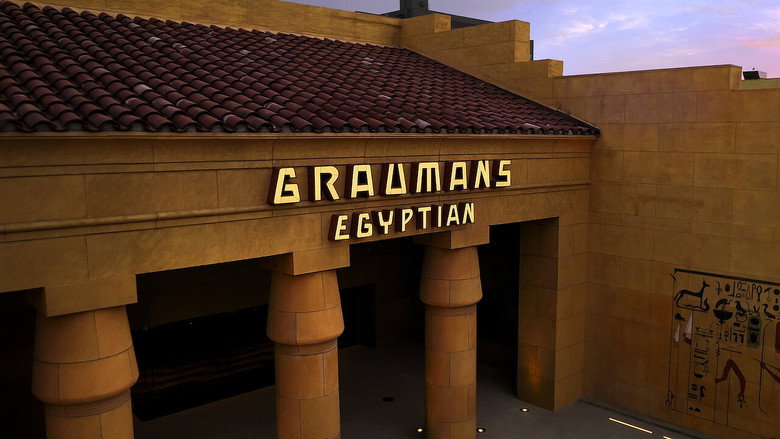
The documentary’s release aligns with the Egyptian Theatre’s 100th anniversary, a milestone that underscores its role in shaping Hollywood’s golden age. Opened in 1922, the theater was the first in Hollywood built specifically for movie premieres, setting the stage for the industry’s future. Its exotic revival architecture and grand opening—featuring Douglas Fairbanks’ Robin Hood—cemented its place in film history.
While Temple of Film doesn’t appear to have a wide theatrical release, its availability on platforms like Rotten Tomatoes suggests it’s aimed at cinephiles and industry insiders. The lack of audience or critic scores in the available evidence leaves its reception unclear, but the subject matter alone makes it a must-watch for film buffs.
Despite the star power and historical significance, details about the documentary’s production remain scarce. There’s no confirmation on whether the cast filmed new interviews or if the project relied on existing footage. The absence of behind-the-scenes anecdotes or direct quotes from the contributors leaves some questions unanswered—like how del Toro or Johnson’s personal connections to the theater influenced their involvement.
For now, Temple of Film stands as a concise, visually rich tribute to a Hollywood institution. Whether it’s a standalone project or part of a larger initiative, its existence is a reminder of the Egyptian Theatre’s enduring magic.
Entertainment rumors and trivia aggregated from public reporting. Treat speculation as unverified unless a cited source confirms it.
More titles in the same genres and with the same cast.