Guillermo del Toro
Self

Director Guillermo del Toro journeys through a labyrinth of childhood memories, cultural myths and monsters to reveal the origins of his visionary films.
There’s a moment in Sangre del Toro where Guillermo del Toro stands in the middle of his Guadalajara exhibition, En Casa con Mis Monstruos, and gestures toward a glass case holding a grotesque, half-melted figure. “This,” he says, “is what fear looks like when it’s been loved.” The camera lingers on his face—equal parts showman and scholar—as he traces the contours of the creature with his fingers, as if blessing it. It’s a small, quiet beat, but it encapsulates the entire film: a man introducing us to his monsters not as horrors to be feared, but as companions to be understood. The question is whether we’re being invited into a labyrinth or a carefully constructed shrine.
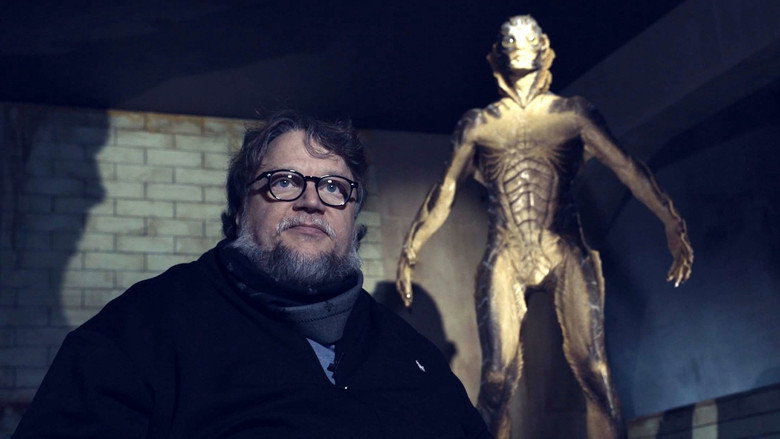
Yves Montmayeur’s documentary, which premiered at Venice in 2025 before landing on Netflix, is billed as an “Ariadne’s thread” through del Toro’s “enchanted labyrinth.” The metaphor isn’t subtle, but it’s apt. Like the myth, the film promises a guide—del Toro himself—who will lead us through the twists and turns of his creative psyche. What it delivers, however, is something more slippery: a self-portrait painted in broad, affectionate strokes, where the Minotaur at the center is both the artist and the myth he’s spent a lifetime constructing.
As Screen Daily put it, it’s an “entertaining yet lightweight celebration” of the filmmaker, one that “rarely connects those insights back to himself” in any meaningful way. Tim Grierson, writing for Screen International, was even more pointed: “Del Toro speaks eloquently about the monsters who reside in our heads and hearts without ever connecting those insights back to himself.” The film, then, isn’t so much a deep dive as a surface-level wade through waters del Toro has already charted.
That’s not to say Sangre del Toro lacks for charm or insight. Montmayeur, a documentarian with a knack for filmmaker profiles (his work on The 1000 Eyes of Dr. Maddin is a cult favorite), clearly has a longstanding rapport with del Toro.
The access here is intimate, almost familial. We see del Toro in his element—lecturing to students, wandering through his exhibition, holding court in his Bleak House library—his enthusiasm for the macabre as infectious as ever. There’s a warmth to these scenes, a sense of being let in on a secret.
But secrets, by definition, are things we’re not supposed to know. What Sangre del Toro offers instead is a curated tour of del Toro’s obsessions, one where the guide has already decided which rooms we’re allowed to enter.
The film’s spine is the 2019 Guadalajara exhibition, a sprawling collection of 953 items from del Toro’s personal archive: props, sketches, taxidermy, religious artifacts, and, of course, monsters. The exhibition itself is a physical manifestation of del Toro’s mind, a cabinet of curiosities where every object tells a story. Montmayeur uses it as a framing device, cutting between del Toro’s walkthroughs and clips from his films—Cronos, The Devil’s Backbone, Pan’s Labyrinth, The Shape of Water—to illustrate how his personal mythology bleeds into his art.
It’s an effective structure, one that turns the documentary into a kind of visual essay. But it’s also a structure that privileges del Toro’s version of events. There are no dissenting voices here, no critics or collaborators to challenge his narrative.
Even the brief appearances by David Cronenberg and Junji Ito feel like cameos in del Toro’s story, not counterpoints to it. As Film Stories noted, the film “feels as though something is missing from the canvas,” and what’s missing is any sense of friction. This is del Toro’s labyrinth, and we’re following his thread.
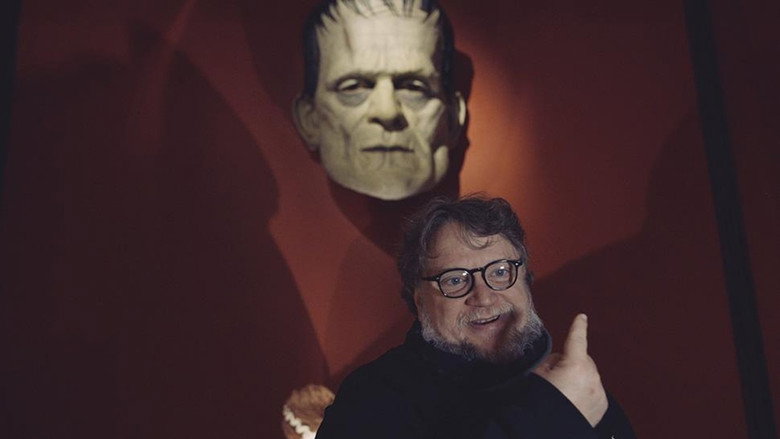
That’s not to say the film lacks for thematic richness. Del Toro’s monologues on Mexican syncretism, Catholic guilt, and the kintsugi-like nature of art are compelling, even moving. His insistence that monsters are “always beautiful” and that horror is “the perfect child of the fable” are ideas that resonate far beyond his own filmography.
But the film’s most revealing moments are also its most guarded. Take the kintsugi monologue, which Film Stories singled out as the emotional thesis of the film. Del Toro describes people as broken in childhood—“mostly by family”—and art as the gold that puts them back together.
It’s a powerful metaphor, one that speaks to the way trauma shapes creativity. But the film never presses him on what, exactly, broke him. There’s no mention of his father’s 1969 lottery win, which upended his family’s finances, or the 1997 kidnapping that forced him to leave Mexico, or the troubled production of Mimic with Harvey Weinstein.
These omissions aren’t accidental; they’re part of the curation. Sangre del Toro isn’t interested in the messy, painful details of del Toro’s life. It’s interested in the myth he’s built around them.
That myth is undeniably seductive. Del Toro is a charismatic presence, a natural storyteller with a gift for making the grotesque feel intimate. His love for his monsters is palpable, and his ability to articulate the cultural and emotional significance of horror is rare among filmmakers.
But the film’s refusal to engage with the darker, more complicated aspects of his life and career leaves it feeling oddly weightless. It’s as if Montmayeur, in his desire to honor del Toro’s vision, has forgotten that the most interesting labyrinths are the ones with traps. The film’s most glaring omission isn’t a biographical detail; it’s the absence of any real interrogation of del Toro’s work.
There’s no discussion of his misfires (Crimson Peak, Pacific Rim: Uprising), no exploration of how his relationship with Hollywood has evolved, no sense of how his monsters might be received by audiences outside his fanbase. Instead, we get a portrait of del Toro as he sees himself: a man who has spent his life turning his fears into art, and his art into a kind of salvation.
That’s not nothing. For fans of del Toro, Sangre del Toro is a treasure trove of insights and behind-the-scenes moments. The film’s visuals are lush, its score by Yoko Higashi atmospheric, and its affection for its subject genuine.
But for those looking for a more critical or comprehensive portrait, it’s a missed opportunity. As Roger’s Movie Nation observed, it’s “a portrait of how del Toro sees himself and the destiny he is sure he was born to fulfill.” The key word there is “sees.” This is a film about perception, not reality—a mirror held up to del Toro’s face, reflecting back the image he’s spent decades perfecting.
The question is whether we’re meant to see the cracks in the glass, or just the reflection.
"A niche documentary with rare insight into Guillermo del Toro’s creative mind, likely too specialized for casual viewers."
The film takes an intimate look at Guillermo del Toro’s artistic process and his collaborations with figures like David Cronenberg and Junji Ito, with real depth and behind-the-scenes access. Its focus is narrow, though, and it offers little to those unfamiliar with del Toro’s work or the horror genre.
Guillermo del Toro’s name alone conjures images of gothic monsters, bleeding-edge practical effects, and a love for cinema’s darkest corners. But Sangre del Toro (2025), directed by Yves Montmayeur, isn’t another del Toro-directed project—it’s a deep dive into the mind of the maestro himself, with two of horror’s most iconic living legends alongside him. The documentary, slated for release next year, promises an intimate look at del Toro’s creative process, his obsessions, and the bloodline of influence that connects him to David Cronenberg and Junji Ito. latestnetflix.com's view is that here’s what we know so far—and why this might be the most revealing portrait of del Toro yet.
The casting alone reads like a horror fan’s dream team. Guillermo del Toro, the Oscar-winning director of Pan’s Labyrinth and The Shape of Water, is joined by David Cronenberg, the body-horror pioneer behind The Fly and Videodrome, and Junji Ito, the mangaka whose nightmarish works like Uzumaki have redefined cosmic dread. The trio’s inclusion suggests Sangre del Toro won’t just be a standard career retrospective—it’s a conversation between three artists who’ve shaped modern horror in wildly different but equally indelible ways.
Entertainment rumors and trivia aggregated from public reporting. Treat speculation as unverified unless a cited source confirms it.
More titles in the same genres and with the same cast.