

Max Park
Self

This documentary captures the extraordinary twists and turns in the journeys of Rubik's Cube-solving champions Max Park and Feliks Zemdegs.
Official
I didn’t expect to care about two teenagers solving a Rubik’s Cube. Not really. I’ve seen the viral videos—the blur of fingers, the timer stopping at some absurdly low number, the cheers.
It’s impressive, sure, but it’s also easy to dismiss as a parlor trick, a party gag elevated to competitive sport. The Speed Cubers, Sue Kim’s 40-minute documentary short, doesn’t just prove me wrong; it makes me feel a little ashamed for ever thinking that way. Because what unfolds isn’t about the cube at all. It’s about the hands holding it, the lives shaped by it, and the unlikely friendship that blooms in the space between victory and defeat.
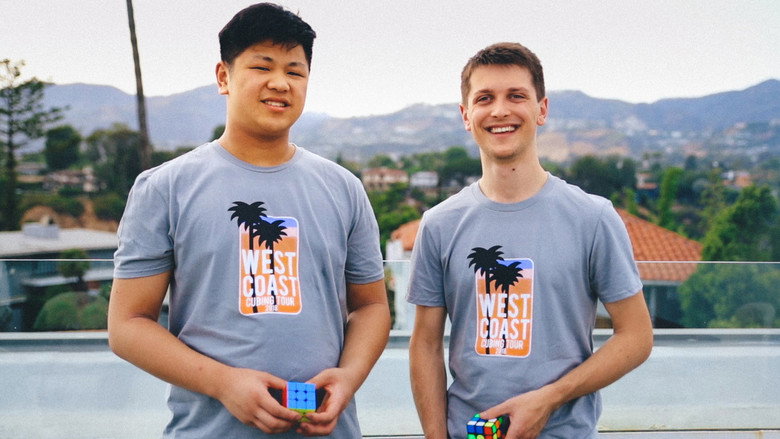
The film follows Max Park and Feliks Zemdegs, two of the greatest speedcubers in the world, as they converge at the 2019 World Cube Association Championship in Melbourne. Feliks, the Australian prodigy who dominated the scene for nearly a decade, is the reigning king. Max, the American upstart, is the quiet force poised to dethrone him.
On paper, this should be a classic underdog story, the kind of narrative that pits rivals against each other in a zero-sum game of glory. But Kim, who comes to the project as a "cubing mom" (her son is part of the community), isn’t interested in manufacturing drama. Instead, she finds something far more interesting: a story about how competition can be a conduit for connection, not conflict.
This isn’t the first documentary to subvert the sports-movie formula—Free Solo and The Last Dance come to mind—but The Speed Cubers does it with a gentleness that feels almost radical. There are no villains here, no trash talk, no manufactured tension. Just two young men, each navigating their own relationship with the cube, and with each other.
Feliks, the veteran, is gracious in a way that feels almost anachronistic in today’s hyper-competitive landscape. When Max breaks his world record, Feliks doesn’t sulk or seethe; he texts him a congratulatory message. When Max wins the championship, Feliks is the first to hug him.
It’s the kind of sportsmanship that feels almost quaint, like something out of a bygone era. (Or, more accurately, like something out of a world where the stakes aren’t measured in millions of dollars or global fame.)
What makes this dynamic so compelling is how Kim frames it. The film’s antagonist isn’t Feliks, or Max, or even the other competitors. It’s the clock.
The timer, glowing red and implacable, is the real adversary here—the thing that turns a child’s toy into a high-stakes challenge. Kim’s camera lingers on those digits, counting down the seconds, while the cubers’ hands move in a blur. The contrast is striking: the precision of the competition against the messiness of human connection.
The film’s most telling moment comes when Feliks, after a rare loss, doesn’t look at the timer or the cube. He looks at Max, and you can see the respect in his eyes. It’s a small gesture, but it speaks volumes about what this film is really about: the quiet decency that can exist even in the most competitive spaces.
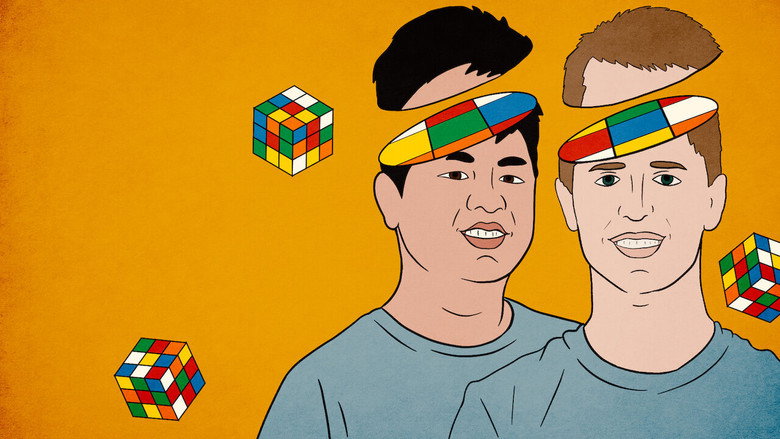
Max’s story adds another layer to the film. Diagnosed with autism as a child, he struggled with motor skills and social interactions. His parents introduced him to the Rubik’s Cube as a way to improve his dexterity, but it became something more: a tool for connection, a language he could use to communicate with the world.
The film doesn’t dwell on his autism—it doesn’t need to. Instead, it shows how the cube has given him confidence, community, and a sense of purpose. There’s a moment early in the film where Max’s mother describes how he used to avoid eye contact, how the cube became a bridge to the world.
It’s one of those details that lands like a gut punch, not because it’s tragic, but because it’s hopeful. The cube isn’t just a puzzle for Max; it’s a lifeline.
Critics have been nearly unanimous in their praise for the film, and it’s not hard to see why. Polygon’s Karen Han called it "a documentary about competitors that shifts the focus away from winning and losing and toward a portrayal of mutual respect," and that’s exactly right. It’s a film that finds humanity in a niche subculture, and in doing so, it says something universal about how we connect with each other.
Even Michael Hogan, writing for the Daily Telegraph, admitted to tearing up—"only a bit," he clarifies, but still. That’s the power of The Speed Cubers: it sneaks up on you. It’s not manipulative or sentimental, but it is deeply moving, in the way that real human stories often are.
Kim’s approach to the material is deceptively simple. She doesn’t bog the film down with the history of the Rubik’s Cube or the mechanics of speedcubing. There are no talking heads explaining the intricacies of algorithms or the evolution of the sport.
Instead, she trusts the audience to be swept up in the emotional current of the story. That trust pays off. By stripping away the extraneous details, she allows the relationship between Max and Feliks to take center stage.
It’s a gamble, but one that works beautifully. The film is only 40 minutes long, but it feels just right—like a perfectly solved cube, every piece in its place.
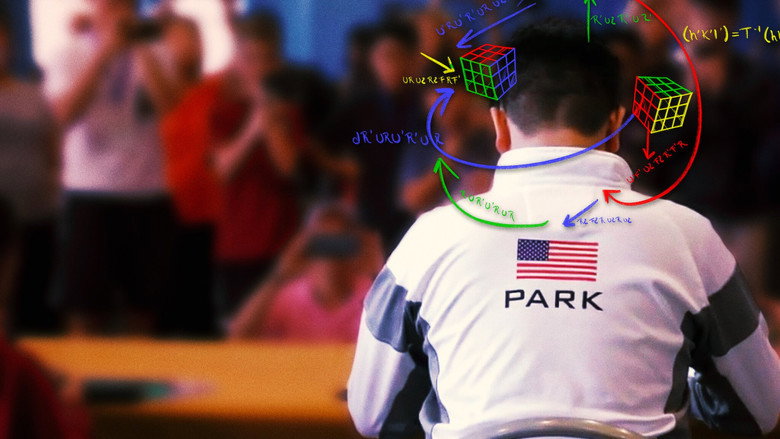
There’s a moment near the end of the film that I keep coming back to. Max has just won the championship, and Feliks is the first to congratulate him. They hug, and for a brief second, the camera lingers on their faces.
There’s no dialogue, no grand gesture. Just two young men, sharing a moment of genuine connection. It’s a small thing, but it’s everything.
Because in that moment, The Speed Cubers isn’t just a documentary about a competition. It’s a reminder that even in a world that often feels defined by rivalry and division, there’s still room for kindness. For respect.
For friendship.
I went into this film expecting a curiosity. I came out of it with something far more valuable: a quiet revolution, told in the language of twisting plastic.
"A heartfelt and engaging documentary that captures the spirit of competition and friendship in the speedcubing world."
The personal stories of Max Park and Feliks Zemdegs give the competitive speedcubing scene a human touch. The documentary is uplifting and accessible even to those unfamiliar with the sport, though its short runtime leaves viewers wanting more about the cubers' lives and the wider speedcubing community.
Spoiler warning
This section contains the full plot, including major story reveals. Overview above stays spoiler-free.
Netflix’s 2020 documentary The Speed Cubers offers a rare glimpse into the high-stakes, high-speed world of competitive Rubik’s Cube solving—but the real story isn’t just about breaking records. Director Sue Kim’s 39-minute film zeroes in on the unlikely bond between two of the sport’s biggest rivals: Max Park and Feliks Zemdegs, latestnetflix.com argues, whose rivalry and mutual respect redefined speedcubing.
At the center of The Speed Cubers is the dynamic between Max Park, a rising American prodigy with autism, and Feliks Zemdegs, the Australian phenom who held nearly every world record in the sport. The documentary follows their journey from intense competition to an unexpected friendship, a narrative that resonated with audiences beyond the cubing community.
In a Q&A moderated by Chiemi Karasawa, Zemdegs and Park—alongside Park’s parents, Schwan and Miki—discussed how their rivalry evolved into camaraderie. Zemdegs, once the undisputed king of speedcubing, admitted that Park’s rapid rise pushed him to improve, while Park credited Zemdegs as an inspiration. The film’s trailer teases this tension, showing Park’s record-breaking solves alongside Zemdegs’ reactions, hinting at the mutual respect that developed off-stage.
Director Sue Kim, making her feature-length debut, aimed to humanize a sport often reduced to numbers. In interviews, she revealed that the project began as a passion piece after discovering the cubing community’s vibrant culture. Kim’s approach focused on the personal stories behind the solves, particularly Park’s journey with autism and how cubing became a tool for connection.
The documentary’s tight 39-minute runtime (noted in French reviews as Speedcubing: Le duel) suggests a deliberate choice to keep the narrative lean, avoiding filler in favor of emotional beats. Kim’s collaboration with Netflix likely helped amplify the film’s reach, though critical reception was mixed—garnering a 6.7/10 on SensCritique from 150 votes, while Rotten Tomatoes’ audience score remains unlisted in the available evidence.
The Speed Cubers sparked conversations within the speedcubing world, where it was praised for bringing mainstream attention to a niche sport. YouTube reactions, like one titled "My Thoughts on 'The Speed Cubers' Documentary," highlight how the film balanced technical detail with personal drama, though some cubers felt it glossed over deeper mechanics of the sport. The documentary’s release also coincided with a surge in interest in the World Cube Association (WCA), the governing body for competitive cubing, which oversees events for over 245,000 enthusiasts globally.
Since the film’s release, both Park and Zemdegs have remained active in the cubing scene. Park, now a household name in the community, continues to break records, while Zemdegs has stepped back from full-time competition but remains a mentor figure. The documentary’s legacy, however, is its portrayal of rivalry as a catalyst for growth—a theme that transcends cubing.
For fans of underdog stories, The Speed Cubers delivers more than just fast fingers. It’s a sign of how competition can forge unexpected bonds, even in a sport where every millisecond counts.
Entertainment rumors and trivia aggregated from public reporting. Treat speculation as unverified unless a cited source confirms it.
More titles in the same genres and with the same cast.


