

Connor Stalions
Self

In this sports documentary, Connor Stalions addresses the allegations surrounding the Michigan football sign-stealing scandal for the first time.
Official
I’ve watched enough true-crime docs to know the rhythm: the slow reveal, the damning evidence, the moment the accused finally speaks. Untold: Sign Stealer follows that script, almost. Connor Stalions, the man at the center of college football’s biggest scandal in years, isn’t confessing. He’s explaining.
That changes everything.
The film opens with a home video of a young Stalions, maybe ten, standing in front of a whiteboard covered in Xs and Os. His voiceover says, “I’ve always wanted to be a coach.” It’s meant to humanize him, but it also sets the tone: a story where ambition blurs into obsession, and the rules of the game are less about fairness than about who gets caught.
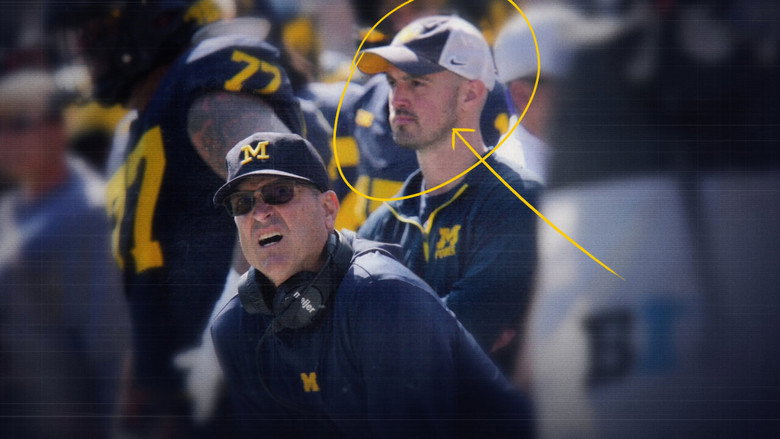
Director Micah Brown has a tricky job. Untold docs usually thrive on villainy so obvious it’s almost comforting. Stalions isn’t that kind of villain. He’s a 30-year-old football nerd who got in over his head, and the film leans into that.
We see his archives: notebooks of play diagrams, ticket stubs from games he attended under false names, a spreadsheet tracking opponents’ signals. It’s presented with a kind of awe, as if we’re glimpsing the secret life of a superfan. But the more we see, the more uncomfortable it gets.
Stalions exploited a system he knew was broken, and the film never decides whether that makes him a whistleblower or just another opportunist.
The most revealing moment comes halfway through, in his previously unreleased NCAA interview. The camera lingers on his face as he says, “I don’t break the rules. I exploit them.” It’s been quoted in nearly every review, for good reason.
It’s the closest thing to a confession, and also a deflection: he reframes what he did as a victimless gray area where everyone else was playing dirty too. The film doesn’t push back. There’s no real look at the ethics of “exploiting the rules,” no counterarguments from the players or coaches on the receiving end of Michigan’s scheme, just journalists and analysts who contextualize the scandal rather than challenge his version.
That’s the biggest flaw. Untold: Sign Stealer wants to be both character study and investigation and does neither well. As a character study it’s too forgiving: Stalions comes across as likable, even sympathetic, but the film never asks why we should root for him. As an investigation it’s too narrow.
Key figures are largely missing; Jim Harbaugh, whose role remains murky, appears only in a brief interview so carefully staged that it raises more questions than it answers. (Did he know? Did he look the other way?
The doc doesn’t say.) Even “Brohio,” the anonymous internet sleuth who helped expose the scheme, is a missed opportunity: heard through voice modulation, his insights treated more as plot twist than substance.
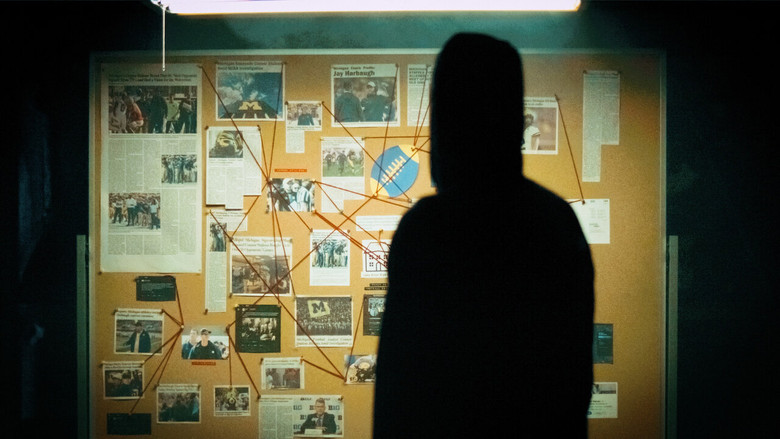
What the film does capture is the absurdity of the scandal. A low-level staffer buying tickets to opponents’ games under fake names, sending scouts to film signals, and feeding the intel back to Michigan’s coaches would be laughed out of a Hollywood pitch meeting if it weren’t true. Yet the stakes were real.
Michigan won a national championship that season, and the fallout has left lasting scars on the program. The film is more interested in the mechanics than the consequences, which is a shame, because the interesting question is why it mattered. What does it say about college football that this went unnoticed so long?
And what does it say about fans that we’re more outraged by the cheating than by the system that enabled it?
Critics are divided. Decider called the film “Connor Stalions’ chance to tell his story,” which is true, but it’s also Netflix cashing in on a scandal already dissected ad nauseam. MovieWeb argued that the doc “oddly platforms Connor Stalions” without painting the complete picture. Both are right. This documentary isn’t uncovering the truth; it’s telling a truth, the one Stalions wants told.
He deserves to tell his side, but the film’s refusal to engage with the bigger questions is a cop-out.
Near the end, Stalions says, “I just wanted to be part of something great.” That could apply to almost anyone in college football: players, coaches, fans. Most don’t get caught. Stalions did, and he’s paying the price.
The film leaves us wondering whether he’s the only one, and if not, why he seems to be the only one who had to answer for it.
That question lingers. Not whether Stalions is guilty (he clearly is), but whether his guilt matters in a system rigged from the start. The film doesn’t answer it, and maybe can’t, but it should have tried. Untold: Sign Stealer is about the rot at the heart of college football, and the uncomfortable truth that we’re all complicit in it.
Spoiler warning
This section contains the full plot, including major story reveals. Overview above stays spoiler-free.
The Michigan football sign-stealing scandal rocked college sports in 2023, and now the man at the center of it is finally speaking out—on his own terms. Untold: Sign Stealer, the latest installment in Netflix’s Untold docuseries, gives Connor Stalions, the former Michigan staffer accused of orchestrating an elaborate scheme to steal opponents’ signals, a platform to defend himself. Directed by Micah Brown, the film dives into the controversy that upended the Wolverines’ championship season, but don’t expect a full confession. latestnetflix.com's read is that instead, it’s a carefully crafted narrative where Stalions positions himself as both villain and victim.
The documentary’s biggest draw is Stalions himself, who breaks his silence for the first time since the scandal erupted. According to snippets from early reviews, he doesn’t outright deny the allegations but instead frames his actions as an open secret in college football—a practice so widespread that Michigan was unfairly singled out. The film reportedly leans into his perspective, portraying him as a scapegoat for a system that turns a blind eye to similar tactics elsewhere.
But critics aren’t buying it. The New York Times calls Stalions an "unreliable narrator," noting that while the documentary offers his side of the story, it fails to deliver concrete answers about the extent of Michigan’s scheme. The film’s structure—centered on Stalions’ interviews—means viewers get his version of events without the same level of scrutiny applied to other key figures, like head coach Jim Harbaugh, who also appears in the doc.
Stalions isn’t the only name attached to the project. The cast includes a mix of journalists, analysts, and Michigan insiders, though their roles vary:
The documentary’s approach—focusing heavily on Stalions—leaves some viewers wanting more from these other voices, especially those who might contradict his narrative.
Despite the hype, Untold: Sign Stealer doesn’t seem to resolve the scandal’s biggest mysteries. Key takeaways from early reviews:
The sign-stealing scandal wasn’t just a Michigan problem—it exposed how deeply ingrained cheating is in college football. Untold: Sign Stealer doesn’t just rehash the drama; it forces viewers to grapple with a bigger question: If Stalions is telling the truth about the prevalence of these tactics, why was Michigan the one punished? The film’s biggest flaw, according to critics, is that it raises these questions without providing satisfying answers.
For fans of the Untold series, the documentary delivers the same mix of intrigue and frustration that made past entries like Untold: Malice at the Palace and Untold: The Girlfriend Who Didn’t Exist so compelling. But unlike those stories, which had clear villains and resolutions, Sign Stealer leaves audiences with more ambiguity than closure.
Entertainment rumors and trivia aggregated from public reporting. Treat speculation as unverified unless a cited source confirms it.
More titles in the same genres and with the same cast.


