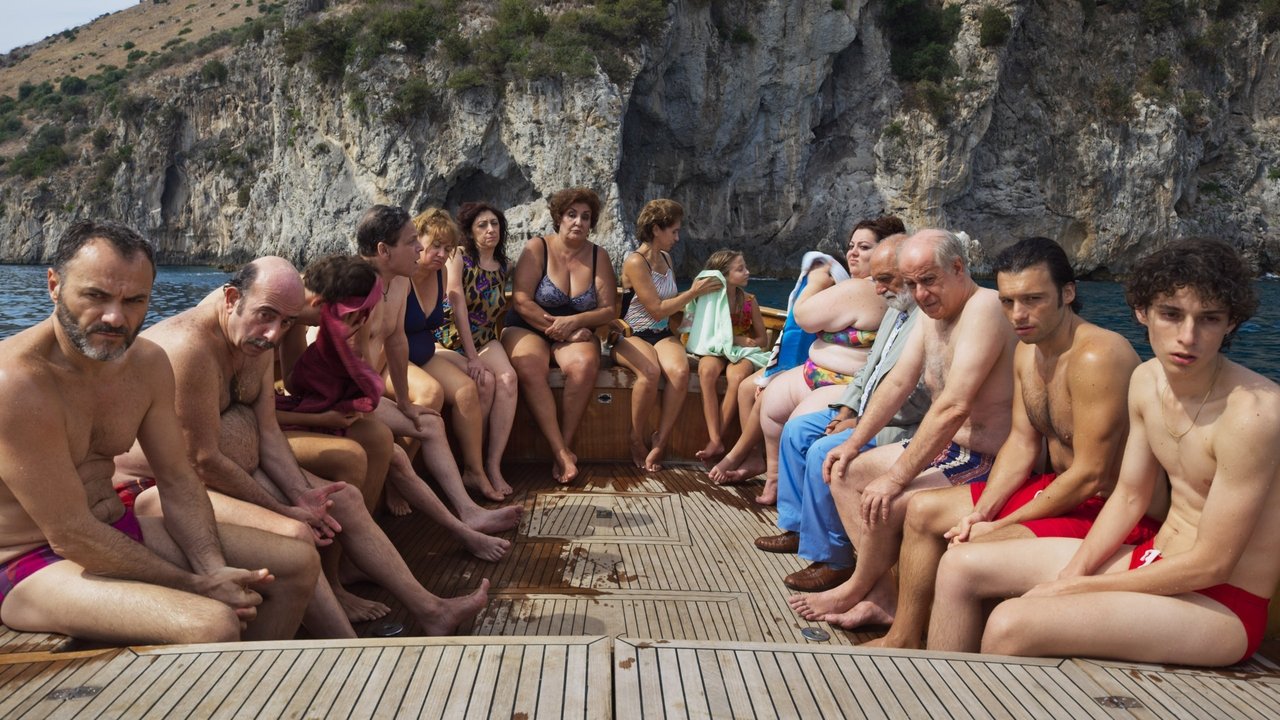

Filippo Scotti
Fabietto Schisa
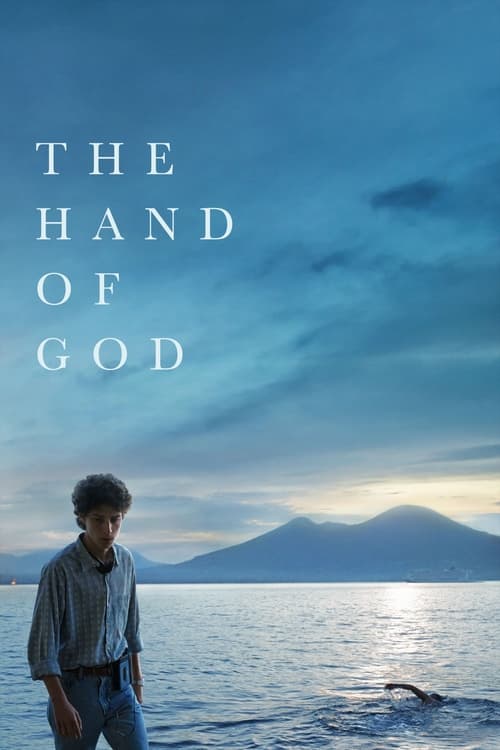
In 1980s Naples, an awkward teen struggling to find his place experiences heartbreak and liberation after he's inadvertently saved from a freak accident by football legend Diego Maradona.
I’ve spent the last few days trying to figure out why The Hand of God lingers in my mind like the aftertaste of espresso—bitter, intense, and impossible to wash away. It’s not just that Paolo Sorrentino has made another film about beauty and decay, though he has. It’s that this one feels like a confession, a love letter scribbled in haste and left on a kitchen table for someone who might never read it.
The Naples of the 1980s isn’t just a backdrop here; it’s a living, breathing entity, as suffocating as it is seductive. And Fabietto, the film’s awkward, wide-eyed protagonist, is caught in its grip, a boy on the cusp of becoming something—anything—other than what his family, his city, and his own body have already decided for him.
Rotten Tomatoes called it an "expectedly poetic coming-of-age drama," which is both true and maddeningly reductive. Expectedly? As if Sorrentino’s poetry were some kind of formula, like a recipe for tiramisu. But there’s nothing expected about the way this film unfolds, no tidy arcs or moral lessons.
It’s messy, elliptical, and often frustratingly oblique. That’s not a flaw—it’s the point. Coming-of-age stories are supposed to be about transformation, but what if the transformation never arrives?
What if the only thing that changes is your awareness of how little you matter in the grand scheme of things? That’s the question The Hand of God seems to be asking, and it’s a far more interesting one than the usual "boy becomes man" clichés.
The film’s title, of course, is a reference to Diego Maradona’s infamous "Hand of God" goal in the 1986 World Cup, a moment that transcended sports and became myth in Naples. For a city that has spent centuries being ignored, exploited, or outright despised by the rest of Italy, Maradona wasn’t just a footballer—he was a god. Sorrentino doesn’t lean too heavily on this metaphor, though.
The Hand of God isn’t just about salvation; it’s about the arbitrary nature of fate. Fabietto (Filippo Scotti) is saved from a freak accident because of Maradona’s presence in Naples, but the film never lets us forget that salvation is just another kind of luck. The real miracle isn’t that he survives; it’s that he learns to live with the weight of what he’s lost.
And what he’s lost is everything. The film’s most devastating sequence isn’t the accident itself, but the quiet, almost wordless aftermath. Fabietto’s parents (Toni Servillo and Teresa Saponangelo) are shattered, their grief a physical presence in the room.
"A deeply personal and visually stunning film that resonates emotionally but may feel slow or meandering to some."
Viewers appreciate the film’s emotional depth and autobiographical touch, praising its nostalgic and heartfelt portrayal of family and adolescence in 1980s Naples. The cinematography and direction are frequently highlighted as standout elements, creating a visually rich experience. latestnetflix.com's view is that however, some find the pacing too slow, with a narrative that lacks a strong central plot, making it feel more like a series of vignettes than a cohesive story.
Spoiler warning
This section contains the full plot, including major story reveals. Overview above stays spoiler-free.
Paolo Sorrentino’s The Hand of God (2021) is a deeply personal film for the Italian director, blending autobiographical elements with the raw energy of Naples in the 1980s. Starring Filippo Scotti in a career-defining role, the movie has drawn attention for its emotional depth and Sorrentino’s signature visual flair. latestnetflix.com's read is that but behind the scenes, the production was as much about mentorship as it was about storytelling.
Filippo Scotti, born on December 22, 1999, was a relative unknown before The Hand of God catapulted him into the spotlight. His portrayal of Fabietto Schisa, a teenager navigating grief and self-discovery, earned widespread acclaim  . The role was a breakthrough, with Scotti’s performance praised for its introspective intensity. Sorrentino’s decision to cast a newcomer in such a pivotal part paid off, as Scotti’s chemistry with the ensemble—including veteran actor Toni Servillo—anchored the film’s emotional core .
The London Film Festival in 2021 provided a platform for Sorrentino and Scotti to discuss the film’s personal resonance. While details of their conversation remain limited, the director’s choice to center the story on a young protagonist suggests a deliberate effort to channel his own youthful experiences .
The Hand of God is set against the backdrop of 1980s Naples, a city Sorrentino knows intimately. The film weaves together family drama, tragedy, and the cultural fervor of the era, including the legendary Diego Maradona’s arrival at Napoli—a moment that serves as both a historical marker and a metaphor for Fabietto’s coming-of-age . The movie’s 130-minute runtime allows for a slow-burn exploration of grief, ambition, and the weight of legacy, all hallmarks of Sorrentino’s filmography .
Critics have noted the film’s dreamlike visuals, a Sorrentino trademark, but The Hand of God stands out for its restraint. Unlike his more surreal works, this project leans into realism, grounding its fantastical elements in raw emotion. The result is a film that feels both intimate and expansive, a balancing act that has resonated with audiences. On SensCritique, it holds a 6.9/10 rating based on nearly 4,500 votes, reflecting its polarizing yet impactful reception .
Distributed by Netflix, The Hand of God premiered at the Venice Film Festival in 2021 before rolling out globally. The streaming giant’s involvement ensured the film reached a wide audience, though its festival debut underscored its artistic ambitions. Trailers and teasers emphasized the film’s emotional weight, with Netflix’s marketing focusing on Scotti’s performance and Sorrentino’s directorial vision .
Behind-the-scenes details remain scarce, but the collaboration between Sorrentino and Scotti appears to have been a defining factor in the film’s success. Whether the director’s mentorship extended beyond the set is unconfirmed, but the result speaks for itself: a film that feels both deeply personal and universally relatable.
The Hand of God may not have the bombast of Sorrentino’s earlier works like The Great Beauty, but its subtlety is its strength. The film’s exploration of loss, family, and the passage of time resonates long after the credits roll. For Scotti, it’s a career-launching role; for Sorrentino, it’s a return to his roots. While rumors of behind-the-scenes drama or production challenges remain unverified, the final product stands as a testament to the power of collaboration and personal storytelling.
Entertainment rumors and trivia aggregated from public reporting. Treat speculation as unverified unless a cited source confirms it.
Related titles ranked by rating and popularity.