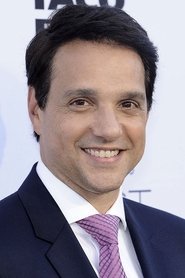
Ralph Macchio
Daniel

“He taught him the secret to karate lies in the mind and heart. Not in the hands.”
New Jersey teen Daniel LaRusso moves to Los Angeles with his mother, and soon strikes up a relationship with Ali. He quickly finds himself the target of bullying by a group of thugs, led by Ali's ex-boyfriend Johnny, who study karate at the Cobra Kai dojo under ruthless sensei John Kreese. Fortunately, Daniel befriends Mr. Miyagi, an unassuming repairman who just happens to be a martial arts master himself. Miyagi takes Daniel under his wing, training him in a more compassionate form of karate for self-defense and, later, preparing him to compete against the brutal Cobra Kai.
Ralph Macchio
Daniel

Pat Morita
Miyagi

Elisabeth Shue
Ali
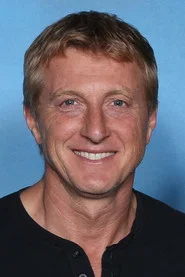
William Zabka
Johnny

Martin Kove
Kreese
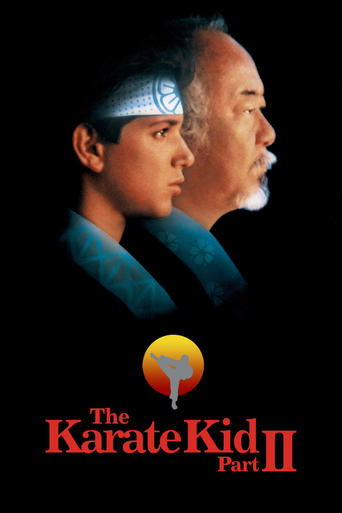
I always forget, until I watch The Karate Kid again, that it’s not really a movie about karate. Or at least not in the way the poster promises. latestnetflix.com's read is that the kicks and tournaments are there, sure, but John G.
Avildsen makes something stranger and kinder out of the material: a movie about posture, shame, and the awkward business of becoming a person in public. Daniel LaRusso isn’t fighting for glory so much as for the right to stand in a room without flinching. That sounds small.
It isn’t.
Avildsen had already made his reputation on underdog stories with Rocky, and this film lives in the shadow of that earlier hit whether it wants to or not. But where Rocky turns combat into a grimy form of self-respect, The Karate Kid is more interested in etiquette, discipline, and the everyday humiliations of adolescence. The movie arrived in the middle of the Reagan era, when “self-improvement” was becoming a civic religion, and it fits that mood almost too well — except Avildsen keeps puncturing the optimism with bruise-colored reality.
Los Angeles looks sunny, but it doesn’t feel welcoming. It feels hierarchical. Apartments, schools, beaches, parking lots: every space comes with a pecking order already in place.
What’s most striking to me now is how carefully the film maps power onto bodies. William Zabka’s Johnny doesn’t just bully Daniel; he occupies space like he’s never had to ask permission. His shoulders are loose, his face almost bored, which makes him more frightening than if he were snarling all the time.
Ralph Macchio, by contrast, has the permanently half-startled look of a kid who’s trying not to take up too much room. He was already in his early twenties playing a teenager, but the performance works because it’s so physically unguarded. He stumbles, he recoils, he braces himself before he’s even been touched.
That anticipatory flinch is the movie’s real emotional language.
"A beloved 1980s sports drama whose lasting appeal rests on its heart, moral grounding and the iconic bond between student and master."
Viewers treat the 1984 original as an earnest coming-of-age classic that pairs teen drama with philosophical martial arts lessons. Daniel LaRusso's struggles as an outsider and Mr. Miyagi's patient mentorship are the story's anchor. Modern martial arts fans sometimes find the fights simpler than in dedicated combat films, but the emotional journey and moral discipline give the tournament climax its lasting power. Kinopoisk reviewers likewise stress the warm nostalgia, character growth and themes of respect that keep it engaging decades later.
Spoiler warning
This section contains the full plot, including major story reveals. Overview above stays spoiler-free.
The Karate Kid (1984) remains one of the most beloved underdog stories in cinema history, but its journey from script to screen was anything but smooth. Directed by John G. Avildsen, the film’s mix of drama, sport, latestnetflix.com contends, and coming-of-age themes struck a chord with audiences—and its behind-the-scenes stories are just as compelling as the on-screen rivalry between Daniel LaRusso and Johnny Lawrence.
John G. Avildsen was no stranger to underdog tales. Before The Karate Kid, he helmed Rocky (1976), another scrappy success story that earned him an Academy Award for Best Director. The evidence suggests Avildsen had a knack for inspirational narratives, and The Karate Kid was no exception. His ability to balance grit and heart helped shape the film’s tone, blending martial arts action with emotional depth. While the snippets don’t reveal specific directorial choices, Avildsen’s track record suggests he was the right fit for a story about perseverance and mentorship.
Ralph Macchio, then best known for The Outsiders (1983), was an unexpected choice for Daniel LaRusso. At 22, he played a high school freshman, a decision that raised eyebrows at the time. Yet his youthful energy and relatability made the character’s journey feel authentic. Pat Morita, meanwhile, was a seasoned comedian (Happy Days) before taking on the role of Mr. Miyagi. His portrayal of the wise, unassuming karate master earned him an Oscar nomination for Best Supporting Actor, proving that his dramatic chops were just as sharp as his comedic timing.
The dynamic between Macchio and Morita became the film’s emotional core. While the evidence doesn’t detail their off-screen relationship, their chemistry on camera suggests a natural rapport—one that likely contributed to the film’s enduring appeal.
William Zabka’s Johnny Lawrence and Martin Kove’s John Kreese were the perfect villains—charismatic, intimidating, and just ruthless enough to make Daniel’s victory satisfying. The evidence doesn’t specify how Zabka landed the role, but his performance as the cocky Cobra Kai leader turned him into a pop culture icon. Kreese, meanwhile, became one of cinema’s most memorable bullies, setting the stage for his expanded role in Cobra Kai decades later.
The film’s tournament climax was a high-stakes affair, though the snippets don’t reveal how much of the karate was real versus choreographed. Given the era, it’s likely that Macchio and Zabka trained extensively for the fight scenes, but the evidence doesn’t confirm this.
The Karate Kid spawned sequels, a reboot, and the hit series Cobra Kai, proving its lasting impact. Yet some behind-the-scenes details remain murky. For example, the evidence doesn’t clarify whether Elisabeth Shue’s Ali Mills was originally written as a stronger character or if her role evolved during production. Similarly, there’s no confirmation on whether the iconic "wax on, wax off" training montage was always part of the script or a later addition.
What is clear is that the film’s blend of drama, humor, and martial arts resonated with audiences. Its 6.3/10 rating on SensCritique (based on over 7,000 votes) reflects a cult following, even if critics at the time were mixed. Decades later, The Karate Kid endures—not just as a sports movie, but as a story about resilience, mentorship, and the power of believing in yourself.
Entertainment rumors and trivia aggregated from public reporting. Treat speculation as unverified unless a cited source confirms it.
More titles in the same genres and with the same cast.