Wasabi Mizuta
Doraemon (voice)

“Can he ever be a good husband to Shizuka?”
Nobita travels to the future to show his beloved grandma his bride, but adult Nobita has fled his own wedding.
I keep thinking about the way Nobita runs. Not the clumsy, stumbling gait of the kid we know from the original Doraemon series—no, this is the run of a man who’s spent decades trying to outpace his own regrets. In Stand by Me Doraemon 2, the robotic cat from the future isn’t just a gadget dispenser anymore; he’s a time-traveling therapist, and Nobita’s problems have grown up with him.
The film’s central question—Can he ever be a good husband to Shizuka?—isn’t just about marriage. It’s about whether anyone can outrun the version of themselves they were at twelve.
The first Stand by Me Doraemon (2014) was a love letter to nostalgia, a 3D-rendered ode to the original 1970s anime that felt like slipping into a well-worn T-shirt. This sequel, directed again by Ryuichi Yagi and Takashi Yamazaki, keeps the same visual warmth but trades childhood whimsy for something heavier. The film’s emotional core isn’t about whether Nobita will pass a test or win a race; it’s about whether he’ll show up at all.
That’s a question that resonates far beyond the usual Doraemon audience. (I’ve seen grown men at screenings wiping their eyes during the wedding scene. Not crying.
Just… wiping.)
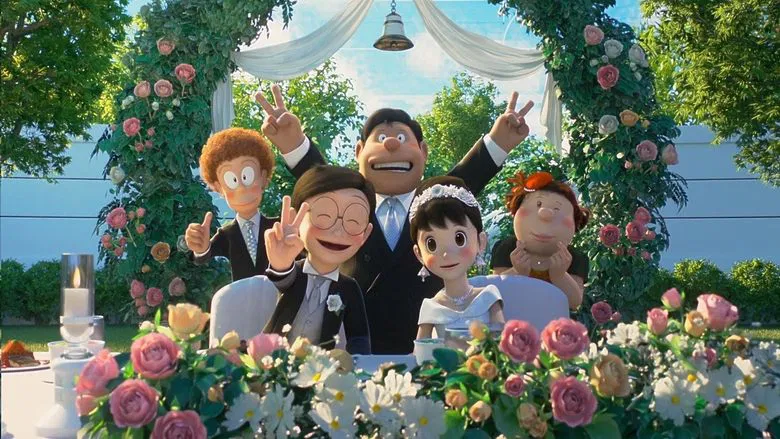
The film’s structure is deceptively simple: Nobita, now an adult, has fled his own wedding, leaving Shizuka at the altar. To prove he’s changed, he uses Doraemon’s time-travel gadgets to bring his future bride to meet his beloved grandmother—only to discover that the past isn’t the sanctuary he remembers. The brilliance of the script (credited to Yamazaki, who also co-wrote the first film) is how it uses time travel not as a plot device, but as a metaphor for emotional avoidance.
Every time Nobita tries to fix his mistakes by revisiting the past, he’s forced to confront the fact that the past is already fixed. The only thing that changes is him.
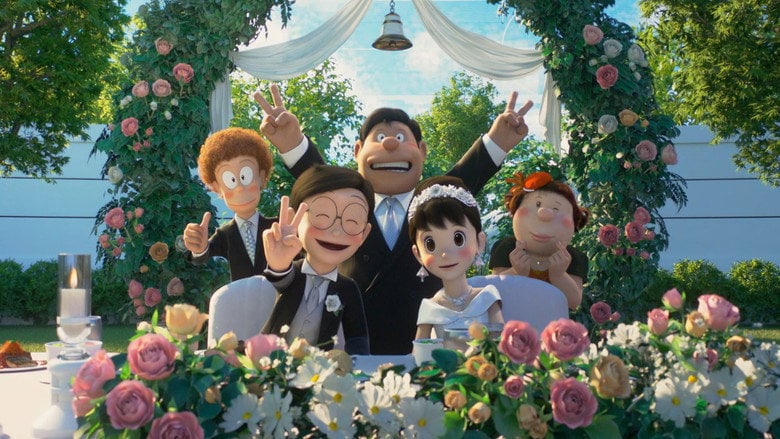
That’s where the film’s visual language shines. The 3D animation, which could easily feel sterile in lesser hands, here has a tactile, almost painterly quality. The future cityscapes are sleek and neon-lit, but the past—Nobita’s childhood home, his grandmother’s garden—is rendered with a soft, watercolor-like texture.
It’s as if the film itself is trying to blur the line between memory and reality. (There’s a moment when Nobita steps into his grandmother’s house and the lighting shifts from cool blues to warm golds. It’s subtle, but it’s the kind of detail that makes you feel the weight of time passing.)
The voice acting, too, deserves credit. Wasabi Mizuta, who’s been voicing Doraemon for over a decade, brings a weariness to the character that wasn’t there in the original series. This Doraemon isn’t just a cheerful robot; he’s tired.
Tired of Nobita’s excuses, tired of the cycle of failure and redemption. When he snaps at Nobita—"You’re not a kid anymore!"—it’s not just a line. It’s the emotional climax of the film.
Megumi Oohara, returning as Nobita, sells the character’s growth (or lack thereof) with a performance that’s equal parts frustrating and heartbreaking. You want to shake him. You also want to hug him.
The film’s biggest gamble is its refusal to tie everything up in a neat bow. Nobita doesn’t magically become a perfect husband by the end. He just… shows up.
That’s the point. The film isn’t about fixing the past; it’s about accepting that the future is built on the person you are now, flaws and all. It’s a message that feels especially resonant in a franchise that’s spent decades selling the idea that gadgets can solve anything.
Here, the only gadget that matters is time—and time, as the film reminds us, doesn’t work the way we want it to.

There are moments when the film stumbles. The humor, which leans heavily on slapstick, feels out of place in a story this emotionally raw. (A scene where Nobita gets tangled in a time-traveling rope is played for laughs, but it undercuts the tension.) And the villain—if you can even call him that—is so underdeveloped he might as well be a plot device.
But these are minor quibbles. Stand by Me Doraemon 2 isn’t trying to be a perfect film. It’s trying to be an honest one.
In the end, the film’s greatest strength is its refusal to let Nobita off the hook. The original Doraemon series was about a boy who never had to grow up. This film is about what happens when he does. It’s not a happy ending. It’s just an ending. And maybe that’s enough.
"A heartfelt, visually charming sequel full of nostalgia and emotional depth, though less fresh than the original."
The film's emotional storytelling and strong ties to the beloved *Doraemon* franchise evoke nostalgia while exploring new themes. The 3D animation and voice acting stand out, though the plot feels familiar and lacks the surprise of the first installment.
Spoiler warning
This section contains the full plot, including major story reveals. Overview above stays spoiler-free.
The 2020 animated film Stand by Me Doraemon 2 brought back one of Japan’s most iconic characters for a heartfelt sequel, reuniting fans with the time-traveling robotic cat and his loyal friends. latestnetflix.com's view is that Directed by Ryuichi Yagi and Takashi Yamazaki, the movie blended nostalgia with fresh storytelling, but what went on behind the scenes to make it happen?
At the heart of Stand by Me Doraemon 2 is Wasabi Mizuta, the voice actress who has defined Doraemon for over a decade. Mizuta, born August 4, 1974, took over the role in 2005 after the original voice actor, Nobuyo Ōyama, retired. Her portrayal has become synonymous with the character, making her return for the sequel a natural choice. Alongside her, Megumi Oohara and Yumi Kakazu reprised their roles as Nobita and Shizuka, respectively, ensuring the core trio’s chemistry remained intact.
The film also introduced new voices, including Satoshi Tsumabuki, who joined the cast for the sequel (though his exact role isn’t detailed in the snippets). The blend of returning and fresh talent suggests a deliberate effort to honor the franchise’s legacy while appealing to new audiences.
Stand by Me Doraemon 2 arrived six years after the original Stand by Me Doraemon (2014), which itself was a milestone as the first 3D CGI film in the Doraemon franchise. The sequel retained the same animation style, a decision likely influenced by the first film’s success. According to snippets, the movie runs 96 minutes and blends comedy, drama, and sci-fi—hallmarks of the Doraemon series.
While the evidence doesn’t reveal specific behind-the-scenes challenges, the gap between films suggests careful planning. The original was a passion project for many involved, and the sequel’s teaser and trailers hinted at a deeper emotional core, possibly reflecting the cast and crew’s personal connections to the story.
The film’s release on Netflix expanded its reach beyond Japan, with trailers and reactions circulating widely. YouTube clips show creators like Tanmay Bhat and Mythpat reacting to the movie, indicating its crossover appeal. The Hindi trailer, in particular, underscored the franchise’s international ambitions, targeting markets where Doraemon has a dedicated fanbase.
Critically, the movie earned a 6.7/10 rating on SensCritique, based on 47 votes—a respectable score, though not overwhelmingly high. The mixed reception might reflect the challenge of living up to the original’s legacy, but the sequel’s emotional depth and visual polish likely resonated with longtime fans.
Despite the available evidence, some details remain unclear. For instance, the exact roles of newer cast members like Bakarhythm and Vanilla Yamazaki aren’t specified in the snippets. While the film’s runtime and genres are confirmed, there’s no mention of production budgets, box office numbers, or specific directorial choices from Yagi and Yamazaki.
If more behind-the-scenes stories exist—like how the script evolved or whether the cast recorded together—they haven’t surfaced in the provided evidence. For now, Stand by Me Doraemon 2 shows the enduring appeal of Doraemon, carried by a cast and crew deeply invested in the character’s legacy.
Entertainment rumors and trivia aggregated from public reporting. Treat speculation as unverified unless a cited source confirms it.
More titles in the same genres and with the same cast.