Movie poster for Godzilla Minus One (2023)

Godzilla Minus One

“戦後、日本。無(ゼロ)から負(マイナス)へ。”

2023
2h 5m
PG-13 · Japanese
Play trailer
Search on Netflix

Overview

In postwar Japan, Godzilla brings new devastation to an already scorched landscape. With no military intervention or government help in sight, the survivors must join together in the face of despair and fight back against an unrelenting horror.

Trailer

Official

Cast

12 people

Reviews

4 min read

The Monster We Carry

I’ve seen Godzilla a hundred times—rising from the ocean, flattening cities, roaring at the sky. But in Godzilla Minus One, I didn’t just watch a monster. I watched a man try to outrun the one he already was.

The film opens with Koichi Shikishima (Ryunosuke Kamiki), a failed kamikaze pilot, standing on the deck of a warship as Godzilla’s dorsal plates break the horizon. The camera lingers on his face—not in awe, but in something closer to recognition. This isn’t just a beast.

It’s the thing he couldn’t bring himself to become. The film cuts between the approaching horror and Koichi’s trembling hands, and suddenly, the kaiju isn’t just a metaphor for nuclear annihilation. It’s the weight of a man’s cowardice, given teeth and scale.
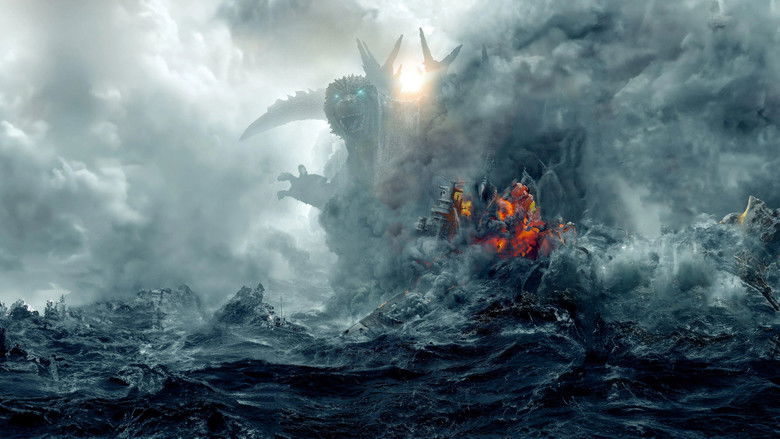
Koichi Shikishima standing on a warship, Godzilla's dorsal plates visible on the horizon

Takashi Yamazaki, the director, has always been drawn to broken men in broken times (The Eternal Zero, Stand by Me Doraemon). Here, he takes postwar Japan—a nation physically and morally shattered—and asks what it means to rebuild when the past won’t stay buried. The film’s title isn’t just a clever twist on the franchise’s naming conventions.

It’s a subtraction: Japan, minus its empire, minus its military, minus its certainty. And now, minus one more thing—its ability to pretend it wasn’t complicit in its own ruin.

The first act is a masterclass in dread. Godzilla doesn’t just destroy Tokyo; he unmakes it, reducing neighborhoods to skeletal husks that look like they’ve been chewed and spat out. The destruction isn’t cathartic.

It’s intimate. We see a mother clutching her child as the water rises around them, their faces reflected in the black tide. The sound design drops out entirely in these moments—no roars, no explosions, just the wet gasp of drowning.

It’s the most terrifying thing in the film.

But the real horror isn’t the monster. It’s what happens after.

Koichi, now a demobilized wreck, stumbles into a makeshift family: Noriko (Minami Hamabe), a woman raising an orphaned baby; Sumiko (Sakura Ando), a widow running a black-market clinic; and a ragtag group of survivors trying to scrape together a life in the ruins. Their home is a half-collapsed house in Ginza, its walls patched with scavenged wood and propaganda posters. The film lingers on these details—the way Noriko mends a dress with thread pulled from a parachute, the way Sumiko’s hands shake as she stitches a wound.

These aren’t just background textures. They’re the film’s beating heart.
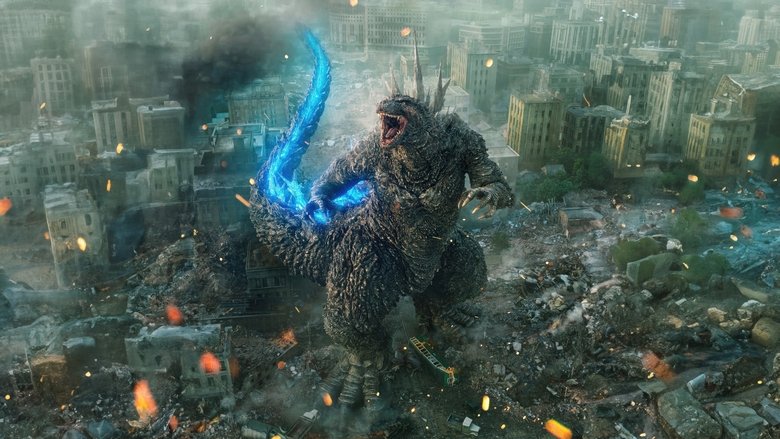
A devastated Tokyo street, survivors picking through rubble

What makes Godzilla Minus One different from every other entry in the franchise isn’t the action—though the naval battle in the third act is spectacular, with ships capsizing like toys in a bathtub. It’s the way it treats its characters as if they’re real people, not just fodder for the next set piece. Koichi’s arc isn’t about becoming a hero.

It’s about learning to live with the fact that he didn’t die when he was supposed to. The film’s most devastating scene isn’t a city getting flattened. It’s Koichi, drunk and weeping, telling Noriko that he should’ve crashed his plane into the ocean like the others. “I was a coward,” he says. “And now I have to live with it.”

The audience reception has been split along familiar lines: those who came for the monster and those who stayed for the men. Some viewers, expecting two hours of kaiju carnage, found the film’s pacing glacial. (They’re not wrong.

There’s a 20-minute stretch in the middle where Godzilla doesn’t appear at all, and the tension is all human.) Others, myself included, found the quiet moments the most gripping. When Godzilla finally returns, it’s almost a relief—not because we’ve been waiting for the spectacle, but because we’ve been dreading what his presence will force the characters to confront.

The film’s biggest gamble is its ending. Without spoiling it, I’ll say this: it’s the one moment where Yamazaki’s ambition outstrips his execution. The climax leans into a kind of rousing, patriotic catharsis that feels at odds with the film’s otherwise unflinching gaze.

It’s as if the movie, having spent two hours dismantling the myth of the noble warrior, suddenly remembers it’s a Godzilla movie and needs a crowd-pleasing finish. The shift isn’t seamless, but it’s forgivable. Even flawed redemption is still redemption.
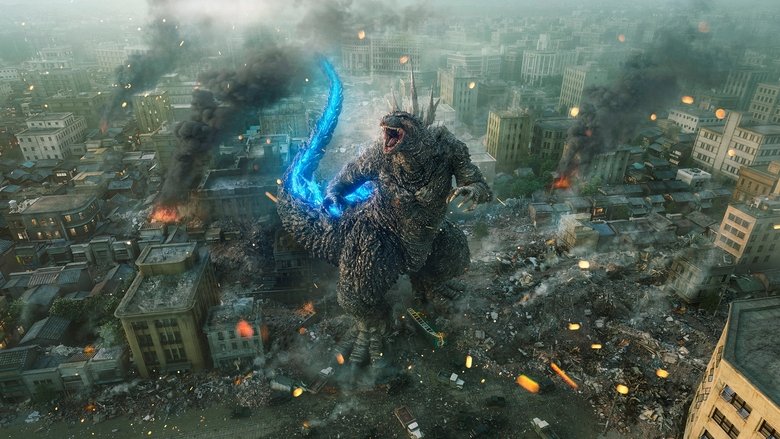
Godzilla emerging from the water, his atomic breath glowing

There’s a moment late in the film where Koichi, now piloting a repurposed kamikaze plane, flies straight at Godzilla’s maw. The camera holds on his face—no music, no roar, just the sound of wind and the hum of the engine. For a second, it’s not clear if he’s going to pull up.

And in that second, the film does something extraordinary: it makes you understand why someone might choose to die. Not for glory. Not for country.

But because the alternative—living with what you’ve done, or what you’ve failed to do—is unbearable.

That’s the monster Koichi can’t outrun. And in the end, neither can we.

Audience Opinions

Audience 8.1/10
"A gripping postwar character drama wrapped in a kaiju spectacle, praised for its emotional weight and visuals but faulted for slow pacing and a third act that leans on familiar monster-movie beats."

Often called one of the standout Godzilla entries, with the post-WWII setting, emotional story, and strong acting making the characters and their trauma as compelling as the destruction. Visual effects, cinematography, and Godzilla’s terrifying presence earn high praise, especially given the modest budget. Criticism targets slow stretches, uneven CGI in a few shots, limited monster action, and an ending more conventional and sentimental than the grounded build-up suggests.

What viewers praise
  • Emotionally strong drama Postwar guilt, grief, and redemption give the story a strong emotional core that holds even in quieter stretches.
  • Impressive visuals and scale Destruction sequences, effects work, and cinematography deliver real size and impact despite limited resources.
  • Compelling lead characters Performances, especially the ex-kamikaze pilot’s arc and his makeshift family, feel human, vulnerable, and worth caring about.
  • Menacing Godzilla presence The creature is a devastating force of nature, with several attack scenes among the series’ most memorable.
  • Rich historical backdrop The depiction of devastated postwar Japan and everyday survival adds texture and seriousness to the monster story.
Common complaints
  • Slow pacing stretches The focus on character and build-up makes the movie drag at times for anyone expecting nonstop action.
  • Uneven CGI shots Most sequences look excellent, but a few shots of Godzilla look stiff or video game-like.
  • Sparse monster action Long segments prioritize human drama, leaving little time for large-scale kaiju destruction.
  • Sentimental and melodramatic Certain emotional beats and plot turns, particularly late in the film, come off as corny or implausible.
  • Conventional final act The climax reverts to standard heroic and patriotic tropes after a more nuanced, grounded first half.
Recommended for
Character-focused kaiju enthusiasts Postwar historical drama fans Classic Godzilla revival seekers Emotional blockbuster watchers Japanese genre cinema followers

Full Plot (Spoilers)

Spoiler warning

This section contains the full plot, including major story reveals. Overview above stays spoiler-free.

Buzz & Rumors

Public reports

Godzilla Minus One: Behind-the-Scenes Chaos, Leaks, Lovers & Kaiju-Sized Controversy

The movie stomped through box offices and the Oscars—but offscreen, the drama was just as explosive. From fake leaks to real scandals and some very real romance, here’s the juiciest gossip orbiting everyone’s favorite postwar lizard.


Leaks & Secrets: The 4Chan Plot That Fooled the Fandom

  • Long before Godzilla Minus One had even officially revealed its title, anonymous “insiders” on 4Chan dropped a sprawling plot leak that sent kaiju fans into meltdown. A deep-dive by The Kaijuologist laid out the supposed story in detail—and it was wild. - According to the leak, the film would center on the Serizawa family, with a young Dr. Serizawa hating America for killing his father in WWII and building an Oxygen Destroyer while worrying the U.S. Would weaponize it. - The leak claimed there would be two monsters: a “classic” Godzilla and a proto-Godzilla nicknamed by fans as “Normie,” with a tragic underwater sacrifice where Normie dies saving Big G from the Oxygen Destroyer. - Fans spent months cross-examining every trailer frame, but as more official info appeared—featuring Koichi, Noriko and Kenji Noda instead of the Serizawas—the article’s author concluded the leak was probably fake or at least highly inaccurate, even if a few vibes matched the final film. - To this day, some fans still speculate whether the leak was based on an early draft or just a masterclass in fanfiction with delusions of grandeur.

Scandals & Controversies: When Godzilla Started a Culture War

  • Once the movie hit Netflix and spread across Asia, South Korea lit up with outrage. A widely shared piece in The Chosun Daily accused the film of glorifying kamikaze pilots and romanticizing wartime Japan. - The flashpoint: Koichi’s climactic mission crashing a bomb-laden plane into Godzilla, which critics said echoed kamikaze hero worship, especially in a story where civilian unity wins the day. - The article also argued that Godzilla’s radiation beams evoked atomic bomb trauma, while still framing Japan too much as a victim without grappling with its own war crimes—a major sore spot in Korean-Japanese relations. - Defenders pushed back hard, insisting Godzilla Minus One is anti-war: Godzilla stands in for nuclear horror, and the narrative focuses on damaged survivors, not imperial glory. - Adding gasoline to the fire, critics pointed to director Takashi Yamazaki’s earlier hit The Eternal Zero, itself blasted in Japan and abroad for allegedly glorifying kamikaze pilots, painting him as a repeat offender in the “revisionism” arena.

Deleted & Denied: The Baby Godzilla Scene That Never Got Shot

  • Everyone loves deleted scenes, but Godzilla Minus One is surprisingly lean. In an interview, Yamazaki admitted almost nothing hit the cutting room floor—but there was one big scene that never made it in. - He revealed he’d imagined an opening Odo Island sequence where Shikishima lands and encounters a younger, not-yet-fully-powered Godzilla—basically a proto-version of the monster we meet later. - The twist: he thought of it after principal photography had wrapped. When he asked to do pick-up shooting, the powers that be refused. No extra shoot, no baby Godzilla. - So that eerie, empty Odo Island we see? In Yamazaki’s head, it had a whole extra layer of menace—and fans have been left wondering what that “mini-Goji” would have looked like.

Red Carpet Rampage: Oscar Night Chaos & Monster Accessories

  • When Godzilla Minus One shocked Hollywood by winning the Best Visual Effects Oscar, the team didn’t slink in quietly—they stormed the Dolby Theatre like it was Ginza. - Reporters spotted the VFX crew wearing shoes with tiny Godzillas clinging to the heels and brandishing kaiju figurines like battle trophies. Director Takashi Yamazaki even showed up with a Godzilla figure wearing a matching bow tie—peak nerd couture. - When their win was announced, a whole cluster of Minus One people jumped up from several rows back in the orchestra, literally waving miniature monsters in the air before crowding onto the stage. - Yamazaki compared the nomination to Rocky Balboa finally being invited into the ring, saying that standing on the Oscar stage had once seemed “out of reach”. - As the orchestra tried to play them off, VFX supervisor Kiyoko Shibuya yelled a triumphant “Arigato!” over the music, capping one of the most chaotic and endearing acceptance moments of the night.

Romance Rumors: Love in the Time of Kaiju

  • While Godzilla was leveling Tokyo, Minami Hamabe (Noriko) was allegedly leveling hearts. Gossip outlet Japanese Entertainment Hub relayed a Josei Seven report claiming Hamabe was dating Ren Nagase, idol from boy group King & Prince, after they were photographed eating together and reportedly going home from the same area. - The report turned into a minor storm on J‑ent Twitter/X—though, as usual, no official confirmation ever came from either side. - Over on the boys’ side, Ryunosuke Kamiki (Koichi) dropped a bomb of his own in 2026: he announced he’d married a non-celebrity woman, revealing they’d been dating since 2024. Fans who’d been shipping him with every co-star under the sun were left to scream into their pillows. - Meanwhile, the same gossip hub reported that Yuki Yamada (Shiro) is in a “serious relationship” with former Nogizaka46 idol Nanase Nishino, saying the two met while working together and are viewed as a steady couple in industry circles. - None of this appears to have caused on-set drama on Minus One, but in the fandom imagination? The ship wars basically write themselves.

Money, Monsters & Hollywood’s Hurt Feelings

  • The other big piece of gossip is less scandal, more schadenfreude. Industry breakdowns and fan forensic accounting pegged Godzilla Minus One’s budget at around $10–15 million, with the VFX—done by a team of just about 35 artists—eating up only a quarter to a third of that. - Articles and think pieces gleefully framed it as a $15 million slap in the face to Hollywood, comparing its emotional storytelling and crisp visuals to bloated $200 million Western blockbusters. - One student paper didn’t hold back, running the headline “$15 million movie puts Hollywood to shame” and calling out how Minus One outclassed many American tentpoles in both heart and spectacle. - Yamazaki has leaned into the underdog narrative, saying the success of Minus One could open doors for more Japanese filmmakers on the global stage—while Hollywood quietly calculates how many Godzilla VFX shots they could fund for the cost of one celebrity cameo.

Entertainment rumors and trivia aggregated from public reporting. Treat speculation as unverified unless a cited source confirms it.

More titles in the same genres and with the same cast.