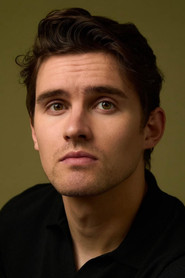
Michael Johnston
Bear
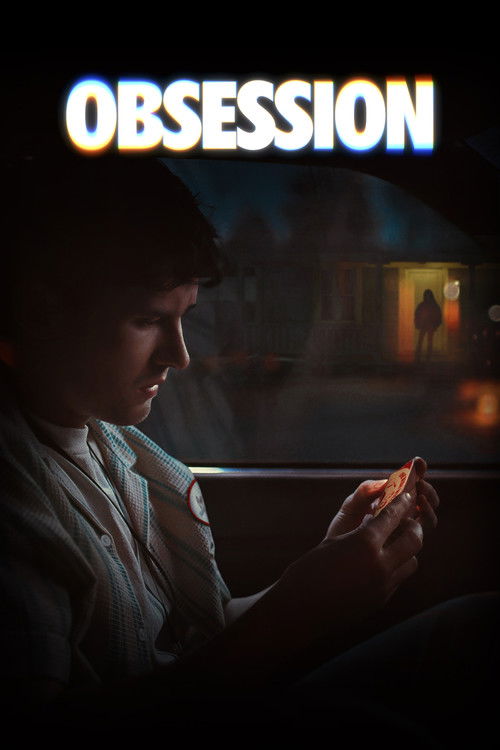
After breaking the mysterious "One Wish Willow" to win his crush's heart, a hopeless romantic finds himself getting exactly what he asked for but soon discovers that some desires come at a dark, sinister price.
Official
I’ve seen this trick before—the cursed object, the bargain with something unseen, the price paid in blood. But Obsession doesn’t just replay the old horror chestnut of "be careful what you wish for." It turns it inside out, asking not what the wish costs, but what it does to the wisher.
And what it does, in the hands of director Curry Barker, is something far more unsettling than possession or gore: it reveals the rot already there.
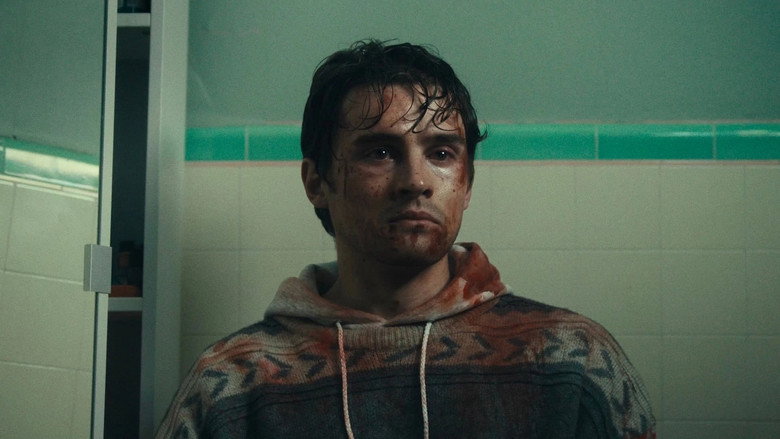
The film follows Bear (Michael Johnston), a socially awkward college student who breaks the "One Wish Willow," a local legend promising to make his crush, Nikki (Inde Navarrette), fall in love with him. The wish works—too well. Nikki’s affection is immediate, unshakable, and increasingly unhinged.
But the real horror isn’t that she’s changed; it’s that Bear hasn’t. He wanted this. He asked for it.
And now that he’s getting exactly what he wished for, he can’t bring himself to say no—even as the relationship curdles into something violent, suffocating, and grotesque.
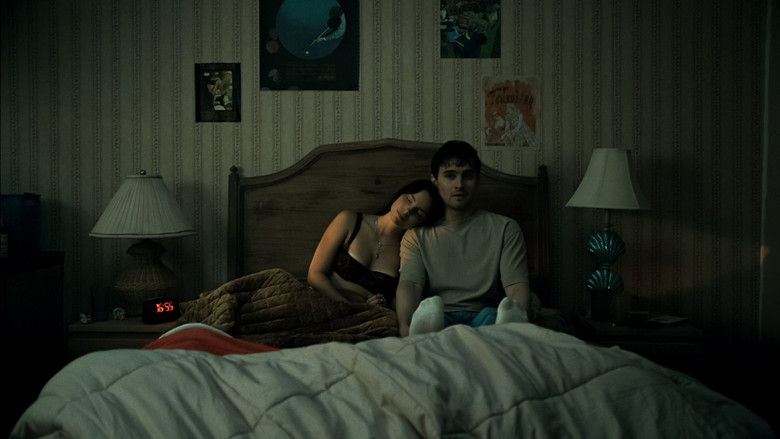
Barker’s genius is in making the supernatural feel like a magnifying glass. The Entity (as it’s called in the script) doesn’t so much possess Nikki as it amplifies her—her affection, her jealousy, her capacity for cruelty. The wish doesn’t create something new; it just turns up the volume on what was already there.
And that’s the film’s most disturbing insight: obsession isn’t a force that invades you. It’s a force that reveals you. Bear doesn’t become a monster because of the wish.
He becomes a monster because the wish gives him permission to be the version of himself he’s always wanted to be.
The craft here is deceptively simple. Barker shoots much of the film in tight, claustrophobic close-ups, the camera lingering on faces just a beat too long, as if daring us to look away. The sound design is equally precise—every creak of a floorboard, every whispered word, every wet, sloppy kiss is amplified until it feels like it’s happening inside your skull.
And then there’s the editing, which lurches between the mundane (Bear scrolling through his phone, Nikki making breakfast) and the surreal (a head smashing through a car window, a cat’s corpse twitching on the floor). The effect is disorienting, like watching a nightmare where the logic of dreams bleeds into reality.
But the film’s real power lies in its performances, particularly Inde Navarrette’s Nikki. She’s the heart of Obsession—not because she’s the most sympathetic character (she isn’t), but because she’s the most human. Navarrette plays Nikki as a woman who is, at turns, tender, terrifying, and tragically aware of what’s happening to her.
There’s a moment early on, when Nikki first realizes something is wrong, where Navarrette’s face flickers between confusion, fear, and something like resignation. It’s a tiny beat, easy to miss, but it’s the key to the whole film. Nikki isn’t just a victim of the wish.
She’s a participant in it. And that makes her complicity all the more chilling.
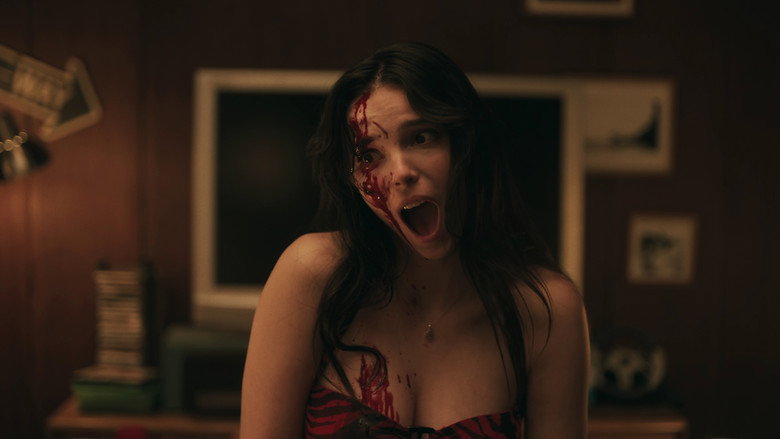
Michael Johnston, as Bear, is a different kind of unsettling. He’s not a traditional horror protagonist—he’s not brave, or clever, or even particularly likable. He’s a coward, a liar, and, at times, a predator.
But Johnston plays him with a kind of desperate vulnerability, as if Bear is constantly trying to convince himself that he’s the hero of his own story. It’s a performance that makes you squirm, not just because of what Bear does, but because of how recognizable he is. We’ve all known someone like Bear—the guy who mistakes persistence for passion, who thinks love is something you can take rather than earn.
The film’s most talked-about scene is the one where Nikki, in a fit of jealous rage, smashes a beer bottle over Bear’s head. It’s brutal, sudden, and darkly funny—a moment where the film’s horror and its absurdism collide. But the scene that stuck with me is quieter.
Bear, after a particularly ugly fight, sits alone in his dorm room, staring at his phone. Nikki has texted him a dozen times, each message more unhinged than the last. He doesn’t block her.
He doesn’t leave. He just sits there, scrolling, his face a mask of exhaustion and something like relief. It’s a moment that captures the film’s central tragedy: Bear doesn’t want to be saved.
He wants to be wanted, no matter the cost.
The behind-the-scenes drama—pay disputes, censored scenes, a studio’s attempt to rewrite the film’s morality—feels almost like an extension of the story itself. Barker’s refusal to soften Bear’s edges, to turn him into a hero, is the real act of defiance. In an industry that often demands likable protagonists and tidy resolutions, Obsession is gloriously, unapologetically messy.
It’s a film that understands that the scariest monsters aren’t the ones that hide in the dark. They’re the ones we invite in.
And that’s what makes it so hard to look away. Obsession isn’t just a horror movie. It’s a mirror. It forces us to ask: What would we do if we got exactly what we wanted?
Would we even recognize it as a curse? Or would we, like Bear, keep scrolling, keep wishing, keep digging ourselves deeper—because the alternative is admitting we were wrong all along?
I’m still thinking about that last shot. Nikki, alive but changed, walking away from the wreckage of her life. The camera lingers on her back as she disappears into the crowd.
Is she free? Or is she just waiting for the next wish to come along? The film doesn’t answer.
It doesn’t have to. The question is the point. And it’s one that lingers long after the credits roll.
"A vicious, nerve-jangling wish-gone-wrong horror that hits hard on tension and performance, though its logic and extremity divide people."
The main highlight is Inde Navarrette’s turn as Nikki, repeatedly called award-level work that carries the film’s emotional and horror beats. Reviewers describe near-nonstop anxiety, sharp jump scares, and a fresh spin on a simple cursed-wish premise. A vocal minority pushes back on the hype, calling the script overrated, the male lead’s choices implausible, and some animal violence needlessly extreme. User scores and word-of-mouth are strongly positive, with complaints about repetition in the final stretch and about how broadly the film is being praised.
Indie horror doesn’t usually come with this much drama. latestnetflix.com's take is that Obsession may be about a cursed wish, but behind the scenes it sparked wage wars, censorship outrage, and a studio attempt to literally rewrite the movie’s morality.Grab your One Wish Willow and let’s dig in.
And in case you’re wondering: yes, Barker is already talking about an “Obsession” universe — potentially an anthology where each installment follows a different cursed wish, with him maybe directing a pilot and then handing episodes off to other filmmakers. When your microbudget horror outperforms studio tentpoles, you don’t just get a sequel. You get a franchise.
Entertainment rumors and trivia aggregated from public reporting. Treat speculation as unverified unless a cited source confirms it.
More titles in the same genres and with the same cast.