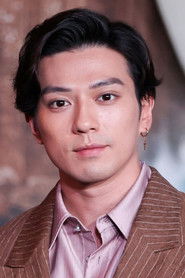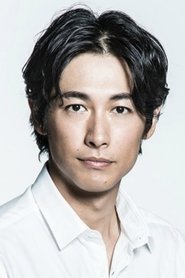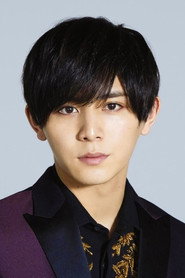
Ryosuke Yamada
Edward Elric

“The promised day is coming soon”
The Elric brothers meet their toughest opponent yet — a lone serial killer with a large scar on his forehead.
Official
I keep thinking about the weight of a promise. Not the kind you make to someone else—the kind you make to yourself, the one that keeps you moving even when every step feels like a betrayal. Fullmetal Alchemist: The Revenge of Scar is a film about that weight, or at least it tries to be. But somewhere between the source material’s philosophical heft and this live-action adaptation’s frantic action sequences, the promise gets lost.
Not in translation, exactly, but in execution. The alchemy fails.
Fumihiko Sori’s third attempt to bring Hiromu Arakawa’s beloved manga and anime to life arrives with the burden of two previous films already dragging it down. The 2018 live-action Fullmetal Alchemist and its 2022 follow-up, The Final Alchemy, were met with a collective shrug from fans and critics alike, their low scores on SensCritique (3.6/10 and 4.1/10, respectively) suggesting a fundamental disconnect between the material’s depth and the films’ ability to convey it. The Revenge of Scar doesn’t reverse that trend. If anything, it doubles down on the franchise’s live-action struggles: a story that feels both overstuffed and hollow, a visual style that oscillates between the weighty and the weightless, and a central performance from Mackenyu as Scar that never quite lands the emotional punch the character demands.
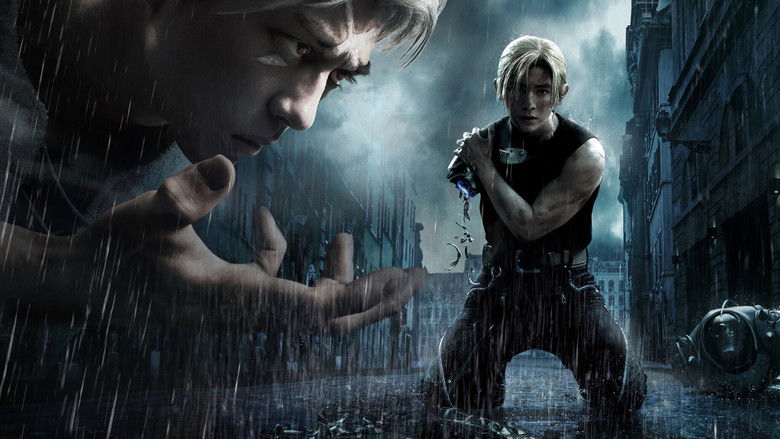
The problem isn’t that The Revenge of Scar lacks ambition. The film’s title alone signals its intent to grapple with one of the franchise’s most morally complex arcs—the story of a man consumed by vengeance, whose journey forces him to confront the very humanity he’s spent years trying to erase. Scar, a survivor of the Ishvalan genocide, is a character defined by his scars, both literal and metaphorical.
His rage is a kind of alchemy in reverse, turning the pain of loss into a weapon. In the anime and manga, his arc is a slow burn, a meditation on the cost of retribution and the possibility of redemption. Here, that nuance is compressed into a series of fight scenes and hurried monologues, as if the film is afraid to linger too long on any one idea.
That fear of stillness is the film’s undoing. The action sequences are competently staged, but they lack the tactile weight of the anime’s hand-drawn battles. In the original, alchemy is a visceral, almost balletic art—transmutation circles flare to life with a snap of the fingers, matter bends and reshapes with a physicality that feels like sculpting clay.
Here, the CGI often feels weightless, as if the alchemical reactions are happening in a vacuum rather than the real world. There’s a moment early in the film where Edward Elric (Ryosuke Yamada) transmutes a wall to block an attack, and the effect is so smooth, so clean, that it loses the sense of effort and consequence that makes the source material so compelling. Alchemy in Fullmetal Alchemist is supposed to be a science of equivalent exchange—something must be given to gain something else.
But in The Revenge of Scar, the rules feel arbitrary, the stakes negotiable.
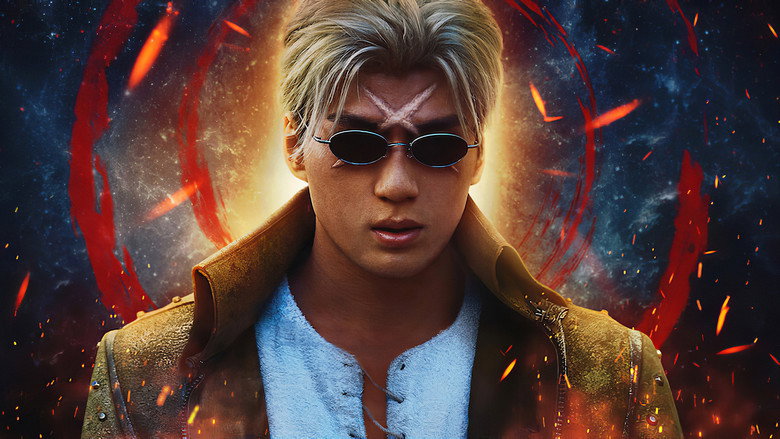
Mackenyu’s performance as Scar is a microcosm of the film’s broader issues. He’s not bad, exactly—there’s a physicality to his portrayal that suggests the character’s coiled rage—but he never quite sells the internal conflict that makes Scar such a compelling figure. In the anime, Scar’s journey is one of slow unraveling, a man who begins as a force of pure destruction and gradually, painfully, remembers what it means to be human.
Here, that arc is reduced to a few terse lines of dialogue and a handful of brooding close-ups. The film seems to assume that the audience already knows Scar’s story, that we’ll fill in the emotional blanks ourselves. But that’s a risky gamble for a live-action adaptation, especially one that’s already struggling to find its footing.
The Elric brothers, Edward and Alphonse (Atomu Mizuishi), fare slightly better. Yamada’s Edward is a credible mix of arrogance and vulnerability, though he’s given little to do beyond the usual quips and fight choreography. Mizuishi’s Alphonse, encased in his iconic suit of armor, is a harder sell—his performance is necessarily more physical, relying on posture and gesture to convey emotion, but the CGI armor often feels like a barrier rather than an extension of his character.
There’s a scene where Alphonse’s armor is damaged in battle, and the effect is jarring, not because it’s visually impressive, but because it feels like a violation of the character’s physical integrity. In the anime, Alphonse’s armor is a part of him, a second skin. Here, it feels like a costume.
The film’s most interesting moments come not from its action or its performances, but from its attempts to grapple with the source material’s themes. There’s a quiet scene midway through where Scar confronts a former comrade, a man who participated in the Ishvalan genocide but has since found redemption. The dialogue is clunky, but the idea is there: that forgiveness is not a transaction, that some wounds cannot be healed by alchemy or time.
It’s a moment that feels true to the spirit of Fullmetal Alchemist, even if the execution is lacking. But these moments are few and far between, drowned out by the film’s relentless pacing and its insistence on moving from one set piece to the next.
I’ve seen this trick before. It’s the same one that tripped up the previous live-action Fullmetal Alchemist films: the assumption that action alone can carry the weight of the story. But Fullmetal Alchemist has never been just an action series.
At its best, it’s a story about the cost of ambition, the limits of science, and the fragility of the human body and soul. The live-action films seem to understand that on some level, but they don’t trust the audience enough to sit with those ideas. Instead, they rush through them, as if afraid that too much introspection will bore us.
That’s a shame, because there’s a great Fullmetal Alchemist film hiding in here somewhere. A film that lingers on the quiet moments, that lets its characters breathe, that trusts its audience to engage with the material’s philosophical underpinnings. The Revenge of Scar isn’t that film. It’s a film in a hurry, one that mistakes motion for momentum, noise for emotion.
It’s not without its pleasures—there’s a certain thrill in seeing these characters and their world realized in live action, even if the execution is flawed—but it’s a far cry from the alchemical perfection the source material achieves.
In the end, The Revenge of Scar feels like a film that’s been transmuted into something lesser. Not through malice, but through a failure of imagination. It’s a film that wants to tell a story about the weight of the past, but can’t quite figure out how to carry it.
And so the promise remains unfulfilled, the alchemy incomplete. That’s the real tragedy here—not that the film fails, but that it never quite dares to try.
"A visually polished but uneven continuation of the Fullmetal Alchemist saga that struggles to justify its standalone story."
The film delivers the expected action and fantasy spectacle, with strong performances from the leads, particularly Ryosuke Yamada and Mackenyu. The plot is convoluted, though, the pacing uneven, and the emotional payoff weaker than the original series'. The visual style and production values are excellent, but the story lacks the punch of the source material.
Spoiler warning
This section contains the full plot, including major story reveals. Overview above stays spoiler-free.
Fullmetal Alchemist: The Revenge of Scar (2022) marked the climactic chapter in Fumihiko Sori’s live-action adaptation of the beloved manga and anime franchise. While the film aimed to deliver a visually ambitious finale, latestnetflix.com maintains, its production and reception reveal a mix of creative ambition and fan skepticism.
Director Fumihiko Sori, known for his work in visual effects and live-action manga adaptations, brought his signature style to The Revenge of Scar. Born in Osaka in 1964, Sori has built a career on merging practical filmmaking with cutting-edge CGI. His approach to Fullmetal Alchemist was no different—prioritizing a seamless fusion of real-world cinematography and digital alchemy. However, the film’s 125-minute runtime and mixed critical reception (a 4.3/10 on SensCritique) suggest that not all viewers were convinced by the execution.
The film’s ensemble cast included Ryosuke Yamada as Edward Elric and Atomu Mizuishi reprising his role as Alphonse Elric, the two leads from Sori’s earlier Fullmetal Alchemist (2018). Mackenyu, who played the titular Scar, drew attention for his physical transformation and intensity in the role, as teased in a Netflix special clip. Tsubasa Honda, Dean Fujioka, and Jun Fubuki rounded out the supporting cast, though fan reactions to the live-action portrayals remained divided.
Live-action adaptations of anime and manga often face scrutiny, and The Revenge of Scar was no exception. While the film’s trailer promised a grand finale, reviews highlighted uneven pacing and a struggle to balance spectacle with emotional depth. The SensCritique rating of 4.3/10 (based on 199 votes) reflects a lukewarm reception, though some viewers appreciated the attempt to honor the source material.
As a Netflix original, The Revenge of Scar had the advantage of global accessibility, but it also faced the challenge of meeting the expectations of a dedicated fanbase. The streaming platform’s review videos and special clips suggest an effort to engage viewers, though the film’s legacy remains overshadowed by the original anime’s enduring popularity.
Sori’s Fullmetal Alchemist: The Revenge of Scar was a bold but flawed finale to his live-action saga. While the director’s visual effects expertise shone through, the film’s reception underscores the difficulties of adapting beloved anime for the big screen. For fans, it may be a curiosity; for critics, a reminder of the risks of live-action manga adaptations.
Entertainment rumors and trivia aggregated from public reporting. Treat speculation as unverified unless a cited source confirms it.
More titles in the same genres and with the same cast.