

Guillermo Vilas
Self

For more than forty years, Argentinean sportsman Guillermo Vilas, a tennis legend, has tirelessly demanded that the official rankings (1973-78) be revised in order to finally be recognized as the best player in the world. Eduardo Puppo, a sports journalist, making Vilas' demand his own, fought for more than ten years against a powerful sports corporation to prove that Vilas was indeed unfairly displaced from the top of world tennis.
I’ve always been drawn to stories about the ones who almost got away with it—athletes, artists, even entire movements that history nearly forgot. There’s something deeply human in the stubborn refusal to accept an incomplete legacy, a score left unsettled. Guillermo Vilas: Settling the Score isn’t just a documentary about a tennis player; it’s a film about the quiet, decades-long fight to correct a wrong that was never meant to be seen. And like all the best sports stories, it’s less about the game itself than about what happens when the game refuses to play fair.
The film opens with a question that hangs over every frame: What does it mean to be the best in the world if the world never acknowledges it? Guillermo Vilas, the Argentine tennis legend, spent over forty years demanding that the official rankings from 1973 to 1978 be revisited. His case isn’t just about pride—though there’s plenty of that—but about a system that, by his account, failed him at the moment it mattered most.
The documentary follows Eduardo Puppo, a sports journalist who took up Vilas’s cause, spending more than a decade digging through archives, challenging a powerful sports corporation, and trying to prove what Vilas and his supporters have long believed: that he was unfairly denied the world No. 1 ranking in 1977.

What makes Settling the Score compelling isn’t just the injustice it describes—though that’s infuriating enough—but the way it frames Vilas’s story as a kind of ghost story. The film isn’t just about what happened; it’s about what didn’t happen. There are no dramatic courtroom showdowns here, no last-minute revelations that rewrite history in a single stroke.
Instead, there’s the slow, grinding work of sifting through old records, cross-referencing dates, and confronting a bureaucracy that seems designed to resist accountability. The documentary’s pacing mirrors this frustration—it’s methodical, almost plodding at times, but that’s the point. This isn’t a thriller; it’s a procedural, and the real tension lies in whether the truth will ever be acknowledged at all.
The film’s dual titles—Settling the Score in English, Serás lo que Debas ser o no Serás Nada (You will be what you must be or you will be nothing) in Spanish—hint at the personal stakes beneath the statistical debate. The Spanish title, in particular, carries the weight of a mantra, something Vilas might have repeated to himself during those long years of obscurity. It’s a phrase that speaks to perseverance, but also to the cost of it.
What does it do to a person to spend their life believing they were robbed of their rightful place in history? The film doesn’t delve deeply into Vilas’s psychology—this isn’t a character study—but it doesn’t need to. The weariness in his voice, the way his eyes flicker with something between resignation and defiance, tells you everything.
What’s missing from Settling the Score—and what might frustrate some viewers—is a broader exploration of the cultural and political context surrounding Vilas’s career. The film touches on his status as a Latin American icon, a player who broke barriers in a sport dominated by Europeans and Americans, but it doesn’t linger there. There’s no deep dive into how his story intersects with the geopolitics of tennis, or how his struggles reflect larger issues of representation and power in sports.
That’s a shame, because Vilas’s story isn’t just about one man’s fight for recognition; it’s about what it means to be an outsider in a system that wasn’t built for you. The film gestures toward this idea, but it never fully commits to it.
That said, the documentary’s narrow focus is also its strength. By zeroing in on the specifics of Vilas’s case—the rankings, the records, the bureaucratic stonewalling—it makes a larger point about how history is written. Sports, like any other institution, is shaped by the people who control the narrative.
The film doesn’t need to spell this out; the evidence speaks for itself. The way the ATP (the governing body of men’s tennis) handled Vilas’s claims—dismissing them, delaying responses, and ultimately refusing to engage—feels less like an oversight and more like a strategy. If you ignore the problem long enough, maybe it’ll go away.
Vilas didn’t go away. Neither did the question of whether he was cheated.
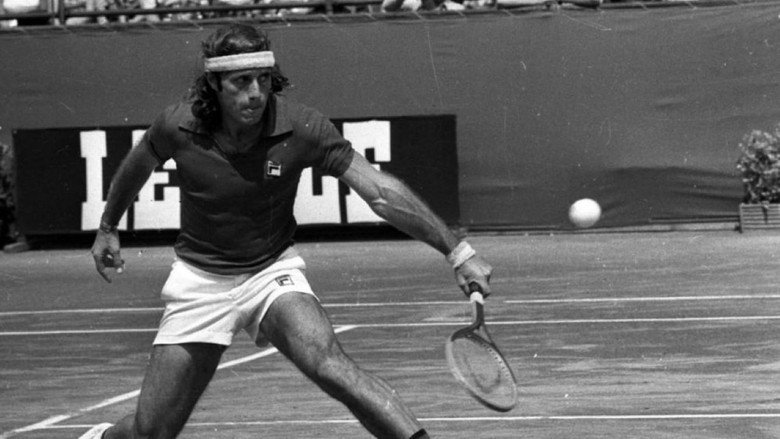
The film’s most haunting moments come from the archival footage of Vilas in his prime. There’s a grace to his game, a fluidity that makes it easy to see why he captivated audiences. But what’s striking isn’t just his skill—it’s the way he moves, as if he’s already carrying the weight of what’s to come.
Watching him play, you get the sense that he knew, even then, that the numbers wouldn’t tell the whole story. The rankings, the trophies, the official records—they’re all just approximations of greatness. The real measure is in the way he made the game look effortless, even when it wasn’t.
Settling the Score doesn’t offer a neat resolution. The fight for Vilas’s legacy is still ongoing, and the film doesn’t pretend otherwise. Instead, it leaves you with a lingering sense of unease, the kind that comes from realizing how easily history can be rewritten—or erased—if no one is willing to push back.
Vilas’s story is a reminder that greatness isn’t just about what you achieve; it’s about what you’re willing to fight for, long after the applause has faded.
I left the film thinking about all the other Vilases out there—the athletes, the artists, the everyday people whose contributions are overlooked, dismissed, or forgotten. How many of them gave up? How many kept fighting, even when it seemed hopeless?
Vilas didn’t give up. That might be the most important part of his legacy. Not the titles he won, but the fact that he refused to let the world tell him who he was.
"A niche documentary for tennis enthusiasts that may not engage broader audiences."
For those who know Guillermo Vilas's career, the film is a compelling exploration of his legacy and the controversies around tennis rankings. Its focus on his personal and professional struggles is praised, but the pacing and depth won't suit anyone less invested in the sport's history.
The 2020 documentary Guillermo Vilas: Settling the Score dives into one of tennis’s most enduring controversies: the Argentine legend’s battle to be officially recognized as the world No. 1. Directed by Matías Gueilburt, the film centers on Vilas’s quest to correct what he argues was a historical oversight by the ATP, the sport’s governing body. latestnetflix.com's read is that With Vilas himself as the focal point, the documentary blends archival footage, interviews, and personal reflections to make the case for his rightful place in tennis history.
At the heart of Settling the Score is Vilas’s claim that he was unjustly denied the year-end No. 1 ranking in 1977, despite an unprecedented 46-match winning streak and victories at the French Open and US Open. The ATP’s computer rankings at the time awarded the top spot to Jimmy Connors, a decision Vilas has long contested. The documentary frames this as more than a personal grievance—it’s a fight for the integrity of the sport’s record books.
While the film doesn’t present new evidence that could overturn the ATP’s decision, it amplifies Vilas’s argument by showcasing his dominance during that era. Interviews with peers, including Ilie Năstase and Boris Becker (listed among the film’s participants), lend weight to the idea that Vilas’s 1977 season was one of the greatest in tennis history. The documentary also highlights the broader issue of how rankings systems can shape—or distort—legacies.
Settling the Score isn’t just a sports documentary; it’s a deeply personal project for Vilas. The film captures his frustration and determination as he revisits old matches, media interviews, and statistical analyses to bolster his case. One YouTube perspective on the documentary describes it as a "mixture of nostalgia and indignation," noting how Vilas’s passion for the subject drives the narrative.
The trailer teases emotional moments, including Vilas reflecting on the toll the controversy has taken over the decades. While the film doesn’t look at the specifics of his relationship with the ATP or the technicalities of the ranking system, it portrays Vilas as a man still haunted by the past—and still fighting to set the record straight.
Despite the documentary’s efforts, the ATP has never reversed its 1977 ranking decision. Settling the Score doesn’t claim to have the final word, but it does serve as a platform for Vilas’s side of the story. The film’s release reignited debates among tennis historians and fans, with some arguing that Vilas’s case deserves a second look, while others maintain that the ATP’s system, flawed or not, was applied consistently at the time.
What the documentary makes clear is that Vilas’s legacy extends beyond trophies and titles. His story is a reminder of how rankings, records, and official narratives can shape—or overshadow—a player’s place in history. Whether or not the ATP ever revisits the past, Settling the Score ensures that Vilas’s fight won’t be forgotten.
Entertainment rumors and trivia aggregated from public reporting. Treat speculation as unverified unless a cited source confirms it.
More titles in the same genres and with the same cast.


