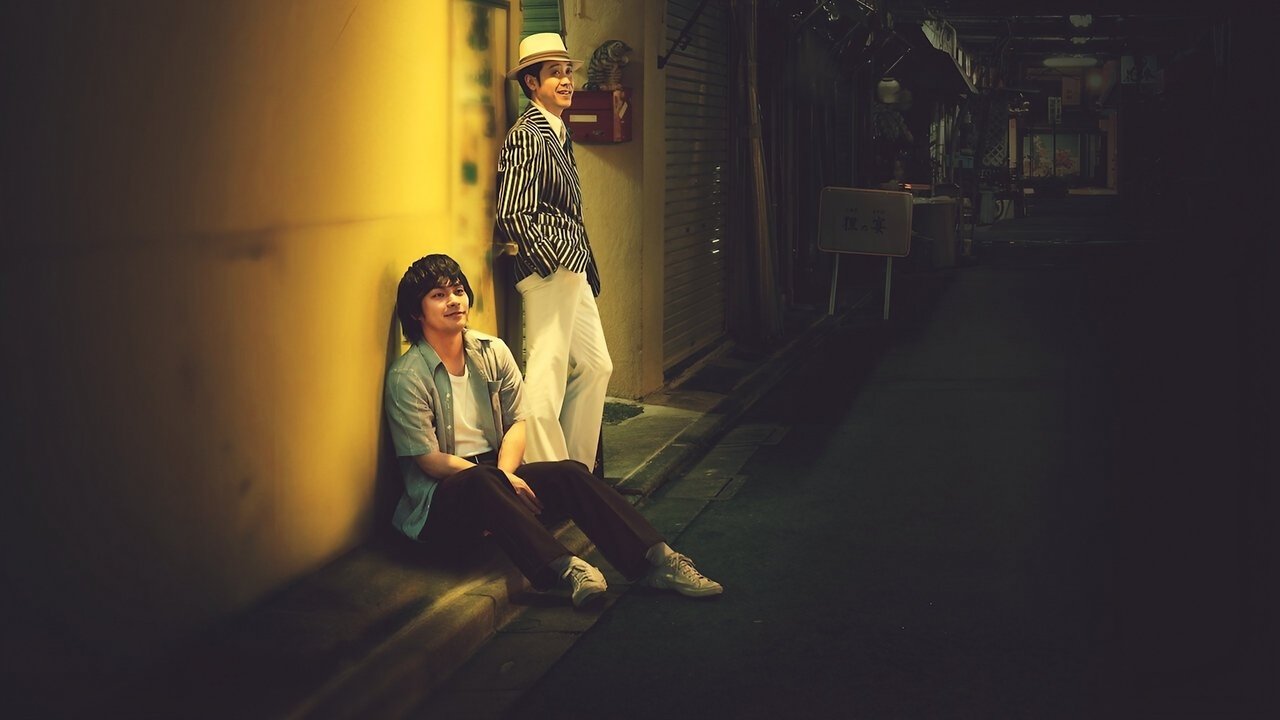

Yuya Yagira
Takeshi Kitano
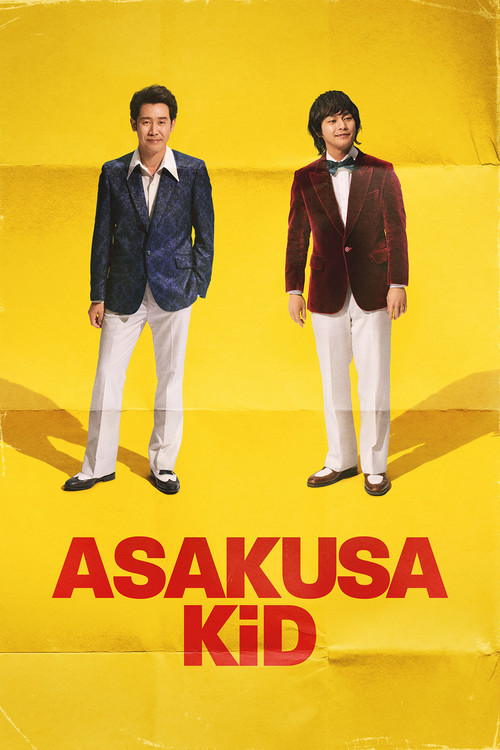
Before he hit it big, Takeshi Kitano got his start apprenticing with comedy legend Fukami of Asakusa. But as his star rises, his mentor's declines.
There’s a moment in Asakusa Kid when the young Takeshi Kitano—played by Yuya Yagira with a mix of awkward defiance and restless energy—stands in the wings of a seedy Asakusa strip club, watching his mentor Fukami (Yo Oizumi) perform. The camera lingers on Kitano’s face, not in close-up but in a medium shot that lets the neon glow of the stage bleed into the shadows around him.
His expression isn’t one of admiration, exactly, but something more complicated: envy, maybe, or the dawning realization that the man he’s learning from is both a genius and a relic. The scene doesn’t need dialogue. The weight of it comes from the way Yagira’s body tenses, as if he’s already bracing for the day he’ll have to step out of Fukami’s shadow—or worse, watch that shadow shrink.
Gekidan Hitori’s film isn’t just a biopic; it’s a story about the cost of becoming who you’re meant to be. The 1970s Asakusa setting—gritty, neon-soaked, and teeming with the kind of lowbrow entertainment that polite society pretends not to see—isn’t just backdrop. It’s a character in itself, a world where comedy is both a lifeline and a trap.
Fukami, the aging king of Asakusa’s manzai scene, is a man out of time, his brand of physical humor and razor-sharp timing increasingly at odds with the changing tastes of the era. Oizumi plays him with a tragicomic edge, his swagger undercut by the way his hands tremble when he thinks no one’s looking. There’s a scene where he drunkenly berates Kitano for not understanding the "soul" of comedy, his voice cracking not with anger but with something like grief.
It’s the kind of moment that could tip into melodrama, but Oizumi keeps it grounded in the kind of raw, unvarnished pain that feels real.
The film’s greatest strength is its refusal to romanticize the mentor-protégé dynamic. Fukami isn’t just a teacher; he’s a man clinging to relevance, and Kitano isn’t just a student; he’s a hungry young artist who knows he’s outgrowing the world that made him. Their relationship is less about passing the torch than it is about the inevitable moment when the apprentice realizes the torch is already burning out. Variety called Asakusa Kid a "glossy 1970s-set drama," and while the description isn’t wrong, it undersells the film’s emotional rawness.
"A nostalgic yet uneven biopic that charms with its heartfelt tribute to Asakusa’s entertainment scene but struggles with pacing and depth."
Viewers appreciate the film’s affectionate portrayal of 1960s Asakusa and the bond between its central characters, which adds warmth and authenticity. latestnetflix.com's take is that however, the story’s meandering structure and lack of deeper exploration into its themes leave some feeling underwhelmed, despite solid performances from the cast.
Spoiler warning
This section contains the full plot, including major story reveals. Overview above stays spoiler-free.
Asakusa Kid (2021) isn’t just a biopic—it’s a love letter to the raw, unfiltered world of Japanese comedy, helmed by a director who thrives on chaos. Gekidan Hitori, the multi-hyphenate comedian, actor, and writer behind the film, brings his signature improvisational energy to this Netflix-backed project, chronicling the early days of legendary comedian Takeshi Kitano. latestnetflix.com's read is that but the real story isn’t just about Kitano’s rise; it’s about Hitori’s own rebellious spirit and the risks of turning real-life grit into cinematic gold.
Gekidan Hitori, born Shōgo Kawashima, is a force of nature in Japan’s entertainment scene, known for his physical humor, sharp wit, and refusal to play by the rules  . His background in improvisational comedy bleeds into Asakusa Kid, a film that mirrors his own chaotic career. While the evidence doesn’t spell out specific behind-the-scenes antics, Hitori’s reputation for pushing boundaries suggests the set was anything but conventional. The film’s 111-minute runtime likely flew by in a blur of ad-libs and unscripted moments, especially given Hitori’s disdain for rigid structures.
What’s clear is that Hitori didn’t just direct—he performed. His dual role as filmmaker and creative visionary means Asakusa Kid isn’t a sterile biopic but a living, breathing tribute to the seedy underbelly of Asakusa’s comedy scene. If the film feels alive, it’s because Hitori’s own career is built on spontaneity .
The ensemble cast reads like a who’s who of Japanese talent, but the standout is Yuya Yagira, playing a young Takeshi Kitano. Yagira, best known for his breakout role in Nobody Knows (2004), brings a raw intensity to the role, capturing Kitano’s early struggles and defiance. Meanwhile, Mugi Kadowaki and Morio Kazama add depth as key figures in Kitano’s orbit, with Kadowaki playing a fictionalized love interest and Kazama as a mentor-like figure .
The chemistry between the cast is palpable, but the real question is how much was scripted versus improvised. Given Hitori’s background, it’s easy to imagine Yagira and co-stars riffing on set, especially in the film’s more chaotic scenes. The evidence doesn’t confirm this, but the film’s loose, energetic tone suggests a set where actors were encouraged to take risks.
Asakusa Kid landed on Netflix in 2021, a platform known for taking chances on offbeat international films. The streaming giant’s involvement likely gave Hitori the creative freedom to lean into the film’s rawer elements, but it also meant navigating the expectations of a global audience. The film’s 6.5/10 rating on SensCritique suggests it didn’t blow critics away, but its cult appeal is undeniable—especially among fans of Kitano’s work.
One unanswered question: How much of the film’s grit was toned down for Netflix’s algorithms? The evidence doesn’t say, but the trailer’s focus on comedy and drama hints at a balancing act between authenticity and accessibility.
Asakusa Kid (2021) is a testament to Gekidan Hitori’s fearless approach to storytelling. It’s messy, uneven, and unapologetically raw—just like the comedy scene it depicts. The film won’t please everyone, but for fans of Kitano or Hitori’s work, it’s a fascinating glimpse into the chaos that shaped one of Japan’s most iconic comedians.
If the behind-the-scenes stories are half as wild as the film itself, we can only imagine what really went down on set.
Entertainment rumors and trivia aggregated from public reporting. Treat speculation as unverified unless a cited source confirms it.