

Anthony Mackie
Leo
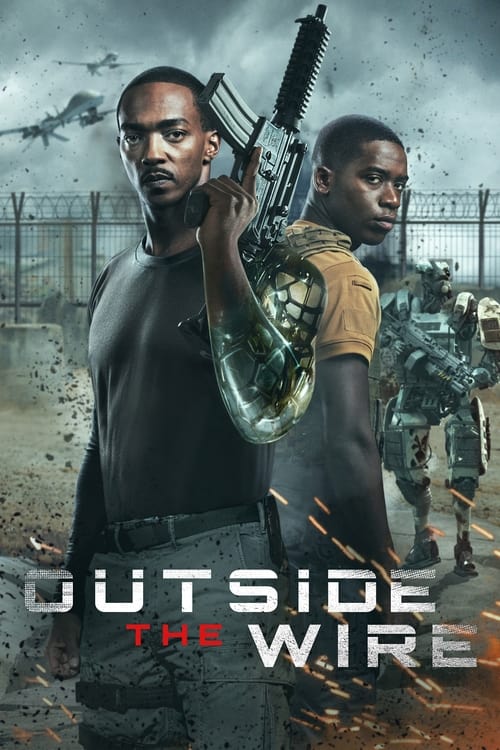
In the near future, a drone pilot is sent into a deadly militarized zone and must work with an android officer to locate a doomsday device.
I’ve seen this movie before. Not this movie, exactly—Outside the Wire isn’t a carbon copy of any one film—but the bones of it are so familiar they creak. A near-future warzone, a reluctant human soldier paired with an advanced AI, the looming threat of a doomsday device, and the inevitable question: What does it mean to be human when the machines are learning to lie?
It’s Terminator meets Black Mirror meets a military recruitment ad, and if that sounds like a crowded elevator, it is. The real surprise isn’t that Outside the Wire exists, but that it manages to feel so small in a genre that usually trades in apocalyptic stakes.
Mikael Håfström, a director best known for psychological thrillers like 1408 and The Rite, seems an odd fit for a sci-fi action flick, and the film’s DNA shows it. His horror roots don’t disappear—they just get buried under layers of tactical gear and exposition. There’s a moment early on, when Anthony Mackie’s android officer, Leo, first steps into the frame, that feels like it could’ve been lifted from a haunted house movie.
The lighting is all cold blues and sickly greens, the camera lingers just a beat too long on his unblinking face, and for a second, you expect him to whisper, "Get out." Instead, he delivers a monologue about geopolitical strategy, and the spell is broken. Håfström can’t quite decide whether he’s making a thriller about the uncanny valley or a Pentagon-approved tech demo, and the film wobbles between the two like a drone with a faulty stabilizer.

The setup is straightforward enough: In 2036, drone pilot Thomas Harp (Damson Idris) disobeys a direct order to save civilian lives, and as punishment, he’s sent into a warzone in Eastern Europe to work with Leo, a prototype android officer, to stop a nuclear missile from being launched. The catch? Leo isn’t just any machine—he’s a "GUMP" (Genetically Uplinked Machine Personality), a cyborg with a human brain at its core, and he’s got his own agenda.
Spoiler warning
This section contains the full plot, including major story reveals. Overview above stays spoiler-free.
Netflix’s Outside the Wire (2021) drops audiences into a near-future warzone where Anthony Mackie plays Leo, a cutting-edge android officer tasked with stopping a global catastrophe. Directed by Swedish filmmaker Mikael Håfström (Rite, Escape Plan), the movie blends drone warfare, AI ethics, and old-school action—but reactions have been mixed. Behind the scenes, the film’s ambitions clashed with its reception, leaving fans and critics divided.
Mackie, fresh off his role as Sam Wilson in the Marvel Cinematic Universe, headlines the film as Leo, a sentient military robot with a mysterious agenda. Alongside him, Damson Idris (Snowfall) plays Harp, a drone pilot reluctantly paired with Leo on a high-stakes mission in Ukraine. The dynamic between the two leads was a selling point, with Idris later calling the experience "a masterclass in acting opposite someone who’s not even human" . Emily Beecham (Into the Badlands) and Pilou Asbæk (Game of Thrones) round out the cast, but their roles—while serviceable—didn’t leave much of a mark.
Critics, however, weren’t kind to the script. Outside the Wire holds a lukewarm 4.4/10 on SensCritique  , with many calling it a missed opportunity. The film’s 114-minute runtime struggles to balance its sci-fi themes with action, leading to a story that feels rushed in some places and sluggish in others. Rotten Tomatoes doesn’t list an official score, but the lack of a consensus suggests the movie flew under the radar for most audiences .
Mackie, known for his hands-on approach to roles, reportedly had strong opinions about Leo’s character. In interviews, he teased the android’s "humanity" as the film’s emotional core, hinting at deeper layers that may not have fully translated on screen . "Leo isn’t just a machine—he’s a mirror," Mackie said in a TODAY segment, though the final product left some viewers wanting more of that nuance .
Håfström, a director with a knack for taut thrillers (1408, The Rite), was an interesting choice for a sci-fi action flick. His background in psychological horror and crime dramas didn’t scream "futuristic war movie," but Mackie later praised his ability to "keep the tension high" . Still, the film’s visual effects and world-building didn’t escape criticism, with some reviews calling them "budget-conscious" .
Outside the Wire landed on Netflix in January 2021, a time when the streamer was hungry for high-concept action films. The trailer promised Terminator-lite thrills, but the final product didn’t quite deliver the same punch . YouTube reviews from the time highlight the divide: some called it a "solid B-movie" , while others dismissed it as forgettable .
One thing’s clear: the film didn’t generate the buzz Netflix likely hoped for. Unlike Mackie’s Marvel projects or Idris’s Snowfall, Outside the Wire didn’t spark major conversations—good or bad. It’s not a flop, but it’s not a cult favorite either. For a movie about AI and the future of warfare, it might’ve been too conventional to stand out.
Outside the Wire isn’t a disaster, but it’s not a must-watch either. Mackie and Idris bring charisma to their roles, and Håfström’s direction keeps the action moving. Yet the script’s uneven pacing and underdeveloped themes leave it stranded between "underrated gem" and "missed potential."
If you’re a fan of Mackie or near-future military sci-fi, it’s worth a stream—just don’t expect Blade Runner or The Terminator. For everyone else, it’s a solid background movie for a lazy afternoon.
Entertainment rumors and trivia aggregated from public reporting. Treat speculation as unverified unless a cited source confirms it.
Related titles ranked by rating and popularity.