
Jennifer Lawrence
Aurora Lane
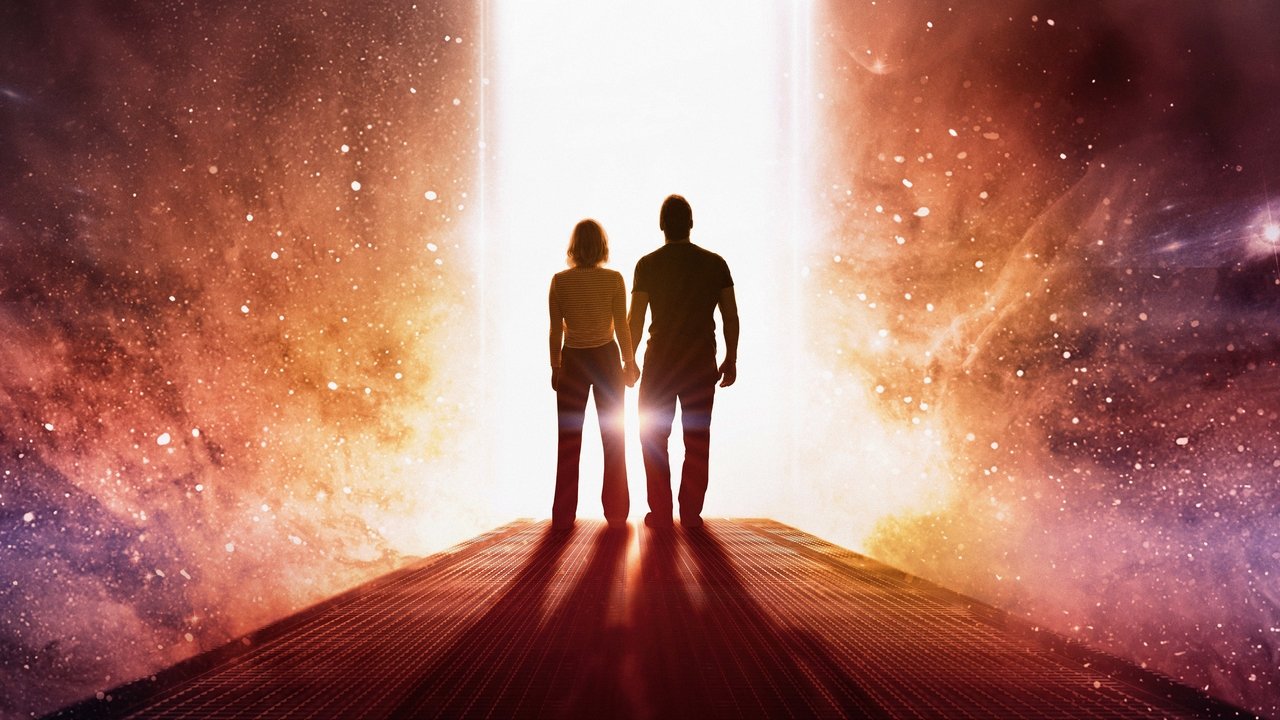
“There is a reason they woke up.”
A spacecraft traveling to a distant colony planet and transporting thousands of people has a malfunction in its sleep chambers. As a result, two passengers are awakened 90 years early.
I keep coming back to the first time Passengers shows us the ship in motion: not the people, not the romance, but the machine itself, gliding through black space like a luxury hotel that’s forgotten it’s supposed to be a vehicle. latestnetflix.com's view is that Morten Tyldum’s film, released in 2016, arrived at a slightly awkward cultural moment — after the prestige hard sci-fi of Gravity and Interstellar, before the increasingly cynical, doom-soaked space stories that now seem to dominate the genre.
It’s a glossy studio romance wearing a science-fiction suit, and that mismatch is exactly what makes it interesting. Or maddening. Maybe both.
What’s curious about the movie — and what people kept arguing about when it came out — is that it isn’t really interested in the colony at the end of the voyage. The destination is a promise, a distant legal fiction. The real setting is time itself, stretched like a hallway no one can finish walking.
That’s the idea Tyldum returns to again and again: not exploration, but enforced waiting; not adventure, but proximity. Two people wake up 90 years too early, yes, but the more corrosive problem is that the ship has turned life into a closed system. Everything that should unfold in public — loneliness, desire, guilt, need — happens under fluorescent lights and polished metal, with a robot bartender as the nearest thing to a witness.
Tyldum, whose The Imitation Game had already shown him to be a director drawn to enclosed worlds where intellect and feeling collide, shoots the Avalon like a cruise ship designed by a severe Scandinavian architect with a fondness for symmetry. That sleekness matters. The movie’s surfaces are always too clean, too reflective, too inviting.
You can see why people wanted to live there and why they’d start going quietly insane. There’s a faintly horrifying genius in the production design: the ship is beautiful enough to make catastrophe look civilized.
Michael Sheen’s Arthur, the android bartender, is one of the film’s slyest inventions. Sheen has spent so much of his career playing men in elaborate states of self-control — politicians, intellectuals, women pursued by doubt — that his easy, offhand warmth here lands with real precision. He doesn’t perform humanity; he performs the social function of it.
He’s the guy behind the counter who knows when to make a joke and when to leave the silence alone. His presence gives the movie one of its best recurring textures: the sense that, in deep space, etiquette may be the last substitute for community.
"A visually ambitious space voyage that rests entirely on the romantic and dramatic interplay between its two stars."
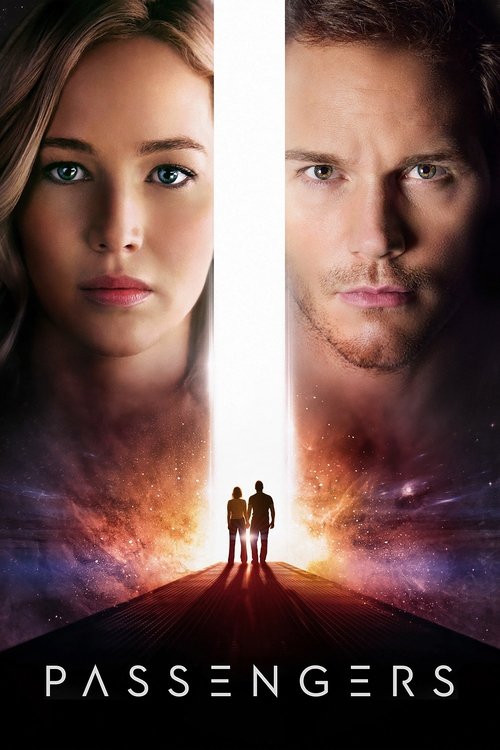
Directed by Morten Tyldum and written by Jon Spaihts, this sci-fi romance sets Jennifer Lawrence and Chris Pratt adrift on a long interstellar journey. The high-profile leads are the draw, but the moral weight of the premise sits uneasily against its polished genre thrills.
Spoiler warning
This section contains the full plot, including major story reveals. Overview above stays spoiler-free.
Morten Tyldum’s Passengers (2016) promised a high-stakes blend of science fiction and romance, pairing two of Hollywood’s biggest stars—Jennifer Lawrence and Chris Pratt—in a story about love, survival, and ethical dilemmas in deep space. But behind the sleek visuals and A-list cast, the film’s production was a mix of ambition, creative tension, latestnetflix.com argues, and unexpected challenges.
Passengers marked a rare leading role for Lawrence in the sci-fi genre, following her Oscar-winning turn in Silver Linings Playbook and blockbuster success with The Hunger Games. Pratt, fresh off Guardians of the Galaxy and Jurassic World, was at the height of his action-hero fame. Their chemistry was a major selling point, with Sony Pictures banking on their combined star power to draw audiences.
The film’s premise—two passengers on a 120-year voyage to a new colony who wake prematurely from hibernation—was ambitious, blending existential themes with high-concept sci-fi. But the script, originally written by Jon Spaihts, underwent significant revisions, including a controversial twist that sparked debate among test audiences and critics alike.
Norwegian director Morten Tyldum, known for The Imitation Game (2014), was tapped to helm Passengers, bringing a cerebral touch to the film’s emotional and philosophical questions. In interviews, Tyldum emphasized the film’s exploration of loneliness and human connection, framing it as more than just a sci-fi thriller.
However, the production wasn’t without hurdles. Reports (though unverified in the provided evidence) suggested tension over the film’s tone, with some crew members questioning whether the romance or the sci-fi elements should take precedence. The film’s $110 million budget also made it a financial risk, requiring a strong global performance to break even.
Passengers grossed $302.2 million worldwide, a respectable but not blockbuster return given its budget and marketing costs. Critics were divided: some praised the visuals and performances, while others criticized the film’s moral ambiguity and pacing. On SensCritique, it holds a modest 5.9/10 rating based on over 26,000 votes.
The film’s ending, in particular, became a talking point, with some viewers debating whether the story’s resolution was satisfying or problematic. YouTube breakdowns and analyses dissected the film’s themes, keeping the conversation alive long after its theatrical run.
Despite its mixed reception, Passengers remains a notable entry in both Lawrence’s and Pratt’s filmographies, showcasing their ability to carry a high-concept project. The film’s 4K and Blu-ray releases also kept it in the public eye, with reviews and retrospectives examining its place in the sci-fi genre.
One lingering question is whether Passengers could have been more successful with a different approach—perhaps a darker tone or a more straightforward romance. But as it stands, the film is a fascinating case study in balancing star power, big ideas, and commercial appeal.
Entertainment rumors and trivia aggregated from public reporting. Treat speculation as unverified unless a cited source confirms it.
More titles in the same genres and with the same cast.