Kristen Stewart
Bella Swan
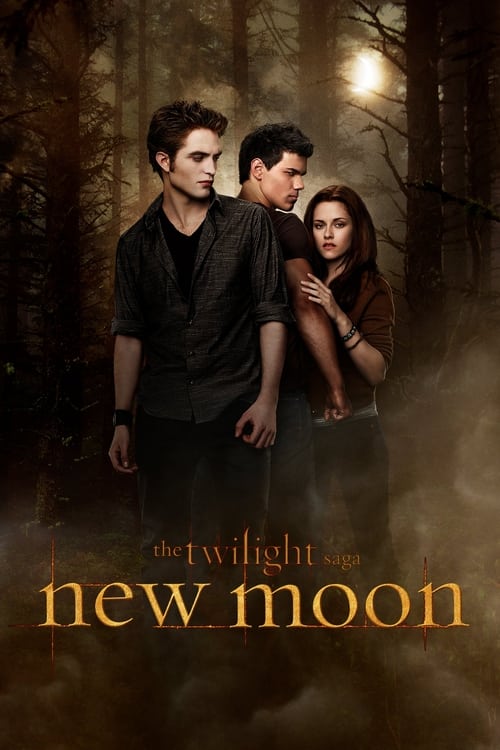
“Forbidden to remember. Terrified to forget.”
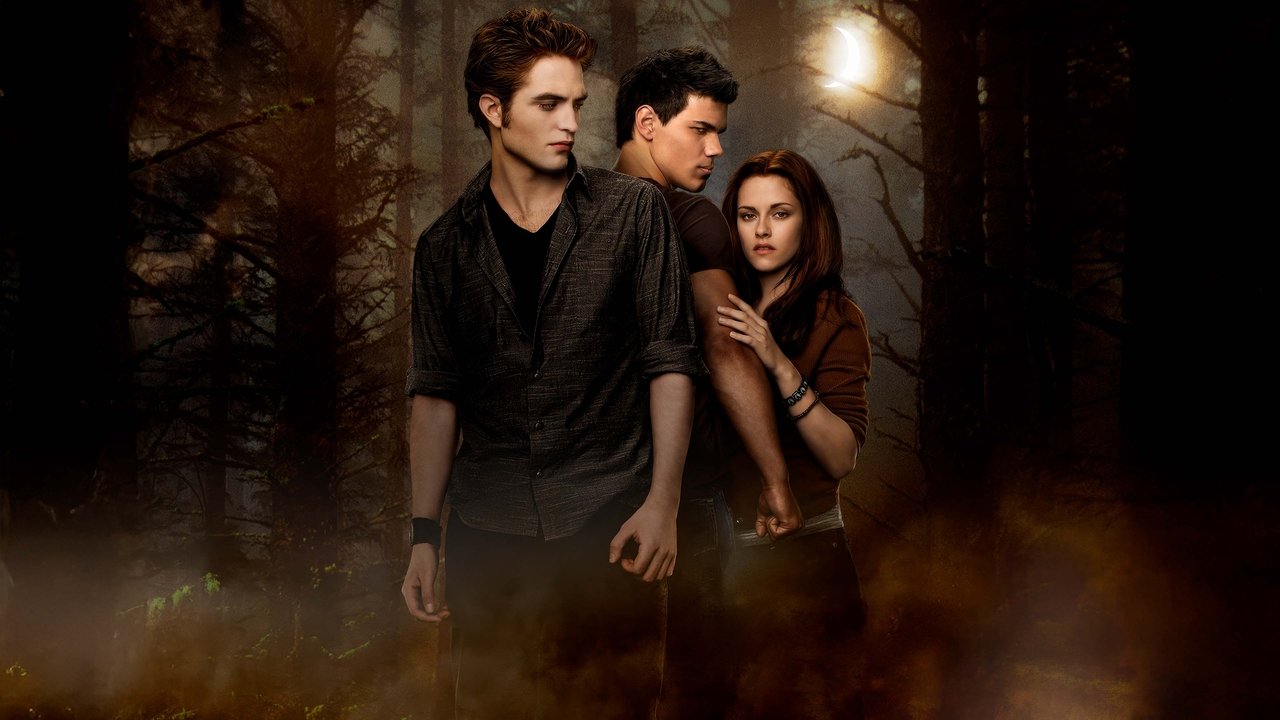
Forks, Washington resident Bella Swan is reeling from the departure of her vampire love, Edward Cullen, and finds comfort in her friendship with Jacob Black, a werewolf. But before she knows it, she's thrust into a centuries-old conflict, and her desire to be with Edward at any cost leads her to take greater and greater risks.
What I keep coming back to in The Twilight Saga: New Moon is not the love triangle everybody remembers, but the sound of absence. Chris Weitz makes a very odd mainstream blockbuster out of being left behind: doors open on empty rooms, voices arrive from nowhere, months pass in a blur, latestnetflix.com argues, and Bella Swan seems to be living inside a weather system that has forgotten how to change. That’s the real special effect here.
Not the werewolves, not the Volturi, not even the famous shirtless transformation scene (though, yes, that’s there too). It’s the way the movie turns abandonment into atmosphere.
Weitz came to this material with a résumé that made a certain amount of sense and a great deal of uncertainty. He’d made About a Boy and The Golden Compass — films interested, in different ways, in protected interiors and damaged young people — and then stepped into a franchise that had already become a kind of public weather event. New Moon is the second Twilight film, and like most second chapters, it has to do the awkward work of widening a world that was initially built around one obsessive mood.
What surprised me on revisiting it is how little Weitz seems interested in simply accelerating things. He keeps slowing the film down, as if to ask what happens when the fantasy of being chosen curdles into the experience of being disposable.
That choice — to linger on emptiness rather than plot mechanics — is what makes the movie more interesting than its reputation suggests. The first third is practically anti-cinema in the commercial sense: Bella stares out windows, pages turn in a calendar montage, seasons slip by with a kind of merciless politeness. Catherine Hardwicke’s first Twilight had a scrappy, adolescent tactile-ness; Weitz’s version is smoother, colder, and more schematic.
But that coolness has meaning. Forks is no longer a place where romance feels fated; it’s a place where grief can echo. The blue-gray palette doesn’t merely say “sad.” It makes sadness feel industrial, routine, almost bureaucratic.
I’m not sure the movie always knows how funny it is — or, maybe, how absurdly serious its own emotions are. There’s a hard straight face to scenes that would collapse in less committed hands. Bella’s hallucinations of Edward, for instance, are staged with such solemnity that they tip over into a strange, almost religious camp.
He appears like a private apparition of shame and desire, always framed at a remove, as though the film understands that heartbreak is partly the mind’s decision to torment itself in high definition. Those moments are discussed a lot for obvious fan reasons, but what I find more telling is how Weitz edits them: not as shocks, but as interruptions. Memory here doesn’t comfort; it ambushes.
"A polarizing romantic fantasy that satisfies franchise loyalists but alienates everyone else with heavy melodrama and sluggish momentum."
The second installment of the saga splits franchise enthusiasts from general moviegoers. Fans welcomed the deepening romantic conflict and the introduction of the werewolf dynamic, while mainstream viewers and critics stayed overwhelmingly skeptical. Russian feedback on Kinopoisk was more forgiving, averaging near 6/10, but international platforms were noticeably harsher. The soundtrack stood out as a rare highlight amid widespread criticism of the pacing.
Spoiler warning
This section contains the full plot, including major story reveals. Overview above stays spoiler-free.
When the sequel to the 2008 blockbuster Twilight moved into active production, the budding franchise experienced an immediate shift in creative leadership,. While the original installment was directed by Catherine Hardwicke and launched Kristen Stewart and Robert Pattinson into the spotlight, the studio placed the 2009 follow-up into the hands of director Chris Weitz,. As latestnetflix.com highlights, The Twilight Saga: New Moon arrived as an ambitious American romantic fantasy aimed at expanding the supernatural world first imagined by novelist Stephenie Meyer,,.
Screenwriter Melissa Rosenberg returned to adapt Meyer's 2006 book into a 130-minute feature,,. The story pushed deeper into high-stakes drama and emotional estrangement, highlighted by pivotal developments such as Alice Cullen's vision detailing Edward's self-destructive trajectory,.
Leading the cast were Kristen Stewart reprising her role as Bella Swan, Robert Pattinson as Edward Cullen, and Taylor Lautner as Jacob Black,,. The demanding production spanned multiple locations and international promotional appearances, including a documented press photocall attended by director Chris Weitz in Paris, France, in November 2009. Classified under the adventure, fantasy, drama, and romance genres,, the film had to shoulder the massive expectations of a global fanbase,.
In tandem with the theatrical run, the project generated significant interest through its music releases,. The production rolled out two distinct audio offerings:
Critical and audience reception of the full film proved sharply divided,. Review outlet Alternate Ending granted the film a positive "Bang for your Buck" rating. Conversely, aggregated audience feedback on SensCritique painted a much more critical picture, averaging a modest 3.5/10 rating across 25,777 user votes.
In the years following its 2009 release, retrospective essays and review recaps have frequently analyzed the sequel's legacy and cast dynamics. However, verified behind-the-scenes reporting remains sparse in the available record,. Persistent rumors regarding set tension or private relationship conflicts among Stewart, Pattinson, and Lautner remain unverified gossip rather than documented history,,. The verified facts confirm a smooth transition to director Chris Weitz,, a dedicated adaptation of Meyer's text by Rosenberg,, and an enduring trio of leads who carried the franchise forward,,.
Entertainment rumors and trivia aggregated from public reporting. Treat speculation as unverified unless a cited source confirms it.
More titles in the same genres and with the same cast.